Afghanistan

This week we are looking at the country of Afghanistan, this is a country that for some reason I didn’t think of as being part of Asia, but it is.

It is a landlocked country at the crossroads of Central, South, and Western Asia. It has a rich and complex history as a hub of diverse cultures and civilizations, but its recent history has been defined by decades of conflict and instability.  

Since the Taliban regained control of Afghanistan in August 2021, the country has faced a severe humanitarian and economic crisis. The de facto Taliban government has not been formally recognised by most of the international community.  

The situation remains volatile and dangerous. The Taliban government is led by Mawlawi Hibatullah Akhundzada. The Islamic State Khorasan Province (ISKP) is also active and continues to conduct violent attacks. The country is considered extremely dangerous for travel due to the high threat of terrorist attacks and kidnapping.

The country is experiencing one of the world’s largest humanitarian crises. Factors contributing to this include economic mismanagement, a significant reduction in international aid, and the departure of many skilled professionals. The country’s GDP has seen a decline since 2021, and poverty and food insecurity are pressing challenges.  

The Taliban has reimposed a strict interpretation of Sharia law, leading to severe human rights abuses. These are particularly acute for women and girls, who have been banned from secondary and university education, are largely excluded from public and economic life, and face restrictions on their movement and dress.  

The current government is the “interim government” declared by the Taliban. It is a highly centralized system, and many of the human rights gains made over the previous two decades have been reversed.

The Afghan economy has been pushed into a crisis but has shown some signs of a slow recovery driven primarily by agriculture, mining, construction, and commerce. However, challenges remain due to a fragile banking sector, persistent unemployment, and limitations on women’s economic participation. Afghanistan’s economy relies heavily on foreign aid, although this has been significantly reduced since the Taliban’s takeover.

The country has substantial untapped mineral deposits, including lithium, iron, and copper. Traditional exports include dried fruits, nuts, and carpets.  

Afghanistan is often referred to as the “graveyard of empires” due to its history of resisting foreign occupation. It has been a crossroads of civilizations for thousands of years, with influences from Persian, Greek, Buddhist, and Islamic empires. The modern state was founded in the 18th century. Since the late 1970s, the country has been mired in continuous warfare, including the Soviet invasion in 1979 and the US-led coalition’s presence from 2001 to 2021.  

Afghan culture is a rich tapestry of tribal and ethnic traditions, with a strong emphasis on family, honour, and hospitality. Islam is the official religion and a dominant force in daily life and social customs. The main languages are Dari (Afghan Persian) and Pashto, with many people being fluent in both. Poetry is a highly valued cultural tradition.  

The country has numerous historical and archaeological sites, though many have been damaged or destroyed by decades of conflict. The Buddhas of Bamiyan, destroyed by the Taliban in 2001, are one of the most iconic examples of this loss. Efforts are underway by various organizations to preserve Afghanistan’s remaining cultural heritage.  

More to come next week

Russia Today

Hi everyone, this week I thought I would wrap the posts about Russia with a bit about what it’s like now days.

So, the country is experiencing a period of significant transformation and challenges. While its economy has shown resilience, particularly in the face of Western sanctions, it remains heavily reliant on energy exports and faces persistent issues with corruption and human rights abuses. The ongoing war in Ukraine has also led to intensified repression of dissent and a decline in international relations. 

Power is concentrated in the hands of President Vladimir Putin, with a system that suppresses genuine opposition and controls the media. 

Life expectancy is lower than the OECD average, and there are issues with poverty and inequality. Life expectancy for women is 78 years, compared with 68 for men.

The war with the Ukraine has had a profound impact on Russia, leading to a decline in international relations and increased repression within the country. While overall confidence in the military remains high, there are signs that the war has eroded some support, particularly in comparison to pre-war levels. 

The war is a significant factor in Russian life, with many citizens living in a “twilight zone” where the war is both ubiquitous and a backdrop to everyday life. 

The Russian government has been using propaganda to portray the war as a struggle against the West, and this has been effective in uniting some segments of the population. 

The war has led to a transfer of wealth from the government to the military and regions impacted by the conflict, creating a temporary consumer boom. 

Russia’s international standing has been severely damaged by the war, and it faces increased isolation. 

Many countries advise against all travel to Russia due to the ongoing war and associated risks. Also, there’s a high threat of terrorism. Terrorist groups, including al-Qaeda and Daesh-aligned groups, continue to call for attacks in Russia. Attacks can be indiscriminate and may occur on or around seasonal, festive, or religious events in public places, including popular tourist sites.

Next week we will move on to somewhere else as yet undecided 
20th Century Russia

This week we will have a look at Russia during the twentieth century, this was a period of immense political, social, and economic upheaval, marked by revolution, civil war, and the rise of communism.

The century began with the Tsarist empire, ended with the collapse of the Soviet Union, and saw the country transform into a communist state. Key events include the Russian Revolution, World War I, the rise of Joseph Stalin, the Cold War, and the eventual disintegration of the Soviet Union. 

                  St Petersburg early 20th Century

Russia’s participation in the war contributed to the social and political unrest that led to the February Revolution in 1917. This is when the monarchy was overthrown, and the Bolsheviks, led by Vladimir Lenin, seized power, establishing the world’s first communist society. This marked a shift from autocratic rule to a communist regime. This was known as the Russian Revolution’.

The country found themselves with a civil war which lasted between 1918-1922, this saw the Bolsheviks fighting against various anti-communist forces, ultimately solidifying their control over the country. 

After the civil war Russia united with other republics to form the Union of Soviet Socialist Republics (USSR). 

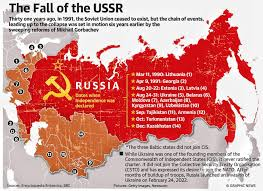
The Soviet Union was composed of 15 Soviet Socialist Republics (SSRs). These republics were: Russia, Ukraine, Belarus, Moldova, Lithuania, Latvia, Estonia, Georgia, Armenia, Azerbaijan, Kazakhstan, Uzbekistan, Kyrgyzstan, Tajikistan, and Turkmenistan. 

It was at this time that Joseph Stalin became the dominant leader, implementing policies of industrialization, collectivization of agriculture, and widespread repression.

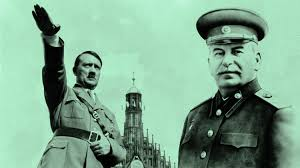
During the second world war The Soviet Union fought against Nazi Germany and the Axis powers, suffering immense casualties but ultimately contributing to the Allied victory.

At first The Soviet Union officially maintained neutrality during WW2 but cooperated with and assisted Germany. However, after Nazi Germany attacked the USSR on June 22, 1941, the country allied with the United Kingdom and then the United States after the latter joined the war in December 1941. 

On 22 June 1941, Adolf Hitler launched Operation Barbarossa, an invasion of the Soviet Union with the largest invasion force in history.

Hitler had always wanted to see Germany expand eastwards to gain Lebensraum or ‘living space’ for its people. After the fall of France Hitler ordered plans to be drawn up for an invasion of the Soviet Union. He intended to destroy what he saw as Stalin’s ‘Jewish Bolshevist’ regime and establish Nazi dominance.

Soviet forces launched a counteroffensive against the Germans arrayed at Stalingrad in mid-November 1942. They quickly encircled an entire German army, more than 220,000 soldiers. In February 1943, after months of fierce fighting and heavy casualties, the surviving German forces—only about 91,000 soldiers—surrendered.

After the second world war the country known as East Germany, officially the German Democratic Republic (GDR), was formed in October 1949 within the Soviet occupation zone of Germany following World War II. The Socialist Unity Party of Germany (SED), led by Walter Ulbricht, played a key role in its establishment and subsequent governance. The GDR was established as a communist state within the Soviet zone, marking the beginning of the Cold War division of Germany. 

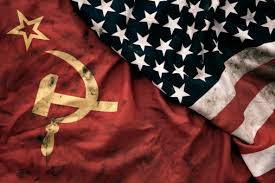
Between 1947-1991 saw what was known as the Cold War, this was the ideological and political rivalry between the Soviet Union and the United States shaped global politics and led to an arms race.

The Cold War was a period of geopolitical tension between the United States and the Soviet Union. It was characterized by an ideological struggle between capitalism and communism, a nuclear arms race, and proxy wars, but no direct military conflict between the two superpowers.

The Soviet Union collapsed in 1991 due to a combination of internal factors like economic stagnation, overextension of the military, and rising ethnic tensions, along with the influence of the Cold War and US policy of containment. 

Mikhail Gorbachev’s reforms, including perestroika (economic restructuring) and glasnost (openness), while intended to revitalize the Soviet system, inadvertently accelerated its demise. 

The Soviet economy was struggling with low productivity, inefficient planning, and a lack of innovation. They were heavily invested in a large military, especially during the Cold War, which strained its economy. 

As the USSR was a vast empire with numerous ethnic groups, it was natural that many would feel oppressed and sought greater autonomy or independence. 

Gorbachev’s reforms, while intended to address the economic problems, also opened the door for more political and cultural freedom. This led to increased criticism of the government, rising nationalist sentiments, and the weakening of the Communist Party’s grip on power. 

In 1991, hardliners attempted to overthrow Gorbachev, but the coup failed due to a lack of support from the military. 

After the failed coup, the Soviet Union’s republics began declaring their independence, and Gorbachev resigned as president. The Soviet Union was formally dissolved on December 26, 1991. 

The collapse of the Soviet Union had a profound impact on the world, leading to the end of the Cold War, the emergence of new nations in Eastern Europe and Central Asia, and a shift in global power dynamics. 

That will do it for this post more about Russia next Monday.

History of Russia Part 1

This week we are having a look at Russia’s history which can be divided into four parts the pre- Slavic era/ Kievan Rus’ period, the time of the Russian Empire and the time of the Soviet Union followed by the post-Soviet era.

The first East Slavic state, Kievan Rus’, emerged in the 9th century, adopting Orthodox Christianity from the Byzantine Empire in 988.

Over time, the Grand Duchy of Moscow unified Russian lands, leading to the proclamation of the Tsardom of Russia in 1547.

The Russian Empire expanded through conquest and exploration, becoming the world’s largest country by the early 18th century. 

The Russian Revolution in 1917 led to the abolition of the monarchy and the establishment of the Soviet Union. The Soviet Union dissolved in 1991, leading to Russia becoming an independent country.

Russia started more or less with Mongol invasions, through to ages of enlightenment and industrialization to revolutions and wars, Russia is known not just for its political rises of world power and upheaval, but for its cultural contributions like ballet, Tolstoy, Tchaikovsky, caviar and vodka.

The first czar of Russia was Ivan IV aka Ivan the Terrible he ruled from 1547 to 1584, he was the grandson of Ivan the Great he expands the Muscovite territory into Siberia while instituting a reign of terror against nobility using military rule. He died of a stroke in 1584.

Now for a little about the Romanov Dynasty, which rule for around three hundred years. In 1613 after several years of unrest, famine, civil war and invasions, Mikhail Romanov is coronated as czar at age 16, ending a long period of instability.

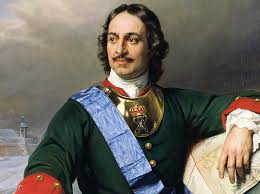
Between 1689-1725 Russia was ruled by Peter the Great it was under his rein that saw the building a new capital in St. Petersburg, modernizing the military (and founding the Russian navy) and reorganizing the government. With his introduction of Western European culture, Russia becomes a world power.

In 1762 Russia’s longest-ruling female leader, Catherine II, aka Catherine the Great, takes power in a bloodless coup and her reign marks Russia’s era of enlightenment. A champion of the arts, her 30-plus-year rule also extends Russia’s borders.

When Czar Alexander III came to power in 1861 he issues his Emancipation Reform, abolishing serfdom and allowing peasants to purchase land. His other notable reforms include universal military service, strengthening Russia’s borders and promoting self-government. In 1867, he sells Alaska and the Aleutian Islands to the United States, gilding the St. Isaac Cathedral domes in St. Petersburg with the proceeds. He was assassinated in 1881.


Russian National Anthem

This week we are looking at Russia’s national anthem.

The “State Anthem of the Russian Federation” is the national anthem of Russia. It uses the same melody as the “State Anthem of the Union of Soviet Socialist Republics”, composed by Alexander Alexandrov, and new lyrics by Sergey Mikhalkov, who had collaborated with Gabriel El-Registan on the original anthem.

In 1944, that earliest version replaced ” The Internationale” as a new, more Soviet-centric and Russia-centric Soviet anthem. The same melody, but without any lyrics, was used after 1956. A second version of the lyrics was written by Mikhalkov in 1970 and adopted in 1977, placing less emphasis on WWII and more on the victory of communism, and without mentioning Joseph Stalin by name.

Glinka’s anthem was replaced soon after Yeltsin’s successor, Vladimir Putin, first took office on 7 May 2000. The federal legislature established and approved the music of the national anthem of the Soviet Union, with newly written lyrics, in December 2000, and it became the second anthem used by Russia after the dissolution of the Soviet Union.

The government sponsored a contest to find lyrics, eventually settling upon a new composition by Mikhalkov; according to the government, the lyrics were selected to evoke and eulogize the history and traditions of Russia. Yeltsin criticized Putin for supporting the reintroduction of the Soviet-era national anthem even though opinion polls showed that many Russians favoured this decision.

Public perception of the anthem is positive among Russians. A 2009 poll showed that 56% of respondents felt proud when hearing the national anthem, and that 25% liked it.

Below are then lyrics in English.

Russia is our sacred state,
Russia is our beloved country.
A mighty will, great glory –
Your dignity for all time!

Be glorified, our free Fatherland,
The age-old union of fraternal peoples,
Ancestor-given wisdom of the people!
Be glorified, country! We are proud of you!

From the southern seas to the polar edge
Our forests and fields are spread out.
You are the only one in the world! You are the only one –
the native land so kept by God!

Be glorified, our free Fatherland,
The age-old union of fraternal peoples,
Ancestor-given wisdom of the people!
Be glorified, country! We are proud of you!

A wide scope for dreams and for life
The coming years open to us.
We are given strength by our fidelity to the Fatherland.
So it was, so it is and it will always be so!

Be glorified, our free Fatherland,
The age-old union of fraternal peoples,
Ancestor-given wisdom of the people!
Be glorified, country! We are proud of you!

Estonia

We are still in Central Europe or maybe we are Northern Europe as my refence book says Central, but the internet says Northern Europe anyway the country is Estonia

Estonia, a country in Northern Europe, borders the Baltic Sea and Gulf of Finland. Including more than 1,500 islands, its diverse terrain spans rocky beaches, old-growth forest and many lakes. It also has a high ratio of meteorite craters to land area.

Formerly part of the Soviet Union, it’s dotted with castles, churches and hilltop fortresses. The capital, Tallinn, is known for its preserved Old Town, museums and the 314m-high Tallinn TV Tower, which has an observation deck.

The official language is Estonia; however, English is spoken widely enough that, in practical terms, learning Estonian isn’t necessary it has a population s 1.4 million.

The national flag of Estonia is a tricolour featuring three equal horizontal bands of blue at the top, black in the centre, and white at the bottom. The flag is called sinimustvalge in Estonian.

The colours of the flag are said to symbolize: Blue: the colour of faith, loyalty and devotion, the blue sky, sea and lakes of Estonia. Black: tragic past of Estonian nation, the traditionally black jacket of the Estonian peasant during past times. White: the striving towards enlightenment and virtue.

The coat of arms of the Republic of Estonia is a golden shield which includes a picture of three left-facing blue lions with red tongues in the middle, with golden oak branches placed on both sides of the shield.

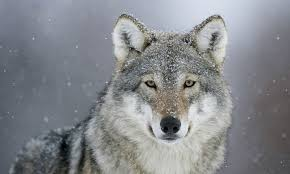
The national animal is the wolf due to it being a survival-expert, that respects it’s their family and territories, thus making it the best national animal.

The people of Estonia chose the cornflower as a national symbol in 1968, but the flower was a folk emblem for many years prior to that. In Estonia, cornflowers grow mostly in rye fields, so Estonians have long associated the flower with their staple grain.

On 4 May 1992, limestone was declared to be Estonia’s national stone. Estonian limestone – grey and dull at first sight, rather it is multi-coloured and multi-faceted, ranging from pure white to crimson, from seaweed green to chocolate brown.

It was the first country to adopt an online political voting system! 99% of Estonian state services are available online.

The official currency in Estonia is the euro- abbreviated to the currency code EUR. 1 Euro is subdivided into 100 cents. The Estonian kroon was circulated in Estonia between 1928-1940 and 1992-2011. Estonia joined the European Union in 2004 and the Eurozone in 2011.

Between 1 January and 14 January 2011, the kroon circulated together with the euro, after which the euro became the sole legal tender in Estonia. The kroon was subdivided into 100 cents.

Estonia is a parliamentary republic. Its prime minister, who is the head of government, is nominated by the president and approved by parliament. He or she is in charge of the executive power vested in government. The president, who is the head of state, is elected by Parliament or electoral college for 5 years.

Among the Baltic countries, Estonia has the happiest people with half of the Estonian population reported to always being happy or at least most of the time, about a third feel happy sometimes, about a ten percent are rarely happy, and only around 3 percent saying they are never happy,

Bulgaria

Good morning, time to visit another country this week we are visiting the Balkan region in Southeastern Europe which takes its name from the Balkan Mountains which run from Bulgaria into eastern Serbia.

So, the country will be Bulgaria a country with diverse terrain encompassing Black Sea coastline, a mountainous interior and rivers, including the Danube. A cultural melting pot with Greek, Slavic, Ottoman, and Persian influences, it has a rich heritage of traditional dance, music, costumes, and crafts.

At the foot of domed Vitosha mountain is its capital city, Sofia, dating to the 5th century B.C

The population is around 6.5 million and the language spoken is Bulgarian.

The lev is the currency of Bulgaria. Although Bulgaria is part of the EU, it is not part of the Eurozone. Eurozone is the group of counties that use the euro as their currency. Some prices are often published in euro, but this is simply to make things easier for visiting foreigners. Transactions are always done in Leva/BGN.

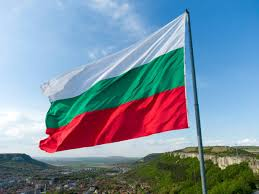
The national flag of Bulgaria is a tricolour consisting of three equal-sized horizontal bands of white, green, and red. The flag was first adopted after the 1877–1878 Russo-Turkish War, when Bulgaria gained de facto independence. After the downfall of the communist government, the old plain tricolour was reestablished on November 27, 1990. The white of the flag is said to stand for peace, love, and freedom, while green emphasizes the agricultural wealth of Bulgaria. Red is for the independence struggle and military courage.

Bulgaria is a parliamentary republic and conforms with the Constitution of the Republic passed by the Grand National Assembly in July 1991. The Constitution of the Republic of Bulgaria is the supreme law of the country and may not be contravened by any other law. All international treaties, which are ratified pursuant to the constitutional procedure, are considered part of domestic legislation.

The National Assembly is a unicameral parliament. It consists of 240 Members of Parliament, who are directly elected every four years. The National Assembly is a permanent acting body, directed by a board of Chairpersons, including the Speaker of the National Assembly. The Speaker of the National Assembly represents the National Assembly externally.

The head of the state is the President, who embodies the unity of the nation and represents the Republic of Bulgaria in international relations.

The Council of Ministers represents the executive branch and decides on the domestic and foreign policy of the country. The government manages the implementation of the state budget, governs state property and approves or rescinds certain categories of international treaties as postulated by the Constitution.

Some say Bulgaria is not dangerous for tourists if you stick to the rules and respect the culture. Crime is very low in Bulgaria; however, pickpocketing and petty theft have been recorded in the more touristy areas and main cities.

With the same colours as the flag, Shopska Salad is often proclaimed as Bulgaria’s national dish. It is often said to have been invented in the 1960s by the socialist party to showcase local ingredients to tourists and promote the theory that Bulgarian vegetables were among the tastiest in Europe.