Zebra

                                                                    PLAINS ZEBRA

Hi everyone, yesterday I forgot to post this so I’m doing it now and if I manage to write Wednesday’s post I will post it this afternoon, if not then tomorrow.
                    AREA’S WHERE ZEBRA’S ARE FOUND

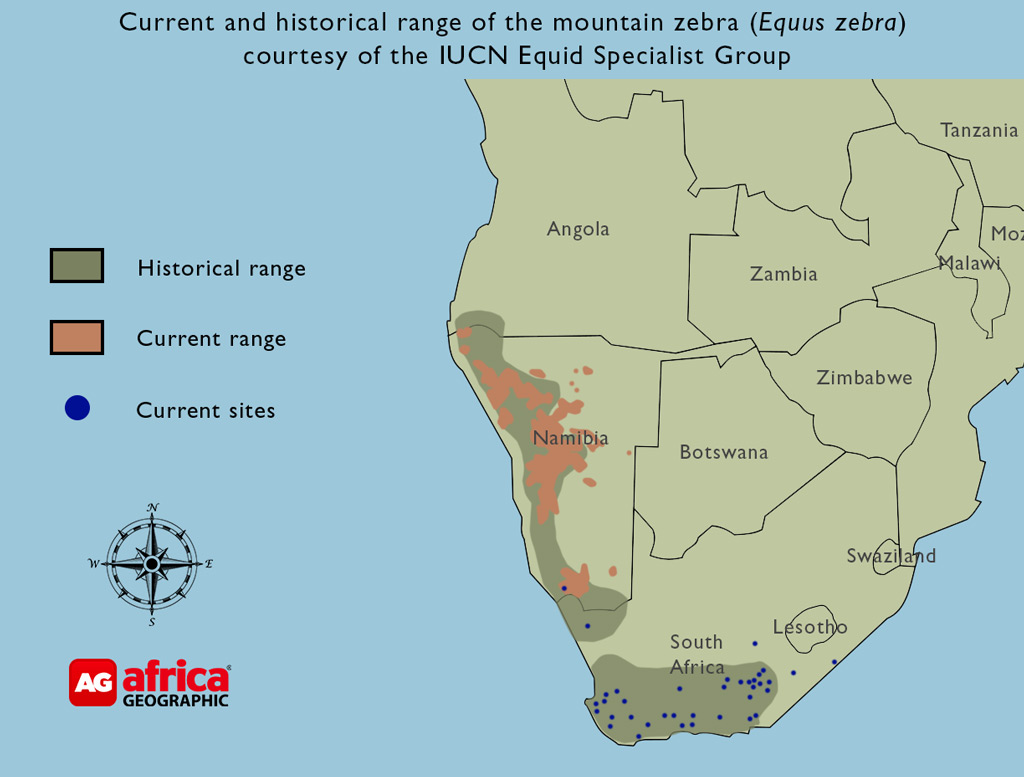
This week we are looking at the zebra, a mammal they are found in various countries across the African continent. Specifically, they inhabit regions within Kenya, Ethiopia, Somalia, Namibia, Angola, and South Africa. Different zebra species, like Grevy’s zebras and Mountain zebras, have more specific ranges within these areas, while Plains zebras are the most widespread. 

They look similar to horses. They stand between 47 and 55 inches (120 and 140 centimetres) tall at the shoulder. Each species of zebra has its own pattern of stripes. The plains zebra has broad stripes that are widely spaced. The stripes of Grevy’s zebra are narrow and closely spaced, and the belly is white. The mountain zebra has a grid like pattern of stripes on the rump.

                        MOUNTAIN ZEBRA

Zebra stripes are like fingerprints. No two zebras are alike. This helps to identify individuals.

They eat mostly tall, rough grasses. Some types also eat shrubs, herbs, and bulbs. Unlike many ungulates in Africa, zebras do not require short grass to graze. Instead, they eat a wide variety of different grasses, sometimes even eating leaves and young trees. As a result, they can range more widely than many other species, often venturing into woodlands. They are considered to be “pioneer grazers” preparing plains for more specialized grazers who rely on short, nutritional grasses.

                        GREVY ZEBRA

Zebras communicate with each other using calls and facial expressions. They often greet each other with nose-to-nose contact. Plains zebras have at least 6 different vocal calls. A two-syllable call is used to alert herd members to predators while snorts indicate happiness. They also use facial expressions to communicate. When greeting each other, they will stick their ears up and push their faces forward. When feeling threatened, they will press their ears against their heads.

Female zebras may have one foal each year. Females and their young usually live in small family groups headed by one male. Thes groups are called “harems.”. Harems generally remain together for months or even years, making it an incredibly stable family unit.

But female Grevy’s zebras may form family groups without head males. Family groups sometimes join together in larger herds. Zebras also may form mixed herds with antelopes.

A male zebra is called a stallion. Female zebras are called mares, and their young are called foals. 

Every year, hundreds of thousands of zebras gather up their young and begin the long journey from Tanzania’s Serengeti plains, north to Kenya. This annual trek to find food and water covers a distance of around 2,900 kilometres (1,800 miles) and exposes them to a myriad of dangers. River crossings leave herds vulnerable to crocodiles, while the size of the migration itself brings lions, hyenas, and wild dogs.

Rhinoceros

This week’s hooved animal is the rhinoceros or rhino the word rhinoceros is a combination of two Greek words – rhino (nose) and ceros (horn).

There are five living species of rhinoceros – white, black, greater one-horned, Javan and Sumatran. In addition, a number of other animals have rhinoceros as part of their names, including the rhinoceros auklet, rhinoceros beetle, rhinoceros chameleon, rhinoceros cockroach, rhinoceros fish, rhinoceros hornbill, rhinoceros iguana, rhinoceros rat snake, rhino shrimp, and rhinoceros viper. All of them have horn-like appendages on their noses.

They can be found in several countries across both Africa and Asia. In Africa, you can find them in Angola, Botswana, Kenya, Malawi, Mozambique, Namibia, South Africa, Tanzania, Uganda, Zambia, and Zimbabwe. In Asia, they can be found in India, Indonesia, Nepal, and Vietnam. 

The two main species of rhino in Africa are the black rhino and the white rhino. Black rhinos are found in 12 African countries, with the largest populations in Namibia, South Africa, Kenya, and Zimbabwe. White rhinos are found in 11 African countries. 

Asia is home to the greater one-horned rhino, Javan rhino, and Sumatran rhino. You can find them in India, Indonesia, Nepal, and Vietnam. 

A rhino’s horn is not attached to its skull. It is actually a compacted mass of hairs that continues to grow throughout the animal’s lifetime, just like our own hair and nails. The longest horn on record belonged to a white rhino and measured just under 152cm or 60 inches, which is five feet, and I am only four foot eleven inches tall.

The rhinoceros’s closest living relative is the tapir. Horses and zebras are also related, but less closely than tapirs. All three belong to the group of odd-toed ungulates, known as Perissodactyla. Really horses and zebras that sounds weird.

The white rhino’s name comes from the Afrikaans word “wyd,” which means “wide” and describes its mouth. Early English settlers in South Africa misinterpreted the “wyd” for “white”. Black rhinos may have received their name from the dark wet mud in their wallows that made them appear black in colour. Both species are gray in colour, the famous Blue Rhino, corporate logo for the well-known propane tank company, is entirely a figment of its founder’s imagination.

After mating, adult male and female rhinos typically go their separate ways. After the calf is born, it will spend a couple of years or more in the company of its mother, and perhaps associate with other females and their calves, but the father rhino is not part of the standard social group.

They are not generally considered friendly to humans, although they are not inherently aggressive. They prefer to be just left alone and will only charge if they feel threatened or are protecting their young. Female rhinos, especially those with calves, can be particularly dangerous in the wild. While they may not intentionally seek to harm humans, their size and power make them a serious threat if they do charge. 

The live anywhere between 35 and 50yrs depending on the breed.

All five species of rhinos are herbivores, eating mainly vegetation. They spend most of their time browsing and grazing through their natural habitat in search of plants and grasses to eat.

This week’s wild dog the Dhole

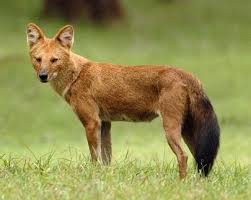
This week we are looking at the dhole, it is a canid native to South, East and Southeast Asia. It is anatomically distinguished from members of the genus Canis in several aspects: its skull is convex rather than concave in profile, it lacks a third lower molar, and the upper molars possess only a single cusp as opposed to between two and four.

It is a highly social animal, living in large clans without rigid dominance hierarchies and containing multiple breeding females.

This highly elusive and skilled jumper is classified with wolves, coyotes, jackals, and foxes in the taxonomic family Canidae. Dholes are unusual dogs for a few reasons. They don’t fit neatly into any of the dog subfamilies (wolf and fox, for instance).

They are very social animals that live in packs of 5–12 members, but packs can be as large as 25 members. They can also be cooperative with a few splitting off from the pack to hunt together. They are apex predators that are highly skilled hunters, they are agile, strong, and can leap up to seven feet vertically and are also excellent swimmers and have high endurance. 

It is believed that they are one of the most talkative canid species, using a variety of vocalizations to communicate, including whistles, clucks, screams, growls, yaps, and squeaks. 

Since their territory is often shared with larger predators like tigers and leopards, the pack must be alert at all times.

They are a medium-sized wild dogs about the size of a border collie. They have a rusty red coat; they are born with a brownish colour which turns more reddish when around three months old. They can also have dark, almost black bushy tails.

They are not generally dangerous to humans and are usually docile and skittish and will typically retreat when they see a person. However, dholes can attack livestock, and humans may retaliate by poisoning the carcasses. This can lead to the deaths of entire packs of dholes, as well as other carnivores and scavengers.