Eye diseases and disorders

This week we are looking at eye diseases or disorders at least 2.2 billion people worldwide have some form of vision impairment or eye condition that’s about 28% of the population. This figure doesn’t include things like dry eye or conjunctivitis or any other condition that doesn’t affect sight, if it did the percentage would be more like 50% of the population.

Eye diseases include any condition that affects the cornea, lens, retina, optic nerve, eyelids, or the visual pathways in the brain. Some are mild and temporary; others can cause permanent vision loss if untreated.

Eye conditions for into one of eight categories these are the following.

Refractive Disorders (Most Common Worldwide)

These affect how light bends in the eye.

  • Myopia (short‑sightedness) – distant vision blurred
  • Hyperopia (long‑sightedness) – near vision blurred
  • Astigmatism – uneven focus due to irregular cornea
  • Presbyopia – age‑related loss of near focus (40+)

Treatment: glasses, contact lenses, or refractive surgery.

Lens Disorders

Cataracts

Clouding of the lens causing blurred or dim vision.

  • Extremely common with age
  • Treated with cataract surgery (one of the safest surgeries worldwide

Retina Disorders

These affect the light‑sensitive layer at the back of the eye.

Age‑Related Macular Degeneration (AMD)

  • Damages central vision
  • Leading cause of blindness in older adults
  • Two types: dry and wet

Diabetic Retinopathy

  • Caused by diabetes damaging retinal blood vessels
  • Can lead to blindness if untreated

Retinal Detachment

  • Retina pulls away from the back of the eye
  • Medical emergency
  • Symptoms: flashes, floaters, curtain over vision

Macular Hole / Macular Pucker

  • Distortion or loss of central vision

Optic Nerve Disorders

Glaucoma

  • Damage to the optic nerve, often due to high eye pressure
  • Causes gradual, irreversible vision loss
  • Requires lifelong management

Optic Neuritis

  • Inflammation of the optic nerve
  • Often linked to autoimmune conditions

Corneal Disorders

Keratoconus

  • Cornea thins and bulges into a cone shape
  • Causes distorted vision
  • Treated with cross‑linking, contacts, or corneal transplant

Corneal Ulcer

  • Open sore, usually from infection
  • Painful and urgent to treat

Eyelid & Surface Disorders

Blepharitis

  • Inflammation of eyelid margins
  • Causes irritation, crusting, dryness

Conjunctivitis (Pink Eye)

  • Viral, bacterial, or allergic
  • Causes redness, discharge, irritation

Dry Eye Disease

  • Very common
  • Caused by poor tear quality or quantity

Childhood Eye Disorders

Amblyopia (Lazy Eye)

  • Brain favours one eye
  • Treatable if caught early

Strabismus (Eye Turn)

  • Eyes misaligned
  • May require glasses, exercises, or surgery

Rare but Serious Conditions

·       Uveitis – inflammation inside the eye

·       Retinoblastoma – childhood eye cancer

·       Graves’ Eye Disease – autoimmune swelling behind the eyes

·       Idiopathic Intracranial Hypertension – pressure on optic nerve

When it comes to our eyes people should seek immediate help if they experience any of the following

  • Sudden vision loss
  • Flashes or a curtain over vision
  • Severe eye pain
  • Sudden double vision
  • Chemical injury

These can indicate emergencies like retinal detachment, acute glaucoma, or infection.

Sacred Band of Thebes

Today I am writing a post suggested by and for my transgender granddaughter Sam, who is mentioned often in my diary posts, she has learnt a bit about these soldiers, I think at school, abut I am not 100% sure about that.

Anyway, the subject is The Sacred Band of Thebes.

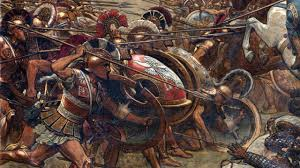
The Sacred Band of Thebes was an elite heavy infantry of select soldiers, allegedly consisting of 150 pairs of male couples which formed the elite force of the Theban army in the 4th century BC, ending Spartan domination. Its predominance began with its crucial role in the Battle of Leuctra in 371 BC.

They were formed under the leadership of Gorgidas but first ac

hieved fame under the general Pelopidas. They remained invincible from 378-338 BCE when the entire troop fell together at the Battle of Chaeronea.

The military unit is first mentioned in 324 BCE in a speech, but their full story wasn’t known to much later.

The Sacred Band were deployed early in the Boeotian War in 378 BCE under Gorgidas but became famous for their participation in the Battle of Leuctra in 371 BCE. They remained undefeated until the decisive battle of Chaeronea in 338 BCE when the Macedonians under Philip II and his son Alexander the Great crushed the combined forces of Thebes and Athens.

The Sacred Band fell together as a single unit and, according to Plutarch, were mourned by Philip II of Macedon himself as valiant warriors. They would later became legendary figures exemplifying courage and military strength.

The city of Thebes, where this band had been founded in 378 BCE was particularly unique in how it regarded the love, between men. A young Plato is thought to have said “the rule has been laid down straightforwardly that it is right to gratify (male) lovers, and no one, young or old, would say that it is wrong.”

Of course, it was not uncommon for male-male encounters to be pursued by ancient Greek soldiers, demonstrated through the institutionalised practices of homoeroticism in Spartan militia and the cities of Crete.

The very act of homoeroticism was thoroughly incorporated into the educational systems of the Greek world. It was a means to lead a boy into adulthood, and by the Classical period, it extended into higher culture: “from the military to athletic games, from philosophy to historiography.”  

But why would Thebes want to specifically create an elite unit of bonded male lovers, if homoeroticism was already part-and-parcel of ancient Greece’s cultural fabric?

According to Plato’s philosophical thought, lover-soldiers would inspire the courage and bravery needed on the battlefield. Plato tells us that:

The last person a lover could bear to be seen by, when leaving his place in the battleline or abandoning his weapons, is his boyfriend; instead, he’d prefer to die many times. As for abandoning his boyfriend or failing to help him in danger – no one is such a coward that he could not be inspired into courage by love and made the equal of someone who’s naturally very brave. — The Symposium, 179a’

It is said that such was the powerful display of love that it brought the great king to tears. So, to mark the burial site, a marble lion was erected in honour of the fallen, acting as a “symbol of their courage.”

The Lion of Chaeronea is still standing. It’s a funerary monument erected in honour of the Theban Sacred Band, who died in the Battle of Chaeronea in 338 BC. The monument was rediscovered in 1818 and later restored, and it remains a prominent landmark near the battle site. 

This once-famous troop of heroes is often passed over in discussions of Greek history possibly because they were gay and the concept of a victorious unit of gay warriors is at odds with the prevalent homophobia of the present day.

As LGBTQ+ activism makes more progress in educating people, however, the Sacred Band of Thebes is again receiving the kind of recognition they deserve.