
Hello everyone, this week see’s us visiting the country of Chad.
Chad, officially the Republic of Chad, is an independent state at the crossroads of North and Central Africa. The landlocked country is bordered by Libya to the north, Sudan to the east, the Central African Republic to the south, Cameroon to the southwest, Nigeria to the southwest, and Niger to the west. It is often called the “Dead Heart of Africa” due to its central and landlocked location.
It has a diverse landscape with an arid centre and a desert dominated north and a more fertile south. The country is divided into 23 regions.

The regions are represented in the country’s bicameral parliament, which includes a Senate that represents autonomous communities. The Senate’s members are indirectly elected by an electoral college of provincial and communal councillors.
Chad’s regions have different social structures and ethnic groups, and local or regional society is often more important to Chadians than national society:
The Sara, the country’s main ethnic group, live in the south. The Sara are sedentary people, and their essential social unit is the lineage.
It is often called the “Dead Heart of Africa” due to its central and landlocked location.
The north is inhabited by nomads, mostly Toubous.

Most of the population lives by agriculture; cotton is grown in the south, and cattle are raised in the central region. Chad joined the ranks of oil-producing countries in 2003, raising hopes that the revenues generated would improve the country’s economic situation.
It has a population around 18.5 million, the official languages are French and Arabic.

The currency is the Central African Franc.
N’Djamena is the capital and largest city in the country. It is also a special statute region, divided into 10 districts or arrondissements. The city serves as the centre of economic activity in Chad.
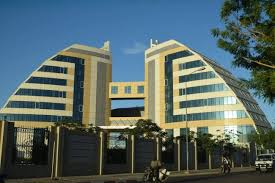
The country has an Executive President who is head of state and a Prime Minister as well as a council of minister
Branches: Executive–president (head of state), prime minister, Council of Ministers.

Chad’s Flag
The national flag of Chad is a vertical tricolour of indigo, yellow, and red. It was adopted on 6 November 1959, almost a year after the founding of the autonomous Republic of Chad. Since the 1990s, its similarity to the flag of Romania has caused international discussion.

Romania’s Flag
Like many African countries Chad is not considered a safe country to visit due to the high risk of violent crime, terrorism, kidnapping, and civil unrest.
The main religions in Chad are Islam and Christianity, with Islam being practiced by the majority of the population.
Chad’s constitution establishes the country as secular and affirms the separation of religion and state. The government generally respects religious freedom and observes several religious holidays as national holidays. It’s common for Muslims and Christians to attend each other’s festivities.


 Jo-AnneRamplings