

This week we are looking at The Tibetan fox, also known as the Tibetan sand fox, is a species of true fox endemic to the high Tibetan Plateau, Ladakh plateau, Nepal, China, Sikkim, and Bhutan, up to elevations of about 5,300 metres.
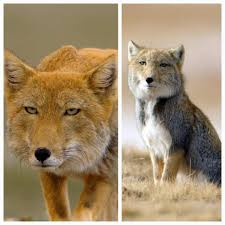
These foxes have a soft and dense rufous coloured coat from the crown, neck, back to the lower legs. Its muzzle is narrow, its cheeks, flanks, upper legs and rumps are grey, and its bushy tail has white tips.
They primarily prey on plateau pikas, followed by rodents, marmots, woolly hares, rabbits, small ground birds and lizards. It also scavenges on the carcasses of Tibetan antelopes, musk deer, blue sheep and livestock. Tibetan foxes are mostly solitary, daytime hunters as their main prey, pikas, are diurnal.

Like some foxes they are monogamous, and they won’t change their spouse unless one of them passes away.
They can live up to 10 years in ideal conditions. However, most foxes die from natural causes or are hunted by humans before they reach five years old.
There are no major threats to the species at present, although poisoning of pikas (a major prey item) in much of the Tibetan plateau poses a concern. Nonetheless, there is no evidence that the species is currently undergoing a decline that would warrant listing in a threatened category.

After a gestation period of 51 – 53 days, Tibetan Sand Foxes give birth to a litter of 3 – 6 young in a den.
 Jo-AnneRamplings