Egypt

Well, we are moving out of Europe and into North Africa this is the second largest and second most populated continent after Asia. North Africa is naturally the northmost region of the African continent it is separated from the rest of Africa by the Sahara Desert.

Egypt is one of the most populated countries in Africa and the Middle East, a great majority of the population live near the banks of the river Nile. It is famous for its ancient civilisation and some of the world’s most famous monuments such as the Pyramids and Great Sphinx.

It is a country linking northeast Africa with the Middle East, dates to the time of the pharaohs.

The capital, Cairo, is home to Ottoman landmarks like Muhammad Ali Mosque and the Egyptian Museum. It is set on the Nile River. At its heart is Tahrir Square and the vast Egyptian Museum, a trove of antiquities including royal mummies and gilded King Tutankhamun artifacts. Nearby, Giza is the site of the iconic pyramids and Great Sphinx, dating to the 26th century BC. In Gezira Island’s leafy Zamalek district, 187m Cairo Tower affords panoramic city views.

The Egyptian pound is the official currency of Egypt. The 10  and 20-pound notes are made out of polymer plastic paper as of July 6, 2022.
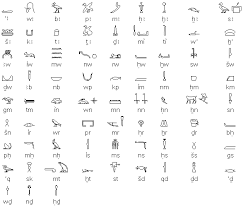
The official language of Egypt is Arabic, and most Egyptians speak one of several vernacular dialects of that language. As is the case in other Arab countries, the spoken vernacular differs greatly from the literary language.
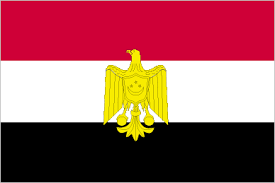
The national flag of Egypt is a tricolour consisting of the three equal horizontal red, white, and black bands of the Egyptian revolutionary flag that dates back to the 1952 Egyptian Revolution. The flag bears Egypt’s national emblem, the Egyptian eagle of Saladin, centred in the white band.

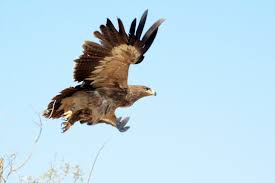
While looking for the country’s national animal I got two responses one being the Dorcas Gazell the other being the Steppe Eagle, which is the country’s national bird.
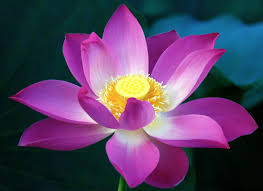
The national flower of Egypt is the Egypt Lotus Flower. This stunning flower has been an important symbol in Egyptian culture for thousands of years, and it is often associated with rebirth and regeneration.

Football is the most popular sport in Egypt, by football I mean soccer many Egyptians gather around to watch various Egyptian clubs and the Egyptian national football team play on an almost daily basis. Zamalek and Al Ahly are amongst the most popular in the country, both of which are based in Cairo.

Throughout much of ancient history Egyptian religion was polytheistic, meaning it recognized many gods and goddesses, as well as a variety of other divine beings.
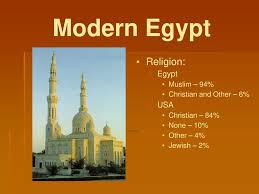
Now days most experts and media sources estimate approximately 90 percent of the population is Sunni Muslim and 10 percent is Christian. Scholars and NGOs estimate Shia Muslims comprise approximately 1 percent of the population. There are also small numbers of Dawoodi Bohra Muslims and Ahmadi Muslims.

 There is also a new post over at Random Stuff

The very sinkable Boambee

Ok this week I am going to share a bit about the steamer Boambee one unlucky vessel.

The 236-tonne wooden steamer was built in 1908 and by the time it ran aground and was dismantled forty years later it had sunk four times, including once at Newcastle’s wharf.

Records show that its first mishap happened at Tweed Heads on 20 December 1923 it was driven ashore by strong gale winds but was able to be refloated. Tweed Heads is a border town between New South Wales and Queensland.

Moving on, it is said to have sunk at Clarence Town Wharf in 1939 while loaded with gravel and wooden sleepers, again it was refloated only to sink again sometime during World War 11 at Hexham. Clarence Town is on the Williams River in New South Wales; the town of Hexham is also in NSW. Hexham is about a half hour drive from where I live.

Later on, it was hit by a ship in Newcastle Harbour and written off, however it would be bought by the Hunter River Steamship Company in 1947 to be used on the Newcastle to Sydney trade.

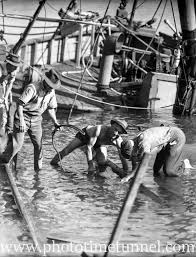
On its first trip it sprang a leak which was more than the pumps could handle so the captain decided to return to Newcastle while it slowly sank. By the time it reached Newcastle Harbour it was very low in the water and there were no tugs available to help. So, by the time she reached the wharf she began to list and sank ten minutes after reaching its berth.

It took five days, but she was able to be refloated, repaired and renamed.

Now called the Illalong it became the property of the Manning River Steamship Company. In March of 1948 while on route from Sydney to Newcastle with a cargo of brattice cloth for coalminers it went too close inshore during a thick fog and ran aground at Nine Mile Beach which is near Belmont.

This time it was written off again and quickly dismantled   

Greece

Good morning, everyone who read this, hope you are doing well this week we are off to Greece.
People have lived in Greece for more than 5,000 years and it has been considered a civilised country for 2,500 years.

Greece is a country in southeastern Europe with thousands of islands throughout the Aegean and Ionian seas. Influential in ancient times, it’s often called the cradle of Western civilization.

The capital is Athens, which retains landmarks including the 5th-century B.C. Acropolis citadel with the Parthenon temple. Greece is also known for its beaches, from the black sands of Santorini to the party resorts of Mykonos.

The country has a population of around 11 million, the official currency is the euro. The euro replaced the Greek modern drachma as Greece’s official currency in 2002, following the country’s introduction into the Eurozone in 2001.

The national flag of Greece, popularly referred to as the Blue-and-White or the Cyan-and-White, is officially recognised by Greece as one of its national symbols and has 5 equal horizontal stripes of blue alternating with white. Blue and white are the national colours of Greece, as blue symbolizes the sky and seas and white denotes the purity of the Greek independence struggle. The cross represents the Christian religion.

Due to its deep connection to the sea, it has adopted the dolphin as its national animal. Revered in ancient mythology and folklore, the dolphin symbolizes intelligence, harmony, and the maritime heritage of Greece.

The little owl is the national bird of Greece, is also known as the owl of Athena and is believed to provide knowledge and wisdom worthy of the goddess.

While looking for the national flower of Greece I found some sites saying it is the Bear’s Breech which is also as the Sea Dock, Oyster Plant, and by its biological name, Acanthus Mollis. Others said it was the lily. Specifically, the white lily is often associated with purity and has historical significance in Greek culture. Additionally, the oleander is also commonly linked to Greece, particularly in its natural landscapes.

In ancient Greek religion and mythology, there were 12 gods called Zeus, Hera, Poseidon, Demeter, Athena, Apollo, Artemis, Ares, Hephaestus, Aphrodite, Hermes, and either Hestia or Dionysus.

Now days religion in Greece is dominated by Christianity, particular the Greek Orthodox Church, which is within the larger communion of the Eastern Orthodox Church. It represented 90% of the total population in 2015 and is constitutionally recognized as the “prevailing religion” of Greece.

Many people will think of the Trojan Horse when thinking about Greece it was in case you do not know a wooden horse said to have been used by the Greeks during the Trojan War to enter the city of Troy and win the war.

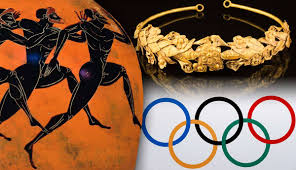
Also, many people when they think of Greece will comment that it is home to the first Olympic games, way back when the ancient Games were staged in Olympia, Greece, from 776 BC through 393 AD, it took 1503 years for the Olympics to return. 

The first modern Olympics were held in Athens, Greece, in 1896. The man responsible for its rebirth was a Frenchman named Baron Pierre de Coubertin, who presented the idea in 1894.

That will do for Greece.

Crossing the harbour

This week we are looking at crossing Newcastle harbour this was a challenge for travellers and those commuting to and from work.

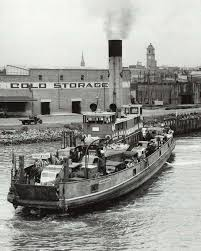
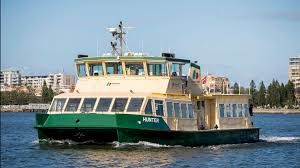
It was also a great opportunity for ferries and punts, a great variety of ferries have come and gone from Newcastle over the years with some used chiefly as industrial transport while others would be used to transport people.

Punts also played an important role and up till the time the Stockton Bridge was built they really had their work cut out for them.

Among the famous and long serving punts was the Mildred which was the first vessel launched at Newcastle’s Walsh Island Dockyard in 1914 and was named after the dockyard superintendent. The Mildred also spent some time working as a Hawkesbury River punt during World War 11, she was retired in 1945 and sold to a private party. This punt could carry 15 vehicles and 70 passengers.

Another punt was the Kookaburra also built a Walsh Island and was the last car ferry built in NSW.

Now days the Stockton Ferry still runs it is a direct ferry departing from Queens Wharf and arriving at Stockton Wharf. Services depart every 15 minutes and operate every day. The journey takes approximately 5 min, I think it costs around $8.

Romania

Good morning, all, it is time for another country this week it is Romania.

Romania can be found on the Black Sea coast of southeastern European it is divided into three major regions, Wallachia in the south, Moldavia in the northeast and Transylvania in the centre.

The country is known for the forested region of Transylvania, ringed by the Carpathian Mountains. Its preserved medieval towns include Sighişoara, and there are many fortified churches and castles, notably clifftop Bran Castle, long associated with the Dracula legend. Bucharest, the country’s capital, is the site of the gigantic, Communist-era Palatul Parlamentului government building. 

The country’s official language is Romanian, there is also some minority languages, including Hungarian and Romani.

It has a population of around 20 million but there’s also a large Romanian diaspora, meaning that a lot of Romanian people live abroad.

The Romanian leu is the currency of Romania. It is subdivided into 100 bani, a word that also means “money” in the Romanian language. The central bank is the National Bank of Romania.

The national flag of Romania is a tricolour featuring three equal vertical bands coloured blue, yellow and red. The flag used in the mid-19th century was a horizontal tricolor design of blue, yellow and red. This was later changed in 1862 to reverse the positioning of the red and blue bands. It was in 1866 when the vertical tricolor flag was introduced. This flag was used through 1948 until the communist era. The flag used in 1948 featured the same vertical tricolour bands as the previous flag with the addition of the country’s emblem. A total of four flags were used during the communist era, each with slight modifications to the emblem. Following the communist era, the flag first used in 1948 was adopted again in 1989 and has flown in the country ever since.

The Eurasian lynx is the national animal of Romania.

The Peony is the national flower.

The Great White Pelican is the national bird.

The coat of arms is a golden aquila that is holding a cross in its beak, at also shows a mace and a sword in its claws. It contains the three colours of the flag.

Undoubtedly one of the most famous people from Romania is Vlad Dracula (aka Vlad the Impaler or Vlad III), a 15th-century ruler of Wallachia. Vlad Dracula was a courageous and tenacious leader. During his rule he fought off Ottoman Turks who invaded parts of Wallachia (Southern Romania). He is often considered one of the most important rulers in Wallachian history and a national hero of Romania. 

Vlad the Impaler tortured thousands while he ate and drunk among the corpses. impaled 20,000 men, women and children and often ordered people to be skinned, boiled, decapitated, blinded, strangled, hanged, burned, roasted, hacked, nailed, buried alive or stabbed, I think he was evil.

Week 41 of 2024

I slept well again, straight through the night till the alarm went off. A nice morning with a temp of 14 degrees, my BGL was 4.8.

Another warm day with a temp of 26 degrees.

Tim bought another whipper snipper.

Sue brought over some Kiwi fruit she bought and didn’t like.

Daylight savings will start tonight.

Steps:4,110

I slept well again, straight through the night till the alarm went off. I was a little confused as the clock in the bathroom said 6am but my phone said 5am and I thought I had set it to the right time before going to bed. I was wrong I put it two hours forward not one silly me.

It is a nice 11 degrees this morning I am in shorts and my BGL is 4.7.

Tim and I went to Lake Fair so I could go to Big W and the Reject Shop as well as Woolies. By the time I got home I was exhausted. I bought a pair of bike shorts, and a pyjama set both size 16 and both fit. I have asked Tasha if she could go and get me another set in a different colour.

I turned the air con on around 1pm as it was that hot and I was able to turn it off around 6pm.

Steps: 5,422 

I had another night where I slept through, I like those nights today is going to much cooler then yesterday with a temp of 18 degrees, my BGL was 4.9 this morning.

Summer walked down and posted my letters for me.

Micheal picked up Summer just before 3pm

I sorted out my Christmas jewellery and gave Sandy a bag of things I was only going to bin to see if her girls want any of them.

Stedps:4,496

I had another good night woke only once to go to the loo and straight back to sleep.

It is a coldish, wet morning with the temp being 13 degrees my BGL is 4.3

I am not doing good; my upper body will not stop moving and using the computer is difficult.

Tim home by 12.15pm, he had me order pizza and he picked it up on his way home. He also ate most of it.

It has rained on and off all day.

Steps: 5,102

I had another good night sleeping straight through, this morning Tim got up when I got up, he has a busy day ahead of him starting with work followed by two or three afternoon medical appointments.

Tim didn’t get home till 5.30pm. the diabetic specialist has changed his medication. He also has to have a blood test and a bunch of scans done oh is arm, thumb and abdomen.

I am having a restless night along with having a pain in the gut, so I got up to use the powerfit.

Steps:7,757

I had a rough start to the night took me a while to settle but once I did, I was ok and slept till the alarm went off. It is a pleasant 14 degrees, and my BL was 5.0

It turned out a pretty warm day, I changed into shorts after returning from the shops.

Tim and I went to the shops, he went and had his blood test and booked into to have his scans done. He has to go to Belmont as Warners Bay are fully booked for when he wanted.

Tim is working tonight and tomorrow night.

Steps: 6,472

I had a pretty good night, slept pretty much all night, I did wake when Tim got home and spoke to him for a few minutes before going back to sleep.

It is a cold and wet morning with a temp of 15 degrees.

Tim left for work around 11am he will not be home till after midnight. When it stopped raining, I walked up and checked the letter box.

Steps: 7, 598

Transport in Newcastle from way back when

                                                           Early Buses

This week will be looking at early public transport in Newcastle.

In 1940 transport in Newcastle was at a crossroads, many people relied on public transport in the form or trams, trains and buses due to the depression in the 1930’s private cars were rare.

Horse drawn vehicles were still pretty common and with the fuel shortages and rubber for tyres being in short supply during the second world war. Many businesses went back to using horse drawn vehicles, however, it became harder to get feed for the horses as the war dragged on.

A horse drawn ambulance

Prior to the construction of various road projects connecting the outer western suburbs of Newie crossing the Hunter River including the Stockton Bridge numerous ferry services, both privately run and publicly operated.

Early Stockton Ferry Warf 

Shuttling people and cars across the Hunter River to link the area of Stockton with the rest of Newcastle during the 19th and 20th centuries, the ferry runs from Market Street Wharf to Stockton.

                    People waiting for the ferry


Newcastle first had trams from 1887 until 1950, when the final line, the Waratah line, was replaced by buses. At its peak, the system ran to Speers Point and West Wallsend.

                        An early tram

The first railway in Australia was built by the Australian Agricultural Company in 1831. The railway was an inclined plane railway from the Company’s A pit in Church Street Newcastle to Newcastle Harbour.

                        Newcastle Station 

The first government operated bus route commenced on 22 September 1935 to Mayfield. On 10 June 1950, the final tram routes were withdrawn. On 2 February 1983, the Stockton ferry service was taken over from a private operator.

                        The first buses

                            Early Buses

Cars have been super important in Australia’s history. They first came to Australia in the early 1900s and back then not many people could afford them. In the 1950s, Australia started making its own cars, and that made a lot of jobs and made cars easier to get.

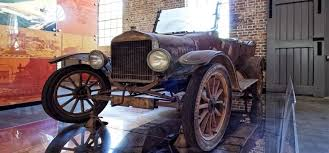
                A Model T on display at the Newcastle Museum 

I have not been able to find when the first cars arrived in Newcastle.

Estonia

We are still in Central Europe or maybe we are Northern Europe as my refence book says Central, but the internet says Northern Europe anyway the country is Estonia

Estonia, a country in Northern Europe, borders the Baltic Sea and Gulf of Finland. Including more than 1,500 islands, its diverse terrain spans rocky beaches, old-growth forest and many lakes. It also has a high ratio of meteorite craters to land area.

Formerly part of the Soviet Union, it’s dotted with castles, churches and hilltop fortresses. The capital, Tallinn, is known for its preserved Old Town, museums and the 314m-high Tallinn TV Tower, which has an observation deck.

The official language is Estonia; however, English is spoken widely enough that, in practical terms, learning Estonian isn’t necessary it has a population s 1.4 million.

The national flag of Estonia is a tricolour featuring three equal horizontal bands of blue at the top, black in the centre, and white at the bottom. The flag is called sinimustvalge in Estonian.

The colours of the flag are said to symbolize: Blue: the colour of faith, loyalty and devotion, the blue sky, sea and lakes of Estonia. Black: tragic past of Estonian nation, the traditionally black jacket of the Estonian peasant during past times. White: the striving towards enlightenment and virtue.

The coat of arms of the Republic of Estonia is a golden shield which includes a picture of three left-facing blue lions with red tongues in the middle, with golden oak branches placed on both sides of the shield.

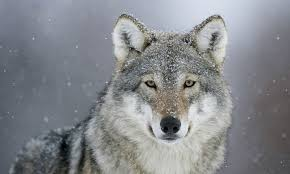
The national animal is the wolf due to it being a survival-expert, that respects it’s their family and territories, thus making it the best national animal.

The people of Estonia chose the cornflower as a national symbol in 1968, but the flower was a folk emblem for many years prior to that. In Estonia, cornflowers grow mostly in rye fields, so Estonians have long associated the flower with their staple grain.

On 4 May 1992, limestone was declared to be Estonia’s national stone. Estonian limestone – grey and dull at first sight, rather it is multi-coloured and multi-faceted, ranging from pure white to crimson, from seaweed green to chocolate brown.

It was the first country to adopt an online political voting system! 99% of Estonian state services are available online.

The official currency in Estonia is the euro- abbreviated to the currency code EUR. 1 Euro is subdivided into 100 cents. The Estonian kroon was circulated in Estonia between 1928-1940 and 1992-2011. Estonia joined the European Union in 2004 and the Eurozone in 2011.

Between 1 January and 14 January 2011, the kroon circulated together with the euro, after which the euro became the sole legal tender in Estonia. The kroon was subdivided into 100 cents.

Estonia is a parliamentary republic. Its prime minister, who is the head of government, is nominated by the president and approved by parliament. He or she is in charge of the executive power vested in government. The president, who is the head of state, is elected by Parliament or electoral college for 5 years.

Among the Baltic countries, Estonia has the happiest people with half of the Estonian population reported to always being happy or at least most of the time, about a third feel happy sometimes, about a ten percent are rarely happy, and only around 3 percent saying they are never happy,

Week 40 of 2024

After I went back to bed, I settled ok and slept till the alarm went off.

Tim is going with Jess to Sydney today she has people to pick up from the airport and Jess hates Sydney and Sydney’s traffic.

It is 14 degrees and my BGL was 5.0

Asked both Tasha and Sue to go to Woolies for me, Sue went not sure about Tasha as yet. Yes, Tasha went as well.

Tim and Jess arrived home around 2.15pm.

Steps:5,892

I slept in because I left my phone in the lounge-room, it was 7am before I woke up. I woke up with a heavy head and not feeling like I am all with it.

The temp is 15 degrees and my BGL is 5.0, it is also cold and wet this morning.

It warmed up by 10.30am.

The girls walked down posted my letters for me and Sydney vacuumed for me.

I have very little motivation today 

I am extremely tired but can’t sleep

Steps: 5,783

I slept well, it did take me a while to settle down but once I did, I was fine and slept till the alarm went.

It is 9 degrees and my BGL was 4.2

Kathy dropped the girls off at 8.35, she arrived only a few minutes after Tim left for work.

Had a phone call from podiatrist they have changed my appointment from Thursday to Friday.

Dawson arrived around 1pm for a visit.

Tim rang at 2pm to let me know that he will be late, he arrived home at the same time Micheal arrived to get the girls.

Tim now working all week, so will need to find someone to take me to the podiatrist on Friday.

Steps: 4,190

I slept well, fell asleep fast and didn’t wake till the alarm went off. It is 13 degrees and my BGL was 4.8

I was watching TV when Sue arrived, I was surprised to see her, her phone is restricted till she pays something off her bill. She didn’t want me to worry as she couldn’t reply to me messages. I asked her while she was here if she could drive me to the podiatrist, she said she would.

Steps: 4,535

I slept well again and woke up feeling good a feeling I like. It is 12 degrees, my BGL was 4.9 and the ground outside is wet.

No rain and not hot nor cold just a nice day.

Sandy and Temika came over so Temika could use my computer to do something with her banking for work that she wasn’t able to do on her phone.

Tim went to the dentist to get a tooth filled cost him $600

Steps: 5,659   

I slept well again and woke up feeling good although I am cold very cold that I had to turn the heater on. It is only 7 degrees and my BGL was 3.4.

Tim left at around 8am he said he should be home by 9pm tonight.

It turned out a warm day.

Sue drove to the podiatrist and then to the Warners Bay Plaza to get a few things. We also checked the P O Box.

Tim arrived home at 1pm and left again at 3pm. He will be back around 9pm.

Steps: 4,511

I slept well again but woke up feeling heavy headed and not fully with it. It is 18 degrees my BGL was 4.8 it is supposed to be a warm day.

We ended p with a nice warm day with temp of 28 degrees. Tim did a lot of yard work took him over 3hrs.

Yesterday while at work he hurt his right arm around the elbow where he had surgery after his accident, and he still has a lot of pain in it and no strength.

I didn’t exercise today so my steps are low. Steps: 1,220     

Hunter Street, Newcastle NSW,Australia

When I was young it was considered to be a big deal to go into town to go the movies or to do some shopping and by in town I mean into Newcastle mainly Hunter Street.

So, this week I will write a bit about Hunter Street’s history and present.

Hunter Street is a major road in the Newcastle central business district, in New South Wales. The street, formerly three separate thoroughfares, extends from Pacific Street in the city’s east, to Selma Street in Newcastle West and since 2008 has been the focus of community-led creative enterprises and projects.

Hunter Street runs in the vicinity of an early nineteenth-century track known as Wellington Street that extended from Watt Street (formerly George Street) in the east to Perkins Street in the west. The strip was renamed Hunter Street by Henry Dangar in 1823 and by the mid nineteenth-century commercial and residential properties had been built on most addresses east of Perkins Street.

By 1900, Hunter Street had stretched a long way and had 26 hotels operating along the street. In 1887the first steam trams came into operation by 1898 the first restrictions on vehicular traffic drawn by animals were introduced

Drainage problems and raw sewerage necessitated the sealing of Hunter Street, first carried out with wooden blocks, concrete and asphalt.

After the opening of the Newcastle Steelworks in 1915, Newcastle became increasingly suburban, and Hunter Street developed as a destination for commerce and retail. The size and extravagance of Newcastle’s early twentieth-century department stores demonstrates the popularity of city shopping.

Established as the city’s main street for commercial and retail activity, Hunter Street entered a period of severe decline after World War II. However, it recovered over time.

Hunter Street developed as the commercial and civic hub of the region. Along its spine were the pubs, banks, insurance houses, shops, department stores, and cooperative societies that formed the civic and cultural life of Newcastle.

In 1989 an earthquake hit Newcastle and due to the damage making Hunter Street inaccessible for two weeks.

The in 1990 there was a recession which coupled with record youth unemployment, brought the emptying of Hunter Street to a terrible low in 2008, with the vacancy rate at 20% and chronically vacant properties beginning to deteriorate.

In recent years there have been efforts to clean up and bring life back into Hunter Street, as I haven’t been there myself I can’t say what it is like now.