Brown Bears

The brown bear is a large bear native to Eurasia and North America. Of the land carnivorans, it is rivalled in size only by its closest relative, the polar bear, which is much less variable in size and slightly bigger on average.

Grizzly bears and brown bears are the same species, although currently grizzly bears are considered to be a separate subspecies.

Brown bears are omnivorous, eating a mixed diet of plants, berries, fish, and small mammals, with almost 80 percent of their diet being tree bark, leaves, roots, mushrooms, nuts, fruit and berries. They are not averse to meat and will eat small rodents, birds, frogs or snakes, fish and carrion.

Unlike black bears, brown bears have long, strong claws that they use to dig for food, pick fruits, and catch prey.

The average life span for a wild brown bear is about 20 years, although many bears typically live longer than this. The oldest wild brown bears known lived for about 35 years.

Bear cubs are born after a gestation period of around 180-270 days. The newborn bears are naked, blind and toothless and are completely dependent on the mother. A litter usually consists of one to three cubs that weigh only 300 to 400 grammes at birth and are around 30 centimetres long.

The cubs typically stay with their mother for 2 to 3 years, learning essential survival skills. This period allows them to grow strong, learn to find food, and navigate their environment under their mother’s guidance. In some regions, like Katmai, cubs might stay with their mothers for around 2.5 years. 

Cubs are born in dens and rely on their mother’s milk for nourishment and protection. 

During their time with their mother, cubs learn crucial skills like foraging for food, recognizing and avoiding predators, and navigating different terrains. 

While some cubs might become more independent in their second year, they often continue to den with their mother for at least one more winter. 

Mothers are very protective of their cubs and may chase away or threaten other bears, including males, to keep their young safe. 

By the time they are around 2 to 3 years old, cubs are generally ready to venture out on their own and start their independent lives. 

They can climb trees, although their ability to do so diminishes as they grow older and larger. While young brown bears are excellent climbers, their size and weight can make it more challenging as they mature. However, they are still capable of climbing trees, even as adults. 

Why do they climb trees, well for various reasons, including escaping predators, accessing food (like fruit), or even just for fun or exploration.

They have an exceptionally acute sense of smell, exceeding that of dogs. Contrary to popular belief, bears are not nearsighted. Their eyesight and hearing are comparable to humans. They can run in short bursts up to 40 mph (64 kph) and are excellent swimmers

They use rocks as a tool to scratch an itchy spot and they know when they are being hunted.

Brown bear attacks on humans are relatively rare, with an average of about 40 attacks per year globally. While most encounters with bears do not result in attacks, and the vast majority of bears are not interested in attacking humans, defensive reactions can occur if a bear feels threatened or surprised, especially if it has cubs.

Vatican City

I thought after writing about Russia the largest country in the world, I would write about the smallest country.

The smallest country in the world by both area and population is Vatican City. It is an independent city-state located within Rome, Italy, and serves as the spiritual and administrative centre of the Roman Catholic Church. Its area is just 0.44 square kilometres (0.17 square miles). 
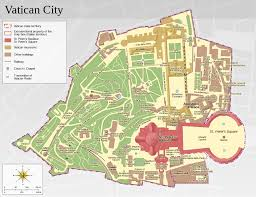
Vatican City, a city-state surrounded by Rome, Italy, is the headquarters of the Roman Catholic Church. It’s home to the Pope and a trove of iconic art and architecture. Its Vatican Museums house ancient Roman sculptures such as the famed “Laocoön and His Sons” as well as Renaissance frescoes in the Raphael Rooms and the Sistine Chapel, famous for Michelangelo’s ceiling.

The entire population of Vatican City is only around 800 people. Every citizen who resides in the city is Roman Catholic and is considered to be influential or significant in some way within Catholicism.

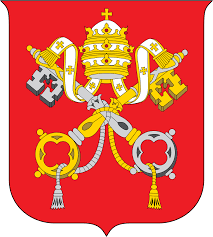
The flag of Vatican City is a vertical bicolour of yellow and white, with the emblem of the Holy See (a papal tiara and crossed keys of Saint Peter) centred on the white half. The yellow symbolizes spiritual power, while the white represents temporal power. The keys represent the Pope’s authority, and the tiara symbolizes the Pope’s threefold power. 

It was adopted in 1929; the year Pope Pius XI signed the Lateran Treaty with Italy creating the new independent state of Vatican City.

The Vatican City passport is a passport issued by the Holy See (the governing body of the Vatican) or by the Vatican City State. It’s ranked among the most powerful passports globally, granting holders visa-free or visa-on-arrival access to a large number of countries. The Vatican issues both diplomatic and service passports, while the Vatican City State issues ordinary passports for its citizens.

The euro is the official currency of the Vatican City, although Vatican City is not a member of the Eurozone or the European Union. The euro has been the official currency of Vatican City since 2002.

The coat of arms of Vatican City is the coat of arms used by Vatican City, which was originally adopted by the Fundamental Law of Vatican City State on 7 June 1929. This coat of arms is defined by law as having the silver key in bend and the gold key in bend sinister.

Wek 23 of 2025

I had another good night’s sleep slept for 6hrs 52-mins and didn’t wake at all. It is cold this morning at 10C.

Tim and I went shopping, and by the time we got home I was exhausted with my legs aching.

Tim bought himself a tablet so expect him to need my help to set it up.

Around 5pm I started to feel unwell, with a headache and a tight feeling in my chest and I am very tired.  The tight chest feeling has passed but I still have a headache and just feel kind yuck.

BGL:4.9

Steps: 4,852=2.44Km 

I had another good night’s sleep slept for 8hrs 51-mins and didn’t wake at all. It is cold this morning at 9C, and I am aching all over my headache is worst then when I went to bed last night.

After Sam left, I decided to make myself a croissant it is a bake at home one after having that and emptying the kitchen bin I took 2 more headache tablets and started to feel more energic, the headache eased of a lot.

After a while the headache went away but it has come back, as it has gotten colder.

Tim received an email telling us that our rent is going up $65 per week to $515 per week, he is going to ring and find out what is happening about our subsidy claim.

BGL:5.1

Steps: 6,265=2.99kms

I had another good night’s sleep slept for 8hrs 54-mins and was awake for 41min. It is cold this morning at 9C.

Jane told me this morning we only get one kerb side collection per year, and we have already had it. This is because when unit 16 placed a heap of rubbish near the letter boxes and someone reported it, and the council came and removed it so now we have to wait another 6 months. I am not happy.

Also, Tim rang about our rent subsidy application and was told it wasn’t in our file, they lost it, so we had to resubmit it via email. That should have been easy, but no the email kept bouncing back, I told Tim I would try from my Gmail account, and I think it went, well it didn’t bounce back. He will ring in a couple of days and see what they have to say about it.

 BGL: 5.5

Steps: 8,270=4.45Km

I had another good night’s sleep slept for 6hrs 11mins and was awake for 26min. It is cold this morning at 9C and the weather ap says it’s going to rain around 9am.

Asked Jess if she could get me a bacon & egg muffin and a hash brown for breakie on her way home from work and she did.

Started raining at around 10am and hasn’t stopped.

BGL: 5.5

Steps:7,946=3.92km

I had another good night’s sleep my watch said I slept for 6hrs 23mins and didn’t wake at all, but I think it was more like 8hrs as I went to bed at 8pm and woke at 5am. It is cold again this morning at 10C. Yesterday was the coldest day we have had all year according to the news report.

It hasn’t been as cold as yesterday and no rain.

Found a letter in the letter box from Housing says they have arranged for a skip bin for the complex to get rid of our bulk rubbish, this will happen next Thursday the 12th. Tim is going to take the morning off work so he can take our stuff out and get rid of it.

BGL 5.9  

Steps: 7,776=3.99Km

JESSICA’S BIRTHDAY SHE IS 36 TODAY

I had another good night’s sleep my watch said I slept for 8hrs 52mins and didn’t wake at all, damn it’s cold this morning only 5C.

Went with Sue her doctor’s appointment, then we went to the square so I could get muffins from Muffin Break as they are my favourite muffins. Sue bought me a ham & cheese pretzel which I had half of for lunch.

Jessica cane over around 1pm and I gave her the birthday present I bought her; she liked the tops and the bag.

After Tim got home, she came over and he gave her the present he bought her, a locked box for a spare house key or whatever she wants to use it for.

BGL:5.8

Steps:6,223=3.18km

I had another good night’s sleep my watch said I slept for 8hrs 45mins and didn’t wake at all, not as cold this morning 13C.

What a morning, Tim helped Tasha return the not working TV to Big W at Lake Fair Shopping Centre, they exchanged it without issue. But Tim was in a mood about having his plans not go as he wanted. After helping Tasha, he came and picked me up and we went back over to Lake Fair so I could do a little shopping.

It has turned out to a warmish day although this afternoon it has become very windy, and the wind is cold, so I had to shut the doors as I was freezing.

BGL: 6.1

Steps: 6,770=3.54km

Week 22 of 2025

A cold start to the day I was up at 4.45am, I had a shower and dressed, I have been so cold all morning had the heater on a beanie on my head which helped with the headache.

My watch says I got only 5hrs & 9mins sleep.

My left wrist has a sore spot with broken skin, I applied some antiseptic cream and covered it with a band aid, so I am wearing my watch on my right wrist.

I tossed a load of washing in the machine, I am planning to hang it up to dry.

Jessica asked if we could go to Costco and get her a cheese pizza and take it into her at work, and we did. Tim also filled the car with petrol while out there.

We also went to Coles and then checked the P O Box, there was 11 letters, 5 for Tasha, 2 for Tasha 1 for Tim and the rest for me.

BGL: 7.2

Steps: 10,938=5.25Klm’s

Another cold morning, I slept for 6hrs & 13mins but woke up tired and not quite with it.

Sue and I went into the Tafe to have aromatherapy massage done by Tasha and wow what a great massage it was better then the one we had a couple of months back which cost us $90 each. This massage didn’t cost us anything, and we both didn’t realise how good Tasha was at massage. I felt so relaxed that I fell asleep.

This arvo I had an issue with my BGL dropping it went from 4.7 to 3.3 in 20 mins and I had to ring Tasha as I wasn’t with it. She came gave me a teaspoon of honey and made me eat something. Tim wasn’t here he was late home from work due to being caught in traffic due to a road closure.

Steps: 4,103=2.15Klm’s

BGL: 7.0

I woke to the sound of rain again; I hope it doesn’t hang around for long not as cold this morning. I had a good 9hrs & 34mins sleep and didn’t wake at all during the night.

I went with Sue to an appointment, and we also went to the post office to get stamps.

Tim keeps going on about how much weight he has lost, and I ended up telling him that going on about it is upsetting me since I have gained some weight. He did acknowledge that part of the cause is that he goes days with only eating very little. I can not do that as if I go too long without food, I start to feel sick in the gut and get a headache.

It was very overcast when I went up with Sam to wait for transport, I started to take the scooter but felt a few heavy drops of rain, so switched to the walker and of course it didn’t rain and hasn’t rained all day.

BGL: 7.00

Steps: 10,027=5.22Km’s

I slept reasonably well had 5hrs & 20-mins sleep with 20-mis awake time.

Tim only had his school runs today which saw him home for 4hbrs, so went out to the Eastern Tiger, all you can eat place.

Just as we arrived home Sandra called in to say high, Sue texted Sandy and asked if she would drop off some ginger beer, I had for her, and she reluctantly agreed. Not long after that Sue turned up to get it as she thought Sandy wasn’t going to do it.

While Sue was here, I helped her set up her new email account.

BGL:7.0

Steps:8,969=4.8Klm’s

I had another good night’s sleep slept for 6hrs 15-mins, not too cold at the moment. The temp is 13C or 55F

What a day, I was feel sad and like crying due to the frustration of my body moving so much. I said so in a text to Sue who decided to come over to see me and she brought Archi with her, so I was able to have a cuddle. She also brought me the latest limited custard pie from Macca’s this on is a mixture of chocolate and normal custard and was quite nice.

Tasha also bought me a 4pack of mini custard scrolls and when Tim came home this morning, he brought me a sausage roll.

Anyway, he made a smart-ass comment that no one brings him food and that he has to go and buy his own. Sue told me that was right as he is more able bodied and can drive so can get his own stuff.

BGL: 5.8

Steps: 10,207=5.7Klm’s

I had another good night’s sleep slept for 8hrs 35-mins and was only awake for 14-mins. It is cold this morning at 10C and I have the heater going.

I put on the new panty hose they fit but not good around the crotch area just not sitting flush against my body. Had them on till around 1.30pm.

I was ironing when I heard Tasha she was printing stuff and said I was low on ink again so I ordered more.

Tim late home tonight, it was close to 8pm when he arrived home had another run after his school run.

I changed the sheets and damn that left me exhausted.

BGL: 5.8

Steps:9,058

I had another good night’s sleep slept for 8hrs 6-mins and didn’t wake at all. It is cold this morning at 10C.

We left home at 9am to go to Sydney to see Tim’s sister Jenny, it took us 3hrs & 15mins to get there and 2hrs & 20mind to get home.

The visit went well, it was the first time Tim had seen her in 13yrs.

I was exhausted by the time I got home, I thought I would eat something and go to bed but after I ate, I was ok sitting in my recliner playing games on my tablet and watching the evening news.

Steps: 3,538=1.81 Km’s

BGL: 5.8

Zebra

                                                                    PLAINS ZEBRA

Hi everyone, yesterday I forgot to post this so I’m doing it now and if I manage to write Wednesday’s post I will post it this afternoon, if not then tomorrow.

                    AREA’S WHERE ZEBRA’S ARE FOUND

This week we are looking at the zebra, a mammal they are found in various countries across the African continent. Specifically, they inhabit regions within Kenya, Ethiopia, Somalia, Namibia, Angola, and South Africa. Different zebra species, like Grevy’s zebras and Mountain zebras, have more specific ranges within these areas, while Plains zebras are the most widespread. 

They look similar to horses. They stand between 47 and 55 inches (120 and 140 centimetres) tall at the shoulder. Each species of zebra has its own pattern of stripes. The plains zebra has broad stripes that are widely spaced. The stripes of Grevy’s zebra are narrow and closely spaced, and the belly is white. The mountain zebra has a grid like pattern of stripes on the rump.

                        MOUNTAIN ZEBRA

Zebra stripes are like fingerprints. No two zebras are alike. This helps to identify individuals.

They eat mostly tall, rough grasses. Some types also eat shrubs, herbs, and bulbs. Unlike many ungulates in Africa, zebras do not require short grass to graze. Instead, they eat a wide variety of different grasses, sometimes even eating leaves and young trees. As a result, they can range more widely than many other species, often venturing into woodlands. They are considered to be “pioneer grazers” preparing plains for more specialized grazers who rely on short, nutritional grasses.

                        GREVY ZEBRA

Zebras communicate with each other using calls and facial expressions. They often greet each other with nose-to-nose contact. Plains zebras have at least 6 different vocal calls. A two-syllable call is used to alert herd members to predators while snorts indicate happiness. They also use facial expressions to communicate. When greeting each other, they will stick their ears up and push their faces forward. When feeling threatened, they will press their ears against their heads.

Female zebras may have one foal each year. Females and their young usually live in small family groups headed by one male. Thes groups are called “harems.”. Harems generally remain together for months or even years, making it an incredibly stable family unit.

But female Grevy’s zebras may form family groups without head males. Family groups sometimes join together in larger herds. Zebras also may form mixed herds with antelopes.

A male zebra is called a stallion. Female zebras are called mares, and their young are called foals. 

Every year, hundreds of thousands of zebras gather up their young and begin the long journey from Tanzania’s Serengeti plains, north to Kenya. This annual trek to find food and water covers a distance of around 2,900 kilometres (1,800 miles) and exposes them to a myriad of dangers. River crossings leave herds vulnerable to crocodiles, while the size of the migration itself brings lions, hyenas, and wild dogs.

Perth

This week we are looking at the last of Australia’s capital cities and that city is Perth, capital of Western Australia. It sits where the Swan River meets the southwest coast. Sandy beaches line its suburbs, and the huge, riverside Kings Park and Botanic Garden on Mount Eliza offer sweeping views of the city. The Perth Cultural Centre houses the state ballet and opera companies, and occupies its own central precinct, including a theatre, library and the Art Gallery of Western Australia. 

It was named after the Scottish city of Perth. The name was chosen by Governor Charles Fremantle, who was instructed by the British Secretary for the Colonies, Sir George Murray, who was a native of Perthshire, Scotland. 

It was founded by Captain James Stirling as the capital of the Swan River Colony in 1829. It was the first free-settler colony in Australia established by private capital. From 1850, convicts began to arrive at the colony in large numbers to build roads and other public infrastructure.

The Traditional Owners of Perth are the Whadjuk Nyoongar people. They are part of the larger Noongar nation and have been the custodians of the land and waters for at least 45,000 years. The town recognizes the Whadjuk people as the Traditional Owners.

The river is a sacred place for Nyoongar peoples and they preserved many stories of the Waugal, a water-serpent understood to be responsible for the creation and maintenance of the river and most of the water features around Perth. The Nyoongar peoples moved with the seasons, travelling inland in winter, then returning in late spring to capture game such as wallabies, kangaroos and possums. A main camp site was at what is now known as Kings Park (Mooro Kaarta). Aboriginal peoples also frequented the mud flats (Matagarup) which later became Heirisson Island as it was a productive fishing spot.

The Nyoongar peoples had contact with various seafaring visitors including the Dutch and the French before the arrival of Captain James Stirling who colonised the region for the British in 1829. Relations between the settlers and the Aboriginal peoples were not always harmonious as the latter were dispossessed of their land and subjected to sometimes harsh and unsympathetic colonial rule. Fast forward to December 2009 when the State Government signed a framework agreement with the representative body, the South West Aboriginal and Land and Sea Council, aimed at resolving through negotiation six Nyoongar Native Title claims over Perth and the south-west of Western Australia. The city is working closely with its Aboriginal community to deliver 71 actions in the City’s Reflect Reconciliation Action Plan which aim to build respect, relationships and opportunity with the Aboriginal and Torres Strait Islander communities. 

Since water transport was vital to communications in the new colony before roads were built, the meanderings of the Swan River determined the site of the first towns. Governor Stirling decided that the site for the colony’s capital would be sited on the river 18km from the sea port of Fremantle. On 12 August 1829 Mrs Helen Dance, wife of the commander of HMS Sulphur, drove an axe into a tree (near the current Perth Town Hall) to mark the colony’s foundation.

The city site was mid-way between the sea and the farming areas of the Upper Swan. However, the early years were difficult financially for the colony and in 1850 it was decided that convict labour would be beneficial in that regard. Between 1850 and 1868 almost 10,000 convicts were transported from Britain. Due to the influx of convicts, many public works were completed during the period from 1856-79, notably the Perth Town Hall. It was not until 1856 that Perth officially gained ‘city’ status when it was declared a Bishop’s See by Queen Victoria.

The first meeting of the Perth City Council was held on 10 December 1858. Rich gold discoveries in the Kalgoorlie region in the early 1890s brought a new era of prosperity for the city and many impressive buildings, some of which still grace the streets to this day. The city also experienced significant population growth. Representative government evolved in Western Australia in the second half of the 19th Century and in 1901 Western Australia federated with the other Australian States to form the Commonwealth of Australia. Perth experienced another mining boom in the 1960s and the wealth it generated could be evidenced by the city’s changing CBD skyline.

Perth became widely known as the City of Lights when U.S. astronaut John Glenn told the world he had seen the city’s lights during his historic orbit around the Earth in February 1962. There was also international attention on Perth later that year when the British Empire and Commonwealth Games were held in the city.

The City of Perth is the fastest growing local government area with a population approaching 20,000. It has ranked consistently among the Top 10 most liveable cities in the world, as surveyed by the highly regarded The Economist Intelligence Unit. Once again, wealth generated by the State’s natural resources is driving development of the city, with the difference being that many companies and businesses are choosing to make Perth their home.

Rhinoceros

This week’s hooved animal is the rhinoceros or rhino the word rhinoceros is a combination of two Greek words – rhino (nose) and ceros (horn).

There are five living species of rhinoceros – white, black, greater one-horned, Javan and Sumatran. In addition, a number of other animals have rhinoceros as part of their names, including the rhinoceros auklet, rhinoceros beetle, rhinoceros chameleon, rhinoceros cockroach, rhinoceros fish, rhinoceros hornbill, rhinoceros iguana, rhinoceros rat snake, rhino shrimp, and rhinoceros viper. All of them have horn-like appendages on their noses.

They can be found in several countries across both Africa and Asia. In Africa, you can find them in Angola, Botswana, Kenya, Malawi, Mozambique, Namibia, South Africa, Tanzania, Uganda, Zambia, and Zimbabwe. In Asia, they can be found in India, Indonesia, Nepal, and Vietnam. 

The two main species of rhino in Africa are the black rhino and the white rhino. Black rhinos are found in 12 African countries, with the largest populations in Namibia, South Africa, Kenya, and Zimbabwe. White rhinos are found in 11 African countries. 

Asia is home to the greater one-horned rhino, Javan rhino, and Sumatran rhino. You can find them in India, Indonesia, Nepal, and Vietnam. 

A rhino’s horn is not attached to its skull. It is actually a compacted mass of hairs that continues to grow throughout the animal’s lifetime, just like our own hair and nails. The longest horn on record belonged to a white rhino and measured just under 152cm or 60 inches, which is five feet, and I am only four foot eleven inches tall.

The rhinoceros’s closest living relative is the tapir. Horses and zebras are also related, but less closely than tapirs. All three belong to the group of odd-toed ungulates, known as Perissodactyla. Really horses and zebras that sounds weird.

The white rhino’s name comes from the Afrikaans word “wyd,” which means “wide” and describes its mouth. Early English settlers in South Africa misinterpreted the “wyd” for “white”. Black rhinos may have received their name from the dark wet mud in their wallows that made them appear black in colour. Both species are gray in colour, the famous Blue Rhino, corporate logo for the well-known propane tank company, is entirely a figment of its founder’s imagination.

After mating, adult male and female rhinos typically go their separate ways. After the calf is born, it will spend a couple of years or more in the company of its mother, and perhaps associate with other females and their calves, but the father rhino is not part of the standard social group.

They are not generally considered friendly to humans, although they are not inherently aggressive. They prefer to be just left alone and will only charge if they feel threatened or are protecting their young. Female rhinos, especially those with calves, can be particularly dangerous in the wild. While they may not intentionally seek to harm humans, their size and power make them a serious threat if they do charge. 

The live anywhere between 35 and 50yrs depending on the breed.

All five species of rhinos are herbivores, eating mainly vegetation. They spend most of their time browsing and grazing through their natural habitat in search of plants and grasses to eat.

Week 20 of 2025

I had another good night slept all night waking only once to pee at 1am.

Kathy rang me this morning to wish me a happy Mother’s Day.

It is raining this morning; it has rained all day and has been a cold day.

I have felt sad a lot of the day, Jess brought over more Mother’s Day gifts for me, shop bought slippers and a crochet bag for my feet and lower legs.

Steps:6070= 3.4km’s

BGL6.6

I slept for 9hrs & 10mins according to my watch and was awake for only 8mins during the night.

BGL:6.5

Jess came over to drop her work shirts for me to wash, she said she was very tired and just wanted to go to bed but she has to drive Sam to Tafe.

Sue rang around 9.30 to let me know her glasses are in and ask if I would like to go with her to pick them up, so I did.

It has rained on and off all day.

Steps:6,728=3.9km’s

I slept for 7hrs and 32mins and was awake for only 7mins according to my watch.

I did a load of washing and hung it out.

I forgot that Sam wasn’t going to school today as it is the sports carnival.

It is a cold day but mostly a dry day.

This afternoon I am feeling sad and don’t know why, I feel life is so damn hard right now.

I am feeling extremely tired this arvo.

Steps:7712=4.5km’s

I slept for 11hrs and 10-mins and was awake for 29-mins during the night. In fact, I was in bed by 6.35 and pretty much fell straight asleep and slept straight through the night.

I am coughing and sneezing a lot this morning and suddenly around 6.45 started to feel really cold. The temp was 15C

By midday it had warmed up to 22C and I had to take my long sleeve singlet.

Steps: 5635=2.98km’s

BGL: 7.0

I slept well, I did wake a couple of times to pee but straight back to sleep. I slept for 6hrs and 59mins and was awake for 24mins during the night.

I started to ride the scooter up to wait with Sam for her transport to arrive but while I was stopped out the front of Jess’s it started to rain so I came back and swapped to the walker. I was waiting for Sam to join me and had my back against the letter boxes, well Sam came up behind me and when she touched my shoulders I screamed. I was recording a text for Sue and had to assure her I was ok due to the screaming.

After I got back it started to piss down raining and rained most of the day.

I mopped the laundry, kitchen and bathroom floors. I also changed the sheets.

Sue went to have her tyre looked at and while she was at the tyre place the road out the front flooded, one small red car was nearly covered in water. To leave she had to drive down the footpath, but she managed it.

Tim rang at 5pm to let me know he will be late due to the traffic. As it turned out he was 30-mins late.

BGL:5.8

Steps:7,575= 4.61Km’s

I slept well, 6hrs and 14mins and I was awake for 14mins during the night.

I woke feeling sick in the gut, but that improved after I ate. I also woke to rain.

It has rained on and off all day, Sue came and took me to do some shopping. Thankfully it wasn’t raining when I went to meet Sam this arvo.

Sue said the bras I bought her from Temu fitted well and she is happy with them.

Tim has conjunctivitis in one eye, he said he will see if he can see a pharmacist tomorrow and get some drops for it.

BGL: 5.8

Steps: 9,033=5.59km’s

I slept well, 7hrs & 4min and I was awake for 23mins during the night. It is a cold morning had to get a jacket on as well as turn the heater on, thankfully only needed it on for an hour.

It has been fine all day no rain at all.

Tim rang to let me know he will be late.

When Jess got home from work, she brought over her work shirt for me to wash and to the cleaned re-ironed shirt home with her.

Steps: 8,244=5.13kms

BGL: 6.2

Hobart

This week we are looking at Hobart, which is the capital of Australia’s island state of Tasmania, sits on the River Derwent. It has a population of around 56,000.

Nearby is Battery Point, a historic district with narrow lanes and colonial-era cottages. The city’s backdrop is 1,270m-high Mount Wellington, with sweeping views, plus hiking and cycling trails.

Battery Point is Hobart’s first suburb, and widely regarded as the best-preserved colonial-era suburb in Australia.

The Muwinina people are the traditional owners of Hobart, Tasmania. They are one of the four distinct groups of Tasmanian Aboriginal people who lived in southern Tasmania, along with the Nuenonne, Mellukerdee, and Lyluequonny. The Muwinina were known as the “South East People”. The city of Hobart is situated on land that was once the domain of the Muwinina for thousands of years. 

Hobart is Australia’s second-oldest capital city, it was founded in 1804 as a British penal colony, by Lt-Governor Collins. Initially named Hobart Town, it grew from a small settlement to a significant port, driven by industries like whaling and shipbuilding. 

Hobart served as a penal colony, with a significant influx of convicts and a growing reliance on industries like whaling and shipbuilding. 

In 1811 Governor Macquarie ordered a town plan for Hobart, which was developing rapidly, with hotels, shops, and other establishments. 

The 1820s saw increased development with more efficient administrators and a growing number of free settlers and ex-convicts. 

The town became a municipality in 1852 and in 1857 it was designated a secular city. It was in 1881 that the “Town” was formally dropped from its name, leaving it as simply “Hobart”. 

Today, Hobart is a vibrant city with a thriving cultural scene, including the Museum of Old and New Art (MONA). It also boasts a dynamic food scene and the famous Salamanca Market. 

Hobart is one of the best places to visit during Summer, with average temperatures ranging from 11.5 – 21°C (52.7 – 69.8°F). The months of January and February are also the driest, and beaches are warm enough to swim. 

Autumn has many calm, sunny days, with average temperatures between 8.9 – 17.3°C (48 – 63.1°F). The city is blanketed in deep red and yellow hues as the trees begin to change.

During Winter the island feels the southerly winds from the Antarctic and experiences some of Australia’s coolest temperatures. Mount Wellington is dotted with snow and average daily temperatures range from 5 – 12.3°C (41 – 54.1°F). Overnight temperatures can drop as low as 3°C (37.4°F).

In Spring, average temperatures range from 7.8 – 16.9°C (46 – 62.4°F). This is the wettest time of year (168.7mm / 6.6 inches), however it should be noted that Hobart is Australia’s second-driest capital city (after Adelaide).

Hippo’s

This week we are looking at hippo’s aka hippopotamus they are what some refer to as stout and naked-skinned. They are semiaquatic artiodactyl mammals, possessing three-chambered stomachs and walking on four toes on each foot. While they resemble pigs physiologically, their closest living relatives are the cetaceans. They are sometimes referred to as hippopotamids.

Their hooves are different from other ungulates, as they are more like fingernails. Their feet are webbed, which helps them move about in water.

They are found in the heart of Africa’s wetlands. These semi-aquatic creatures live in and around lakes, rivers, and grassland swamps. There are two species of hippopotamuses, the common river hippopotamus and the smaller pygmy hippopotamus.

Common river hippopotamuses are native to sub-Saharan Africa. They live in waterways like rivers, lakes, swamps, and estuaries. These semi-aquatic mammals can be found in various African countries, with populations in both East and West Africa.

Pygmy hippos, unlike their larger relatives, are found in the tropical rainforests and swamps of four West African countries: Côte d’Ivoire, Guinea, Liberia, and Sierra Leone. Their slightly smaller bodies have adapted to allow them to easily navigate the vegetation in rainforests.

Hippos must keep their skin wet with mud or water for most of the day to stay hydrated. While they don’t have sweat glands, they secrete a red substance called blood sweat. This helps protect their reddish-brown, thick yet sensitive skin from sunburn and keeps it moisturised. Despite their need to spend most of their time in the water, hippos can’t swim. Instead, they run or walk along riverbeds. When they’re rafting—napping while submerged in water—a subconscious reflex keeps them near the water’s surface.

They are formidable creatures and considered the second largest land mammal, smaller only than elephants. The average male hippo can weigh around 3,200 kilos (7,000 pounds, they’re typically around 3.5 metres (11 feet) long and 1.5 metres tall (5 feet).

While adult pygmy hippos stand about 75–100 cm (2.46–3.28 ft) high at the shoulder, are 150–175 cm (4.92–5.74 ft) in length and weigh 180–275 kg (397–606 lb). Their lifespan in captivity ranges from 30 to 55 years, though it is unlikely that they live this long in the wild.

Hippos have bulky, barrel-shaped bodies, short and stout legs, large heads, and enormously powerful jaws. Their jaws can open to 180 degrees and their bite is three times stronger than a lion. They have incredible sharp teeth that can grow up to 50cms long, which are used for eating and defence. The common hippopotamus has four webbed toes adapted to support them on land and in water. On the other hand, pygmy hippos tend to have less webbing and slightly longer legs. A hippo’s eyes and nostrils sit on top of its head, which helps it stay mostly submerged in water while breathing and keeping an eye on its surroundings. Although hippos can’t breathe underwater, they can hold their breath for up to five mins.

Hippos exhibit strong social bonds and typically live in groups of anywhere between 40 to 200, known as bloats, pods, or herds.

They are territorial creatures and use their dung to mark their territory. Male hippos have been known to flick their dung around to assert dominance. This dung is actually important to their aquatic ecosystems, as it transfers vital nutrients from land to water, allowing insects, plants, and other microorganisms to flourish. 

They play a crucial role in the ecosystem it inhabits in other ways, too. These herbivores graze on the vegetation surrounding wetlands, helping prevent overgrowth, which can clog water sources, disrupt the natural flow of water, and threaten the biodiversity of aquatic ecosystems. 

Healthy wetlands act as effective carbon sinks and remove excess carbon from the atmosphere. By maintaining the balance of these delicate ecosystems, hippos help mitigate the effects of climate change.

Hippos are facing several threats to their survival as a species. Global conservation efforts are critical to ensuring the well-being of the species and the ecosystems it inhabits.