Week 34 of 2025

Sorry I forgot to post this yesterday

I had another good night had 9hr6mins sleep was awake for 7mins. 5C this morning, so bloody cold.

Tim had to leave for work at 2am he should be home by 8am.

I am so damn cold this morning, I am struggling to get warm.  I have two pairs of socks and slippers, a long sleeve singlet, a tee shirt and a cardician, fingerless gloves and a rug over my legs and yes, the heater is also on.

It warmed up by 11am and I managed to do a few things around the house.

BGL:5.8

Steps:6,045=3.05klm

I had really good night got 10hr19mins sleep was awake for 7mins. Not as cold this morning it is 7C.

I mopped the kitchen, laundry and bathroom floors, vacuumed out twice. Cleaned the kitchen when I first got up other than that I did nothing much.

BGL:5.5

Steps: 8,150=4.13klm’s

I slept well got 8hr54mins sleep was awake for 8mins.

Sam’s new driver is named Frank.

Coles was delivered around 8.15am but got message from Woolies at 7.30am saying there was logistical breakdown, and my order would be late, received another message at midday saying the order would be 240mins late.

Sue took me to physio, while there Jess rang to say my shopping had been delivered. So much for being hours late.

Physio went well, the physio’s name is Noah, and he was nice, I have of course been given some exercises to do each day I go back on the 2nd.

I set up the Cpap machine Tim bought for his use, it is actually an Apap machine, something I have never heard of, I didn’t have to set a pressure number. I hope it helps him. However, he does have issues with a blocked nose and that may make things difficult, but we will see.

BGL:5.5

Steps:10,388=5.28klm’s     

KIRSTY & VAUGHAN’S BIRTHDAY YES, THEY ARE TWINS.

I slept well even if my watch says I only had 6hr 56mins sleep was awake for 11mins. That doesn’t seem right I went to bed at 8.30pm work up at 5am.

Asked Tim how he slept he said he removed the Cpap mask during the night as his nose was blocked, and he couldn’t breathe.

Sue and I went to the podiatrist then home, it has rained on and off all day.

Sue sent me a video she shot around Charlestown of the police helicopter circling around and so many cops around the area. A man had been stabbed in a carpark and they were looking for the perpetrator. Part of what Sue was shown on the 6pm news

Of course, it was raining when I went to meet Sam this arvo.

BGL: 5.8

Steps: 9,516=4.83klm’s

I slept well even if my watch says I only had 6hr 48mins sleep and was awake for 19mins. That doesn’t seem right I went to bed at 7.30pm work up at 5am and I didn’t wake at all during the night to pee.

Sam let me know that I don’t have to meet her this arvo as she is going to Bailey’s for a bit.

Sue and I went shopping and saw Sandy and Denni which was great, Sandy told me I walk like our Nan did, and Sue said that on Tuesday when she looked at me, she thought I looked like Nan these comments I take as a compliment

BGL: 5.8

Steps: 7,555=3.83 Klm’s 

I slept well got 8hrs 26mins sleep and was awake for only 8mins.

It is another cold and wet day here temp this morning is 10C but after Sam goes to school, I have nothing to do and won’t be leaving the house.

This afternoon it is 14C and still raining.

BGL: 6.1

Steps: 6,300=3.23klm’s

I slept well got 10hrs 29mins sleep and was awake for only 9mins.

It is 10C this morning but warmed up a bit by 10 am and cooled down again by 5pm.

Tim is working this afternoon he is doing rail and won’t be home till around 2.30am tomorrow and he is working again tomorrow afternoon. He left at midday for work.

I received another parcel from Temu good, my error not Temu’s.

BGL:5.8

Steps: 7,652=3.90 klm’s or 2.4miles

Elephants

Today we are looking at elephants which are the largest living land animals. Three living species are currently recognised: the African bush elephant, the African forest elephant, and the Asian elephant.

African elephants are the largest land animals, with males reaching up to 13 feet tall and weighing up to 14,000 pounds. 

The trunk is a multi-functional organ, used for breathing, smelling, touching, drinking, and even as a tool for digging and grabbing.

They have tusks, which are actually elongated incisor teeth that grow throughout their lives. 

While their skin is thick, it’s also sensitive and elephants often use mud and dust to protect themselves from the sun and insects. 

They are known to have an exceptional memory and are known to remember individuals and locations for years. 

They live in close-knit herds, primarily led by older females, and communicate through various vocalizations and body language. 

They communicate using a range of sounds, including trumpeting and infrasound, which can travel long distances.

African elephants are pregnant for an average of 22 months, whilst for Asian elephants it’s 18 to 22 months.1 You might think such a long pregnancy is because of what huge creatures they are – but you’d only be partly correct. Baby elephants do develop slowly in the womb because of their physical size but also because of the size of their intellect.

Baby elephants can stand and walk within minutes of birth, and they stay close to their mothers for support and protection. 

Both African and Asian elephants are facing threats from habitat loss and poaching, leading to conservation efforts to protect them. 

They can live almost as long as humans, African elephants have a maximum lifespan of about 74 years, Asian elephants can live to about 80 and the oldest known elephant in the world is thought to be an Asian elephant who lived to be 89 in captivity. 

Asia

Time to move into another part of the world, we are now in Asia, which is the worlds largest and most diverse continent, it has both the highest and lowest points on Earth as well as the longest coastline of any continent.

It is subject overall to the world’s widest climatic extremes, and, consequently, produces the most varied forms of vegetation and animal life on Earth.

The name Asia is ancient, and its origin has been variously explained. The Greeks used it to designate the lands situated to the east of their homeland. It is believed that the name may be derived from the Assyrian word asu, meaning “east.” Another possible explanation is that it was originally a local name given to the plains of Ephesus.

Asia has the Arctic Ocean to its north, the Pacific Ocean to the east, the Indian Ocean to the south.

Asia is separated from North America to the northeast by the Bering Strait and from Australia to the southeast by the seas and straits connecting the Indian and Pacific oceans. The Isthmus of Suez unites Asia with Africa.

Asia is the birthplace of all the world’s major religions—Buddhism, Christianity, Hinduism, Islam and Judaism. Of those, only Christianity developed primarily outside of Asia and has little influence on the continent, though many Asian countries have Christian minorities. Buddhism has had a greater impact outside its birthplace in India and is prevalent in various forms in China, South Korea, Japan, the Southeast Asian countries, and Sri Lanka.

There are 48 countries in Asia, this number does not include dependent territories or areas of special sovereignty. 

Over 2,300 languages are thought to be spoken in Asia, sssthis linguistic diversity is due to the continent’s vast size and diverse geography, which has allowed languages to develop in relative isolation. Asia is home to a wide array of language families, including Indo-European, Sino-Tibetan, Dravidian, and many others.

Haiti National Things

This week we are looking at some of the national things connected with Haiti the national animal of Haiti is also the national bird. It is the Hispaniolan trogon. It is a colourful bird with a rich assortment of bright feathers along its wings and breast, and a unique pattern on its tail. It’s found only on the island of Hispaniola, which is shared by Haiti and the Dominican Republic. It is becoming increasingly rare there due to ongoing habitat loss.

Their national flower is the Hibiscus. Specifically, the Hibiscus rosa-sinensis, also known as the pink hibiscus or rose mallow, is the flower often associated with Haiti. In Haitian Creole, it’s called “choublak” or “rose kayenn”. 

The hibiscus is a vibrant and resilient flower that symbolizes the Haitian spirit. It is used in various ways, from traditional herbal teas to being a decorative element and a symbol for political parties, like the Fusion of Haitian Social Democrats. The national tree is the Royal Palm.

Haiti’s national dish is soupe joumou (pumpkin soup). It’s a tradition to eat this soup on New Year’s Day to celebrate Haiti’s independence. The soup is made with squash (joumou), beef, and vegetables, and is known for its symbolism of freedom and hope.

The national sport of Haiti is football (soccer) and huge crowds will come out to cheer at games. Children can be seen playing football all over Haiti’s city streets and rural roads.

Haiti’s national drink is Clairin, a rum made from pure sugar cane. It’s produced by small, artisanal distilleries throughout the island. Clairin is known for its rustic, pure flavour, often expressing herbaceous, vegetal, earthy, and grassy notes. 

In Haiti, the age of consent for sexual activity is 18 years old. The legal age for marriage is also 18 for males and 15 for females but can be lower with parental or presidential authorization. 

The traditional dress for Haitian women is know as a karabela. The dress is made of blue cotton or linen with red lace to symbolize the colors of the Haitian flag. Orange, yellow, and green lace are also used to accent the dress. It is full-length, normally worn off the shoulders.

Giant Panda

This week we are looking at the giant panda, which is a bear, I never thought of them as being part of the bear family.

Giant pandas belong to the bear family, whereas red pandas are in their own family, and they are more closely related to raccoons. Interestingly, giant pandas are more closely related to polar bears than to red pandas.

Giant pandas are typically 4 to 6 feet long and stand 2 to 3 feet tall at the shoulder. They can weigh between 220 and 330 pounds, with males tending to be larger than females,  Newborn pandas are very small, about the size of a stick of butter. 

Giant pandas live in the mountain ranges of southwestern China, specifically in the provinces of Sichuan, Shaanxi, and Gansu. They inhabit bamboo forests at elevations between 5,000 and 10,000 feet. Their habitat is characterized by humid, wet conditions and is often shrouded in mist and clouds.

A panda’s daily diet consists almost entirely of the leaves, stems and shoots of various bamboo species. Bamboo contains very little nutritional value so pandas must eat 12-38kg every day to meet their energy needs.

Scientists are not sure how long giant pandas live in the wild, but they are sure it is shorter than lifespans in zoos. They estimate that lifespan is about 15-20 years for wild pandas and about 30 years for those in human care. Chinese scientists have reported zoo pandas as old as 35.

Pandas are dependent on their mothers for the first few months of their lives and are fully weaned at 8 to 9 months. Most pandas leave their mothers when she becomes pregnant again, usually at about 18 months. Gestation takes from 95-160 days. Pandas normally give birth to single young. Twins seem to be born more frequently in captivity, when artificial insemination is used. The reproductive rate is about 1 cub every 2 years.

They are friendly and cheerful, Pandas have bundles of energy and warmth. They are confident and love trying out new things. Sociable and party-loving, they enjoy seeing friends and often put their friends’ feelings ahead of their own.

While pandas are known for their clumsy and lazy behaviour often observed in captivity or during feeding, they are actually proficient tree climbers and swimmers. 

There are the only two panda species found the giant and the red.. Despite their similarity in name, the two are not scientifically connected. They share the same geographical area and similar food.

Haiti

I  have written about some countries in the Caribbean area but will do a few more, the Caribbean is comprised of 13 independent island nations: Antigua and Barbuda, Bahamas, Barbados, Cuba, Dominica, Dominican Republic, Grenada, Haiti, Jamaica, Saint Kitts and Nevis, Saint Lucia, Saint Vincent and the Grenadines, and Trinidad and Tobago, These nations are recognized for their shared cultural heritage and location within the Caribbean region. There are 12 dependencies and 7 overseas territories as well various disputed territories.

This week we will look at Haiti which is a country located in the Caribbean. It shares the island of Hispaniola with the Dominican Republic, located to its east. While it was once a plantation colony of France based upon slavery of Africans, Haiti gained its independence in the year 1804.

The population is 11.77millon, Haiti has two official languages, Haitian Creole and French, everyone in Haiti speaks Haitian Creole. Some scholars estimate that approximately 90-95% of the population is monolingual, speaking Haitian Creole.

The Haitian Gourde (HTG) is the official currency of Haiti, a nation located on the western part of the island of Hispaniola in the Caribbean.

Haiti’s capital city is Port-au-Prince, it sits on the Gulf of Gonâve. The Musée du Panthéon National Haïtien honours the nation’s history and founding fathers. The Iron Market, a large 1891 covered bazaar, has produce and handicraft vendors. Nearby is the immense Notre Dame de l’Assomption Cathedral, reduced to a ruin by a 2010 earthquake. Colourful gingerbread-style houses from the turn of the 19th century dot the city.

The Haitian flag is a bicolour flag with two equal horizontal bands of blue (top) and red (bottom). In the centre, there is a white rectangle containing the Haitian coat of arms. The coat of arms includes a palm tree topped with the liberty cap, surrounded by cannons, flags, and other weaponry. The motto “L’Union Fait La Force” (“Unity Makes Strength”) is displayed on a banner below the coat of arms. 

The Nullarbor


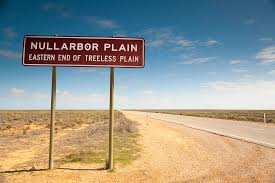
This week we are looking at the area of Australia called The Nullarbor Plain, which means “no trees” in Latin, is a vast, arid region in southern Australia with a rich history, both for Indigenous Australians and Europeans. 

Historically, it was seasonally occupied by the Mirning and Yinyila Indigenous peoples, who knew it as Oondiri, meaning “waterless”.

Europeans first charted the coast in the 17th century, but the interior remained largely unexplored until Edward Eyre’s epic crossing in 1841. The Nullarbor has since been a site of pastoralism, railway construction, and even nuclear testing, shaping its modern landscape and infrastructure.  They have a deep and continuing connection to the Nullarbor. 

The name “Nullarbor” was coined by surveyor Edmund Delissern in1865.  Pastoralists established stations along the telegraph and railway lines, and small settlements developed around these. 

The Nullarbor was used for nuclear testing in the 1950s, leading to the displacement of Indigenous populations.  The Trans-Australian Railway   completed in 1917, facilitated travel and trade across the Nullarbor. 

The Eyre Highway. A road across the Nullarbor, was completed in 1976, connecting South Australia and Western Australia. The highway is a 1,664-kilometre, it is signed as National Highways 1 and A1, it forms part of Highway 1 and the Australian National Highway network linking Perth and Adelaide.

Driving directly across the Nullarbor Plain (from Norseman to Ceduna) takes approximately 12.5 hours of non-stop driving. However, most travellers allocate 2-3 days for the journey to allow for stops at attractions, wildlife viewing, and enjoying the scenery. 

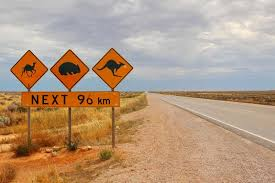
When driving across the Nullarbor people need to beware of trucks as there are triple-decker road trains which have brutal slipstreams, so slow down or pull over to let them pass. Also at night the road. turns into a marsupial rave party at night, from camels, kangaroos, dingoes and occasionally wombats. With no phone service, no other travellers, and emergency services hours away, getting into an accident could leave you stranded without help.

When camping Nullarbor, keep an eye out for scorpions, bird-eating spiders, eastern brown snakes, and death adders. Avoid setting up camp near bodies of water, high vegetation, rocks, fallen logs, or under trees. Also, remind curious kiddos that sticking hands in holes in the ground, under rocks, logs, or trees could disturb a creepy crawly!

If you run into trouble, do not leave your vehicle to search for help. Drones, planes, foot searches, and car trackers will see a vehicle and find you.

The area is known for its vast cave systems, some of which contain fossils and provide insights into the region’s past climate. 

The Nullarbor continues to be a place of both natural beauty and human activity, with tourism and transport playing a significant role. 

Andean or Spectacled Bear

This week we are looking at the Andean Bear also known as the Spectacled Bear, this is a species of bear native to the Andes Mountains in northern and western South America. It is the only living species of bear native to South America, and the last remaining short-faced bear.

The bears are an endangered species, listed as Vulnerable, and it is illegal to kill them. The Andean bear is the last remaining short-faced bear spectacled bears are the only surviving species of bear native to South America, and the only surviving member of the subfamily Tremarctinae.

They are technically the largest land carnivore on that continent, although as little as 5% of its diet is composed of meat. South America’s largest obligate carnivore is the jaguar. Among South America’s extant, native land animals, only the Baird’s and South American Tapirs are heavier than this species. They are a mid-sized species of bear.

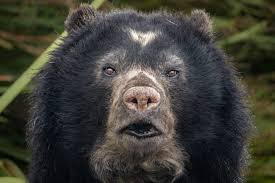
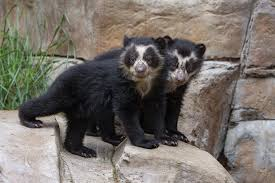
Overall, its fur is blackish in colour, though bears may vary from jet black to dark brown and to even a reddish hue. The species typically has distinctive, beige-coloured marking across its face and upper chest, though not all Spectacled bears have “spectacle” markings. The pattern and extent of pale markings are slightly different on each individual bear and bears can be readily distinguished by this.

They are relatively small compared to other bear species. 

Males typically weigh between 220-440 pounds and are 5.5 to 6.5 feet long, while females weigh between 80-180 pounds and are slightly smaller. They stand 2 to 3 feet tall at the shoulder. 

They have relatively large heads compared to their body size, as well as powerful claws and paws that help them climb trees and build nests.  Despite their size, they are known for their adaptability to different environments within the Andes, from cloud forests to coastal deserts. 

They inhabit mountainous regions of South America, primarily the Andes Mountains, from Venezuela to Bolivia. They are found in a variety of habitats including rainforests, cloud forests, grasslands, and even scrublands. They are known to build platform nests in trees for eating and sleeping and are generally active year-round.

They feed on fruits and bromeliads being there favored foods, but also eat berries, grasses, bulbs, cactus flowers and small animals such as rodents, rabbits and birds. Near settlements, bears sometimes raid cornfields. Andean bears climb trees and forage on the ground.

They have a lifespan of around 20yrs in the wild but up to about 38yrs under human care they have a gestation of between 160 to 255 days and can have between 1 and 4 cubs they are considered mature between 4 and 7 years.

They are the only bears are the only known to eat bromeliads. Has rings of white or light fur around its eyes. The rest of the bear’s fur is black or dark brown.

Andean bears, also known as spectacled bears, are generally considered one of the least aggressive bear species towards humans. While they are capable of defending themselves if threatened, they typically avoid encounters with people and are known for their shy and elusive nature. Attacks on humans are rare, with only one confirmed human death attributed to a spectacled bear. They can run up to 30 mph.

Uzbekistan

Here we are at another Monday, I wasn’t sure I would do a post today due to feeling tired and worn out and not having a lot of motivation but here I am writing about the country of Uzbekistan, not a country I have heard of but I do like doing posts about places and other stuff I know little or nothing about.  This country has a population of around 36 million.

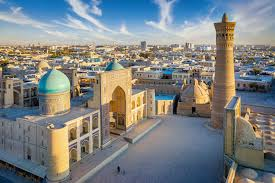
Uzbekistan is a Central Asian nation and former Soviet republic. It’s known for its mosques, mausoleums and other sites linked to the Silk Road, the ancient trade route between China and the Mediterranean. Samarkand, a major city on the route, contains a landmark of Islamic architecture: the Registan, a plaza bordered by 3 ornate, mosaic-covered religious schools dating to the 15th and 17th centuries

The capital city is Tashkent, it’s known for its many museums and its mix of modern and Soviet-era architecture. The Amir Timur Museum houses manuscripts, weapons and other relics from the Timurid dynasty. Nearby, the huge State Museum of History of Uzbekistan has centuries-old Buddhist artifacts. The city’s skyline is distinguished by Tashkent Tower, which offers city views from its observation deck.

The official currency is the Sum, the country replaced the ruble with the sum at par in on 16 July 1994. No subdivisions of this sum were initially issued and only banknotes were produced, in denominations of 1, 3, 5, 10, 25, 50, 100, 200, 500, 1,000, 5,000, and 10,000 sum. Further series, however, have introduced coins and a subunit, the tiyin. Because it was meant to be a transitional currency, the design was rather simplistic.

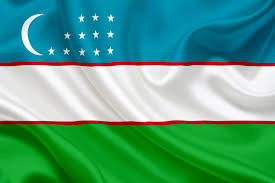
The flag of Uzbekistan is a horizontal triband with three equal bands of blue, white, and green, separated by two thin red stripes. In the upper left canton (hoist side), there’s a white crescent moon and twelve white stars. The blue band represents the sky and water and is also associated with the Turkic peoples. The white represents peace and purity. The green symbolizes nature and new life. The red stripes are a symbol of the power of life. The crescent moon is a traditional Uzbek symbol, and the twelve stars represent the twelve months of the Islamic calendar and the constellations. 

Islam is the predominant religion, with the vast majority of the population identifying as Muslim. While Islam is dominant, there are also other officially recognized faiths, and the country has a diverse religious landscape.

Other faiths are also present, including Russian Orthodox Christianity, Judaism, Buddhism, there are also significant populations of Baha’is, Zoroastrians, and Roman Catholics. 

Uzbekistan’s government acknowledges religious freedom, but it also maintains a system of state control over religious organizations, including registration requirements and oversight of religious literature. The Muslim Board of Uzbekistan (MBU) plays a significant role in managing Islamic affairs, and it works within a framework established by the government. 

Uzbek is a Karluk Turkic language spoken by Uzbeks. It is the official and national language of Uzbekistan and formally succeeded Chagatai, an earlier Karluk language endonymically called Türki or Türkçe, as the literary language of Uzbekistan in the 1920s.  However, many other native languages are spoken in the country. These include several other Turkic languages, Persian and Russian.

Alice Springs NT Australia

I have spent most of the day trying to decide what the topic of today’s post would be, and I ended up picking the town of Alice Springs.

Aussies commonly refer to Alice Springs as “The Alice” or simply “Alice”.

This is one town I would like to visit one day my parents visited the Alice and enjoyed the visit, I do remember mum & dad telling me that when the bought wine from a bottle shop, they were told to make sure it was covered so it couldn’t be seen by looking in a window and to get in their car and drive to a different area. This was because some of the local aboriginals would break into the car if they saw grog inside and if they were seen placing alcohol in the car and walking away the car would be broken into.

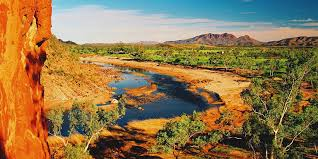
Alice Springs is a remote town in Australia’s Northern Territory, halfway between Darwin and Adelaide, both 1,500km away. It’s a popular gateway for exploring the Red Centre, the country’s interior desert region. Its 1872 origin as part of the Overland Telegraph Line (linking Darwin and Adelaide) is preserved in the vintage buildings and equipment at the Alice Springs Telegraph Station Historical Reserve.

It has an estimated population of around 28,922. This is based on the Alice Springs Town Council LGA profile, which was last updated in January 2025. The town is the major settlement in Central Australia and a significant population centre in the Northern Territory. 

The population of Alice Springs is an estimate because it is based on projections and statistical modelling rather than a direct head count. The Australian Bureau of Statistics (ABS) uses various methods, including census data and estimated resident population (ERP) figures, to calculate population numbers, but these are subject to revision and may not perfectly reflect the actual population at any given time, especially in smaller areas like Alice Springs. 

Alice Springs was established in 1872 with the construction of the Alice Springs Telegraph Station, part of the Australian Overland Telegraph Line (OTL) connecting Adelaide to Darwin. It was originally named Stuart, but the settlement near the telegraph station was later renamed Alice Springs in 1933. The name Alice Springs was given by W.W. Mills, after Alice Todd, wife of Sir Charles Todd, who was instrumental in the construction of the telegraph line. 

The Arrernte people are the traditional owners and custodians of Alice Springs, also known as Mparntwe in the Arrernte language. They have a deep and enduring connection to the land, dating back tens of thousands of years. The Arrernte have stories and significant sites related to the creation of the landscape, including the MacDonnell Ranges.

Alice Springs is famous for its unique location in the heart of Australia, its strong Aboriginal culture and art scene, and its stunning natural landscapes, including the MacDonnell Ranges. It’s also known as a hub for exploring the broader Red Centre region and for its outback character.

Alice Springs faces a complex combination of social and crime-related issues that contribute to a perception of danger. These include high rates of alcohol-related violence, property crime, and domestic violence, along with concerns about youth crime and the impact of past policies. While the town has a diverse population and attracts tourists, these issues have led to increased fear and anxiety among residents. 

While Alice Springs faces significant challenges, it’s important to acknowledge that it is also a place of cultural significance, with a diverse population and a strong community spirit. Efforts are underway to address the underlying issues and improve safety and well-being for all residents.