Uzbekistan National Things

This week we will wrap up stuff about Uzbekistan with some information about their national things like their national animal which is the Turkestan sand which is a nocturnal animal with long hair between its toes, which helps protect them from the hot desert sand. It is known for its resilience and ability to adapt to the challenging desert environment. 
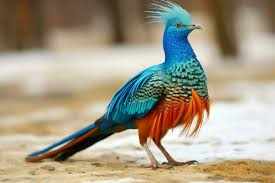
Their national bird is the mythical Humo (or Khumo) bird. It is featured on the national emblem and symbolizes happiness, peace, and freedom. 

Uzbekistan does not have an officially declared national flower. While the tulip is widely recognized as a national symbol and represents beauty, love, and innocence in Uzbek culture, and is depicted on various national emblems, it has not been officially designated as the national flower. The cotton plant, though not a flower, is also a prominent symbol of Uzbekistan, featured on the coat of arms and as a major national crop. 

Their national dish is plov (also spelled osh or palov), a flavorful rice pilaf. It’s a cornerstone of Uzbek culture and cuisine, often served at celebrations and large gatherings, and even recognized by UNESCO. 

The national drink of Uzbekistan is Tea, especially Green Tea. Due the Russian domination over centuries, Vodka is also popular here. The Uzbekistan Drinks are a must try on your Uzbekistan Tours. Tea is normally served normally everywhere including home, office, cafes, tiny stores too.

The national sport of Uzbekistan is Kurash, a traditional form of wrestling. It’s one of the most ancient types of wrestling and is considered a popular amusement in Uzbekistan, often featured during holidays. 

Kurash is more than just a sport; it’s deeply rooted in Uzbek culture and history. It’s a martial art that emphasizes strength, dexterity, and mutual respect between opponents. The rules are relatively simple, with prohibitions against painful holds, choking techniques, and attacks below the waist.

However, football is the most popular sport in Uzbekistan. It is widely played and followed, particularly among young athletes, with increasing participation in grassroots programs and professional academies. The Uzbekistan Professional Football League is a key player in the region, and the national team is a strong competitor in Asian football.  There is also a women’s national football league.

Uzbekistan

Here we are at another Monday, I wasn’t sure I would do a post today due to feeling tired and worn out and not having a lot of motivation but here I am writing about the country of Uzbekistan, not a country I have heard of but I do like doing posts about places and other stuff I know little or nothing about.  This country has a population of around 36 million.

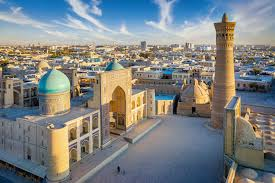
Uzbekistan is a Central Asian nation and former Soviet republic. It’s known for its mosques, mausoleums and other sites linked to the Silk Road, the ancient trade route between China and the Mediterranean. Samarkand, a major city on the route, contains a landmark of Islamic architecture: the Registan, a plaza bordered by 3 ornate, mosaic-covered religious schools dating to the 15th and 17th centuries

The capital city is Tashkent, it’s known for its many museums and its mix of modern and Soviet-era architecture. The Amir Timur Museum houses manuscripts, weapons and other relics from the Timurid dynasty. Nearby, the huge State Museum of History of Uzbekistan has centuries-old Buddhist artifacts. The city’s skyline is distinguished by Tashkent Tower, which offers city views from its observation deck.

The official currency is the Sum, the country replaced the ruble with the sum at par in on 16 July 1994. No subdivisions of this sum were initially issued and only banknotes were produced, in denominations of 1, 3, 5, 10, 25, 50, 100, 200, 500, 1,000, 5,000, and 10,000 sum. Further series, however, have introduced coins and a subunit, the tiyin. Because it was meant to be a transitional currency, the design was rather simplistic.

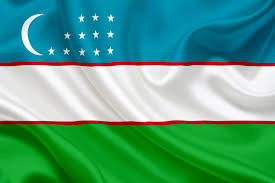
The flag of Uzbekistan is a horizontal triband with three equal bands of blue, white, and green, separated by two thin red stripes. In the upper left canton (hoist side), there’s a white crescent moon and twelve white stars. The blue band represents the sky and water and is also associated with the Turkic peoples. The white represents peace and purity. The green symbolizes nature and new life. The red stripes are a symbol of the power of life. The crescent moon is a traditional Uzbek symbol, and the twelve stars represent the twelve months of the Islamic calendar and the constellations. 

Islam is the predominant religion, with the vast majority of the population identifying as Muslim. While Islam is dominant, there are also other officially recognized faiths, and the country has a diverse religious landscape.

Other faiths are also present, including Russian Orthodox Christianity, Judaism, Buddhism, there are also significant populations of Baha’is, Zoroastrians, and Roman Catholics. 

Uzbekistan’s government acknowledges religious freedom, but it also maintains a system of state control over religious organizations, including registration requirements and oversight of religious literature. The Muslim Board of Uzbekistan (MBU) plays a significant role in managing Islamic affairs, and it works within a framework established by the government. 

Uzbek is a Karluk Turkic language spoken by Uzbeks. It is the official and national language of Uzbekistan and formally succeeded Chagatai, an earlier Karluk language endonymically called Türki or Türkçe, as the literary language of Uzbekistan in the 1920s.  However, many other native languages are spoken in the country. These include several other Turkic languages, Persian and Russian.