Rhinoceros

This week’s hooved animal is the rhinoceros or rhino the word rhinoceros is a combination of two Greek words – rhino (nose) and ceros (horn).

There are five living species of rhinoceros – white, black, greater one-horned, Javan and Sumatran. In addition, a number of other animals have rhinoceros as part of their names, including the rhinoceros auklet, rhinoceros beetle, rhinoceros chameleon, rhinoceros cockroach, rhinoceros fish, rhinoceros hornbill, rhinoceros iguana, rhinoceros rat snake, rhino shrimp, and rhinoceros viper. All of them have horn-like appendages on their noses.

They can be found in several countries across both Africa and Asia. In Africa, you can find them in Angola, Botswana, Kenya, Malawi, Mozambique, Namibia, South Africa, Tanzania, Uganda, Zambia, and Zimbabwe. In Asia, they can be found in India, Indonesia, Nepal, and Vietnam. 

The two main species of rhino in Africa are the black rhino and the white rhino. Black rhinos are found in 12 African countries, with the largest populations in Namibia, South Africa, Kenya, and Zimbabwe. White rhinos are found in 11 African countries. 

Asia is home to the greater one-horned rhino, Javan rhino, and Sumatran rhino. You can find them in India, Indonesia, Nepal, and Vietnam. 

A rhino’s horn is not attached to its skull. It is actually a compacted mass of hairs that continues to grow throughout the animal’s lifetime, just like our own hair and nails. The longest horn on record belonged to a white rhino and measured just under 152cm or 60 inches, which is five feet, and I am only four foot eleven inches tall.

The rhinoceros’s closest living relative is the tapir. Horses and zebras are also related, but less closely than tapirs. All three belong to the group of odd-toed ungulates, known as Perissodactyla. Really horses and zebras that sounds weird.

The white rhino’s name comes from the Afrikaans word “wyd,” which means “wide” and describes its mouth. Early English settlers in South Africa misinterpreted the “wyd” for “white”. Black rhinos may have received their name from the dark wet mud in their wallows that made them appear black in colour. Both species are gray in colour, the famous Blue Rhino, corporate logo for the well-known propane tank company, is entirely a figment of its founder’s imagination.

After mating, adult male and female rhinos typically go their separate ways. After the calf is born, it will spend a couple of years or more in the company of its mother, and perhaps associate with other females and their calves, but the father rhino is not part of the standard social group.

They are not generally considered friendly to humans, although they are not inherently aggressive. They prefer to be just left alone and will only charge if they feel threatened or are protecting their young. Female rhinos, especially those with calves, can be particularly dangerous in the wild. While they may not intentionally seek to harm humans, their size and power make them a serious threat if they do charge. 

The live anywhere between 35 and 50yrs depending on the breed.

All five species of rhinos are herbivores, eating mainly vegetation. They spend most of their time browsing and grazing through their natural habitat in search of plants and grasses to eat.

Hippo’s

This week we are looking at hippo’s aka hippopotamus they are what some refer to as stout and naked-skinned. They are semiaquatic artiodactyl mammals, possessing three-chambered stomachs and walking on four toes on each foot. While they resemble pigs physiologically, their closest living relatives are the cetaceans. They are sometimes referred to as hippopotamids.

Their hooves are different from other ungulates, as they are more like fingernails. Their feet are webbed, which helps them move about in water.

They are found in the heart of Africa’s wetlands. These semi-aquatic creatures live in and around lakes, rivers, and grassland swamps. There are two species of hippopotamuses, the common river hippopotamus and the smaller pygmy hippopotamus.

Common river hippopotamuses are native to sub-Saharan Africa. They live in waterways like rivers, lakes, swamps, and estuaries. These semi-aquatic mammals can be found in various African countries, with populations in both East and West Africa.

Pygmy hippos, unlike their larger relatives, are found in the tropical rainforests and swamps of four West African countries: Côte d’Ivoire, Guinea, Liberia, and Sierra Leone. Their slightly smaller bodies have adapted to allow them to easily navigate the vegetation in rainforests.

Hippos must keep their skin wet with mud or water for most of the day to stay hydrated. While they don’t have sweat glands, they secrete a red substance called blood sweat. This helps protect their reddish-brown, thick yet sensitive skin from sunburn and keeps it moisturised. Despite their need to spend most of their time in the water, hippos can’t swim. Instead, they run or walk along riverbeds. When they’re rafting—napping while submerged in water—a subconscious reflex keeps them near the water’s surface.

They are formidable creatures and considered the second largest land mammal, smaller only than elephants. The average male hippo can weigh around 3,200 kilos (7,000 pounds, they’re typically around 3.5 metres (11 feet) long and 1.5 metres tall (5 feet).

While adult pygmy hippos stand about 75–100 cm (2.46–3.28 ft) high at the shoulder, are 150–175 cm (4.92–5.74 ft) in length and weigh 180–275 kg (397–606 lb). Their lifespan in captivity ranges from 30 to 55 years, though it is unlikely that they live this long in the wild.

Hippos have bulky, barrel-shaped bodies, short and stout legs, large heads, and enormously powerful jaws. Their jaws can open to 180 degrees and their bite is three times stronger than a lion. They have incredible sharp teeth that can grow up to 50cms long, which are used for eating and defence. The common hippopotamus has four webbed toes adapted to support them on land and in water. On the other hand, pygmy hippos tend to have less webbing and slightly longer legs. A hippo’s eyes and nostrils sit on top of its head, which helps it stay mostly submerged in water while breathing and keeping an eye on its surroundings. Although hippos can’t breathe underwater, they can hold their breath for up to five mins.

Hippos exhibit strong social bonds and typically live in groups of anywhere between 40 to 200, known as bloats, pods, or herds.

They are territorial creatures and use their dung to mark their territory. Male hippos have been known to flick their dung around to assert dominance. This dung is actually important to their aquatic ecosystems, as it transfers vital nutrients from land to water, allowing insects, plants, and other microorganisms to flourish. 

They play a crucial role in the ecosystem it inhabits in other ways, too. These herbivores graze on the vegetation surrounding wetlands, helping prevent overgrowth, which can clog water sources, disrupt the natural flow of water, and threaten the biodiversity of aquatic ecosystems. 

Healthy wetlands act as effective carbon sinks and remove excess carbon from the atmosphere. By maintaining the balance of these delicate ecosystems, hippos help mitigate the effects of climate change.

Hippos are facing several threats to their survival as a species. Global conservation efforts are critical to ensuring the well-being of the species and the ecosystems it inhabits. 

Largest Horse Breeds

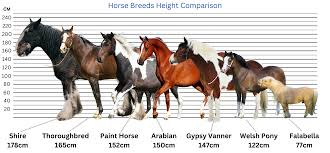
This week we are looking at the world’s largest horse breeds with the Shire horse often considered the largest horse breed. It is a British breed known for its impressive size and strength, with some individuals reaching heights of 18 to 21 hands. The largest Shire on record, Sampson (later Mammoth), stood at 21.5 hands. They usually black, bay, or grey.

This horse originated in England and are known for their large size and powerful build. They can weigh up to 2,200 pounds and stand up to 18 hands tall. Historically used for pulling heavy carts and ploughing fields. 

They are now used for horse riding, show events, as well as still being used for work in some areas. They are known for their gentle and calm temperament. 

The Shire breed have held world records for both the largest and tallest horse. 

They are primarily found in the United Kingdom, Australia, Canada, and the United States. While the breed originated in England, they have been exported and bred in other countries as well. 

In addition to the Shire, other large horse breeds include the Clydesdale which is another British draft horse breed, known for its size and strength, and often used in parades and horse shows. Clydesdale horses are found in several countries around the world, most notably in their native Scotland, Oklahoma State University, as well as in Australia, New Zealand, Canada and the United States.

They were also exported to other countries like Russia and South America. Today, the breed is particularly popular in Australia, where it’s known as “the breed that built Australia”. 

Then there is the Belgian Draft Horse, known for its large size and strong build, used for farm work and heavy hauling. They are primarily found in Belgium, where they originated, and the United States, particularly the American Brabant. The breed is also found in other parts of Europe and North America. 

Next week we will look at the smallest horses 

Island Fox

This will be the last post about foxes we are ending with the Island Fox.

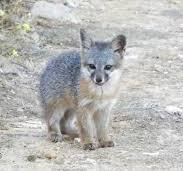
The Island fox is native to six of the eight Channel Islands in California it is considered critically endangered by the IUCN, it is threaten by golden eagles, disease, and habitat destruction.

The Catalina Island Conservancy and Institute for Wildlife Studies have established a fox recovery program for the island fox. This program includes vaccination, relocation, and captive breeding. 

The island fox is a small fox species that is endemic to six of the eight Channel Islands of California. There are six subspecies, each unique to the island it lives on, reflecting its evolutionary history. They are generally docile, show little fear of humans, and are easily tamed.

The island fox has similar markings to the gray fox. They have gray colouring on the back, rust colouring on the sides, and white underneath. The face has a distinctive black, white, and rufous-coloured patterns.

In March 2004, four subspecies of the island fox were classified as a federally protected endangered species: the Santa Cruz Island fox, Santa Rosa Island fox, San Miguel Island fox and the Santa Catalina Island fox.

Island foxes reach sexual maturity at 10 months, and females usually breed within the first year. These foxes can live for up to 10 years in the wild, but four to six years is more typical.

They are generally docile, show little fear of humans, and are easily tamed. Island foxes played an important role in the spiritual lives of native Channel Islanders. They have been likely semi-domesticated as pets, used as pelts, or for other functions, like pest control.

They are omnivorous, eating both plants and other animals. They eat a large amount of insects, some island deer mice, reptiles, and fruit from native plants. New evidence is showing marine resources may be important for island foxes. Their diet also changes with the seasons.

 The primary threat to the island fox is predation by invasive golden eagles. The species is also very vulnerable to canine distemper transmitted by domestic dogs, habitat fragmentation due to development, and habitat loss to introduced livestock and game species.

Bat-Eared Fox

This week we are look at the bat-eared fox, another fox I hadn’t heard of.

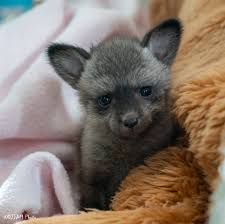
The bat-eared fox is a species of fox found on the African savanna. It is the only extant species of the genus Otocyon and a basal species of canid. Fossil records indicate this canid first appeared during the middle Pleistocene.

As the name indicates, this fox has unusually enormous ears in proportion to its head, like those of many bats. Their bodies are generally yellow-brown with a pale throat and under parts. The outsides of the ears, the racoon-like “face-mask,” lower legs, feet, and tail tip are all black. 

They can be found living in groups of mating pairs and their young. They are a very social species and spend lots of time grooming each other, as well as playing and sleeping together.

Their hearing is remarkable, but bat-eared foxes are also known for their social nature. They often live in family groups of up to 15 animals. They do not mark or defend territories aggressively against other packs.

They seldom drink water as they obtain most of the moisture they need from their food; 3. Unlike other canids, the male undertakes most parental care duties, while the female forages for food that maintains her milk production

Termites and dung beetles make up about 80 percent of their diets. In addition to termites and dung beetles, they also eat other insects and arthropods, small rodents, lizards, the eggs and chicks of other birds, and plant matter. They obtain much of their water from the body fluid of the insects they consume.

Predators include cheetahs, jackals, spotted hyenas, rock pythons, African wild dogs, and leopards. Bat-eared foxes are named for their large ears, which are also used for thermoregulation. To escape from predators, bat-eared foxes rely on speed and their incredible dodging ability.

They typically live for 6 years in the wild but can be up to 13 years in captivity. 

They reach sexual maturity at 8–9 months old, both male and female. They usually leave their family groups at 5–6 months old. 

They breed annually, producing litters of 3–6 pups, with a gestation period of 60–75 days. 

Crab-eating fox

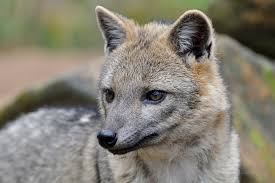
This is week we are looking at the crab-eat fox, also known as the forest dog, wood fox, bushfox or maikong, is an extant species of medium-sized canid endemic to the central part of South America since at least the Pleistocene epoch. Like South American foxes, which are in the genus Lycalopex, it is not closely related to true foxes. 

They can be found in the ranges in savannas; woodlands; subtropical forests; prickly, shrubby thickets; and tropical savannas such as the caatinga, plains, and campo, from Colombia and southern Venezuela in the north to Paraguay, Uruguay and northern Argentina at the southernmost reaches of its range.

They can be solitary but can also form couples or even families of up to disturbed by human activities. The species gets its name because during the wet season it searches for crabs on muddy floodplains.

Crab-eating foxes are omnivorous; their diet includes many fruits, vertebrates, insects, amphibians, crabs and other crustaceans, birds and carrion.

The crab-eating fox is predominantly greyish-brown, with areas of red on the face and legs, and black-tipped ears and tail. It has short, strong legs and its tail is long and bushy. The head and body length averages 64.3 centimetres (25.3 in), and the average tail length is 28.5 centimetres (11.2 in).

They reach sexual maturity within 9–10 months. Adult females give birth to one or two litters per year, depending on the climate and the availability of food. The reproductive period most often begins in November or December, and again in July.

The birth of offspring follows after an approximately 56-day gestation, typically in January, February or sometimes March then again from September to October. If giving birth to one litter, they typically give birth in the early spring. The parents are monogamous and raises the pups together, which are weaned at around three months old and become independent of their parents around 5–8 months old.

Grey Fox

The gray fox, or grey fox, is an omnivorous mammal of the family Canidae, widespread throughout North America and Central America.

They live in a wide variety of places. They prefer to live in places they can blend in, like canyons and ridges. Though they will also live in wooded areas, open desert and grasslands. They can be found from Quebec to Northern Columbia and Venezuela.

They are common, but very elusive and rare to spot in the wild. They are primarily nocturnal but may forage during the day.

They are smaller than red foxes. They weigh between 7 and 13 pounds and average 3 to 4 feet in length including the tail. They are stockier and have shorter legs than the red fox. Their color is grizzled gray with a distinctive black streak along the top to the black tip of the tail.

They have a white throat and belly. Their chest and lower sides of the body, undersurface of the tail, backs of the ears, parts of the legs, feet and neck are reddish or yellowish brown. The claws are sharp, and on the forefeet recurved.

Due to their more aggressive behavior, they prefer to hunt thicker cover than the more timid red fox. The gray fox’s preference for thicker cover, aggressive behavior, and the ability to climb trees minimizes the effect that eastern coyotes have on their population.

It often lines the den with shredded bark or leaves and will return to the same one year after year. The gray fox is nocturnal and crepuscular, which means it is most active at dusk and dawn. During the day, it remains in the den.

The gray fox is a solitary hunter and eats a wide variety of foods. A large part of its diet is made up of small mammals like mice, voles and eastern cottontail rabbits. It also eats birds; insects; and plants like corn, apples, nuts, berries and grass.

The gray fox has few natural predators. Bobcats, coyotes, great horned owls, and golden eagles may occasionally prey upon young gray foxes.

Kit Fox

Hello everyone, this week we are having a look at the Kit Fox, anyone heard of this fox before, I haven’t till now.

The kit fox is a fox species that inhabits arid and semi-arid regions of the southwestern United States and northern and central Mexico. These foxes are the smallest of the four species of Vulpes occurring in North America and are among the smallest of the vulpines worldwide.

It has a narrow nose and a small, slim body. The foot pads of kit foxes are small by comparison with other canids. They weigh only about three to six pounds, making them about the size of a full-grown jackrabbit, and ​​the smallest fox in North America​.

It is specially adapted for its desert habitat. Its large, close-set ears help dissipate heat, keeping it cool in the hot desert.

​They closely resemble swift foxes found on the eastern plains of Colorado but have larger ears and a more angular appearance.

They live for up to seven years in the wild, while captive animals can live up to 12 years.

Their primary food is kangaroo rats, but it also actively hunts white-footed mice, pocket mice, ground squirrels, rabbits and ground-nesting birds. During certain times of the year, kit foxes will also eat insects. They are nocturnal animals finding shelter in dens to avoid the heat of the day and hunt at night.

They rarely drink water since they get all the water and electrolyte they need from their diet. They also have a digestive tract that is super-efficient at absorbing every last millilitre of water from the food they eat.

Coyotes are the biggest predatory threat to kit foxes. Some estimates suggest that three out of four kit fox deaths can be associated with coyote attacks.

In September and October, the female will prepare a natal den, where the male will meet the female. Pair bonds last at least one breeding season. After birth, parents bring food to the dens for the pups. The pups emerge from the dens when they are about five weeks old then forage alongside the parents once they reach four months, by seven months they are ready to leave their parents. They mate for life and have intricate family situations where kits from previous years often stay with the family and help with the new pups.

Arctic Fox

This week we are looking at the Artic Fox, which is also known as the white fox, polar fox, or snow fox, is a small species of fox native to the Arctic regions of the Northern Hemisphere and common throughout the Arctic tundra biome.  

The Arctic tundra biome is a vast, dry, and rocky region that stretches from the Arctic Circle to the polar ice cap, and includes parts of Canada, Russia, Greenland, and northern Europe. 

It is well adapted to living in cold environments, and is best known for its thick, warm fur that is also used as camouflage. It has a large and very fluffy tail.  Its body length ranges from 46 to 68 cm (18 to 27 in), with a generally rounded body shape to minimize the escape of body heat.

In the wild some do not live past their first year, but others live for 3 or 4 years in the wild and up to 14 years in captivity.

They prey on many small creatures such as lemmings, voles, ringed seal pups, fish, waterfowl, and seabirds.  It also eats carrion, berries, seaweed, and insects and such.

 They form monogamous pairs usually mate for life and during the breeding season and they stay together to raise their young in complex underground dens. Occasionally, other family members may assist in raising their young.

Their natural predators are golden eagles, artic wolves, polar bears, wolverines, red foxes and grizzly bears.

They must endure great temperature differences between the external environment and their internal core temperature. To prevent heat loss, they curl up tightly tucking its legs and head under its body and behind its furry tail. This position gives the fox the smallest surface area to volume ratio and protects the least insulated areas. Arctic foxes also stay warm by getting out of the wind and residing in their dens. Although the Arctic foxes are active year-round and do not hibernate, they attempt to preserve fat by reducing their locomotor activity. They build up their fat reserves in the autumn, sometimes increasing their body weight by more than 50%. This provides greater insulation during the winter and a source of energy when food is scarce.

The Arctic is home to more than 630,000 Arctic foxes and they are not currently at risk from extinction, but populations are declining. Arctic foxes are well adapted to winter temperatures of -34C. They are born with thick fur and their snout, ears and legs are short to conserve heat.

Fennec Fox

First up there is a new post  over here:

http://jamfn.blogspot.com/2024/12/goodbye-2024.html

Hi everyone, how many of you have heard of the fennec fox?

I had noy heard of it till I was researching foxes for these posts. 

The fennec fox is a small fox native to the deserts of North Africa, ranging from Western Sahara and Mauritania to the Sinai Peninsula. Its most distinctive feature is its unusually large ears, which serve to dissipate heat and listen for underground prey.

The fennec is the smallest fox species, standing about 20cms or 8 inches tall and weighing up to 1.3kgs or 3 pounds.

In the wild, fennec foxes eat insects—particularly grasshoppers and locusts—as well as small rodents, lizards, birds and their eggs. They will also consume roots, fruits and leaves, which help them to hydrate.

In captivity should consist of a mix of meat and vegetables, and include supplements to ensure they get enough taurine, they should be eating 90% meat and insects, such as waxworms, morioworms, locusts and such. The meat should be low in retinol (vitamin A) and contain enough calcium and taurine. 

The other 10% should be vegetables and fruit, such as diced melons, berries, and leafy greens. Avoid fruits and vegetables that are high in carbohydrates or belong to the nightshade family, such as tomatoes and aubergines.

They can live up to 14 years in captivity and about 10 years in the wild. 

They typically give birth to one litter of pups per year, with between two and five young in a litter.

The female does not allow the male to interact with the kits until they are 5 to 6 weeks old. Parent-raised offspring are weaned by 8 to 10 weeks of age. Carrying, grooming, and nursing of the young continue until this time. Wild fennec foxes stay with their family until they are at least 1 year old.

In general, male fennec foxes tend to be slightly larger and heavier than females.

The primary threat to fennec foxes is human interference. They are commonly trapped for exhibition or sale to tourists, and there have been limited instances of human settlements encroaching on fennec populations. Native populations in the Sahara region also hunt fennec foxes. They are preyed upon by the Pharaoh eagle-owl; both adults and pups may possibly fall prey to jackals and striped hyenas.

They are currently listed as a species of least concern, according to the International Union for Conservation of Nature (IUCN) Red List of Threatened Species. While there are no major threats to the desert-dwelling wild populations, habitat loss still occurs in their native range.