The POW camp in South Australia

pow camp sa 1944

Today I want to tell you about the POW camp in South Australia

South Australia consisted of one main internment camp at Loveday, near Barmera on the River Murray. Opened in 1941, it was supported by centres at Bordertown, Clare, Lameroo, Maitland, Mount Gambier, Mount Pleasant, Morgan, Murray Bridge, Naracoorte, Tumby Bay, Willunga and Woodside from 1943—45 and a transit camp at Sandy Creek near Adelaide from 1944—46.

The Loveday Internment Group accommodated German, Italian and Japanese internees from various states of Australia, and international internees and POWs from the Netherlands, East Indies, the Pacific Islands, New Zealand, Britain and the Middle East. It consisted of six compounds and accommodation for personnel of the 25/33 Garrison Battalion who kept guard.

During its peak, the camp held over 5000 internees who produced goods and cultivated crops for the Australian war effort.

pow camp sa 1943

Some Italians were deployed to work as farmhands, while other Italian and Japanese internees were separated and even paid to harvest wood at Katarapko, Woolenook and Moorook West. 300 Italian internees were employed as railway workers at Cook on the Trans — Australia line.

One POW and 134 internees died at Loveday, while another two POWs were killed during an escape attempt while en route to Loveday.

Cause of death varied from illness and fragility brought on by old age, suicide, and at least one homicide.

Loveday Internment Camp closed in December 1946.

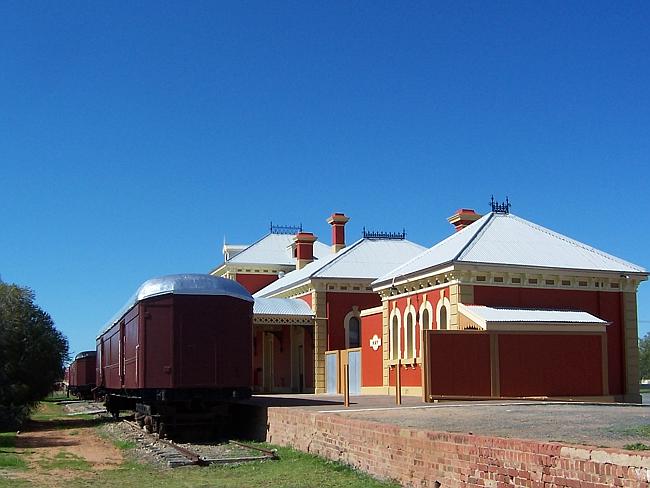
pow camp hay today

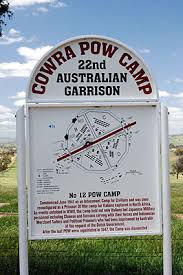
Cowra POW Camp

cowra pow camp

How many people have heard of Cowra POW camp?

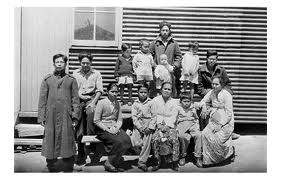
Cowra is in New South Wales, near Bathurst during the second world war it was the site of a prisoner of war camp. It housed mostly Japanese and Italian prisoners, with some Korean and Indonesian civilians detained at the request of the Dutch East Indies government. It began operating in June, 1941, specially built to house POWs brought to Australia from overseas.

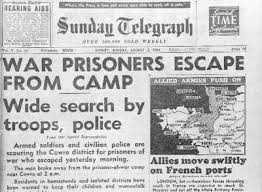
cowra breakout

It was divided into four areas, each surrounded by barbed wire fences, the prisoners first lived in huts, but eventually included its own store, kitchen, mess huts, showers and vegetable gardens.

There were other POW camps in Australia in fact most states had prisoner of war camps as well as interment camps.

cowra pows

On 5 August 1944, Japanese prisoners of war housed in the detention camp in Cowra, New South Wales staged a breakout. Armed with improvised weapons including baseball bats and sharpened mess knives, they stormed the perimeter fences and overcame the machine gun posts. Never likely to be successful, the breakout resulted in the death of 231 Japanese prisoners with a further 108 wounded. All survivors were recaptured in the surrounding countryside in the days that followed. It is widely believed the goal of the breakout was for the Australian’s to kill the Japanese, as they felt it brought shame to themselves and their families to be POWs.

Four Australians were killed in the breakout – Privates Benjamin Gower Hardy, Ralph Jones and Charles Henry Shepherd. Lieutenant Harry Doncaster was killed when ambushed during the recapture of the prisoners. Hardy and Jones were posthumously awarded the George Cross.

cowra breakout bodies

A Military Court of Inquiry investigated the incident, and a summary of its findings was read to the House of Representatives by Prime Minister John Curtin on 8 September 1944.

The summary indicated the following:

  • that conditions at the camp were fully in accordance with the International Convention;

  • that no complaints regarding treatment had been made by or on behalf of the Japanese prior to the incident, which appeared to have been a premeditated and concerted plan of the prisoners;

  • that the actions of the Australian garrison in resisting the attack averted greater loss of life, and that firing ceased as soon as control was assured; and

  • that many of the dead had died by suicide or by the hand of other prisoners, and that many of the wounded had suffered self-inflicted wounds.

  • cowra prisioners

Five things Friday……………on Saturday and more

green

Didn’t get around to doing a post yesterday was far too busy to do so, so here I am on a wet Saturday afternoon at last getting around to doing a post so what am I going to post about well I am going to give you my five things Friday.

Sad…………..me…………….never

Recovering from surgery……………nicely

Two little boys here for the night (Friday night)

Watching YouTube clips, then throwing punches, then back to watching video clips again

Bloody cordless phone

Saturday

Now let us move onto Saturday what a lovely wet cool Saturday it is, Tasha turned up early to pick up the boys while Tim and I went out to do some shopping, I had to find something for my mum for Mother’s Day anyway when it was time to go to the checkout Tim says to me that he will go threw first and pay for his stuff, I tell him you will have to pay for everything as I have no money I could tell he was annoyed but what the hell I didn’t have any money.

As said it has been a cool/cold wet day, about half an hour ago Tim left for work so I am home alone for the night which is nice. It isn’t going to happen very often now as I will be having Blain most nights a week while his mum is at work.

Thankfully most mornings Natasha will be able to drive the boys to school and I will be the one picking them up in the afternoon. I have decided to have one of the boys stay at the office till I get there so I don’t have to get one out early. I did this on Friday, I rang and asked for Blain to wait at the office for me, however, when I arrived he was standing out the front of the school waiting for me and two office staff came running out looking for him. They see him getting into my car and freak out, I had to wind the window down and yell out “I’m his grandmother, I’m the one who rang”.

So I had Natasha have a talk to both boys about waiting in the office when told to do so, I don’t want them waiting on the side of the road for me as I feel it is not safe, thankfully both my girls and Tim all understand this and agree with me.

Ok that is all I have for today, I will be back with another post tomorrow.

Good Afternoon, my special girl is out of hospital

Great tuesday

Good afternoon world, how is everyone on this fine Tuesday afternoon?

I had a somewhat busy morning, taking boys to school, driving Tasha to her job network provider so she could finish off her white card and then I had to go over to the hospital to pick up Jessica. Yes she is home at last but of course she will not be going back to her place for a little while as she is still in pain and finding it difficult to get around, she has been given the all clear to go back to work in a week or two depending on how she is feeling.

I have decided that since I will have to pick either Blain or Leo up early I will arrange with the school that one week Blain will got to the office when he gets out and wait for me and the next week Leo will do it this will start after Jessica goes back to work and that way I will only have to the one boy out only 10 minutes early.

Natasha’s car is now not running at all so Jono has asked a mate to look at it and tell her how much it will cost to get it repaired and if it is too much she is going to sell it as is to whoever wants it and save to get another car.

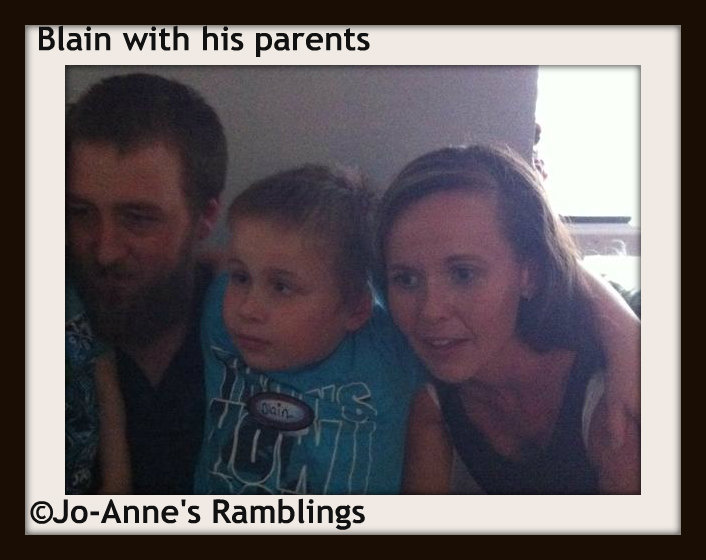
Blain with parents

So tonight I will have both Blain and Leo here again and Jessica as well so hopefully they will not fight, they do have a tendency to fight when together for any length of time.

Oh yeah I woke this morning at around 3.30am to go to the loo and when I got back to bed and checked the time I woke Tim and said don’t you have to get up, he looks at his clock and says no not yet, well I thought he said he had to get up at 3.30am but I was too tired to argue with him, well I get a text from him saying he overslept 45 minutes and I replied thought so.

Jessica just went off at me because Leo still likes to sleep with nan & papa I do try to get him to sleep in the spare room and some nights he will go to sleep in there but still ends up with me and Tim at some point during the night.

Leo and JesI hope Jessica gets her car back soon it has been in the shop being repaired for over 2 weeks now closer to 3 weeks in fact.

Chocolate Soldiers

The ‘Chocolate Soldiers’ of New Guinea

By A. E. Lockrey

The heat and the haze of the jungle
Enshroud them on every side,
The dank and the damp so insistent
They contend with in youthful pride:
Dark terrors are there in the lurking,
In shady concealment they hide,
But the defiant Chocolate Soldiers
Have suffered and bled and died.

Through the trackless mountain passes,
Through the deadly swampland drear,
In the slush of endless mudlands
They plod; and the enemy near
Is crafty, and cunning and silent,
But the Chocos have no fear
As, shedding their blood in the jungle
They fight for their country so dear.

And who will dare with sneering
To say they cannot face,
All this, and more if needs be
For the honour of their race?
And how can mind forget it,
And how can time efface,
Such valour must be given
In history’s page a place.

100 Years on and still going strong

100 yrs on

Anzac Day goes beyond the anniversary of the landing on Gallipoli in 1915. It is the day on which we remember Australians who served and died in all wars, conflicts, and peacekeeping operations. The spirit of Anzac, with its human qualities of courage, mateship, and sacrifice, continues to have meaning and relevance for our sense of national identity.

In Canberra, the Memorial, in close cooperation with the Returned and Services League of Australia ACT, hosts the:

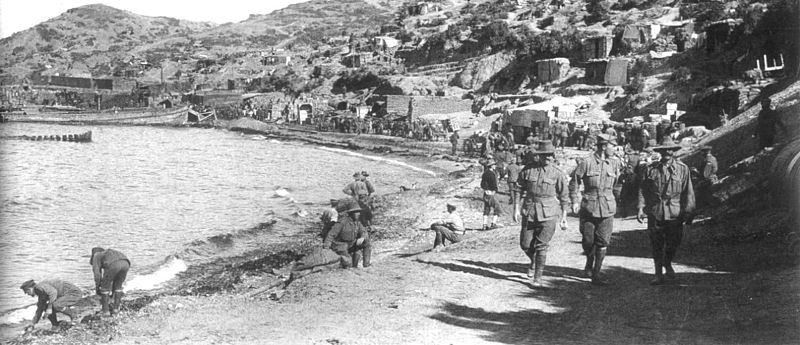
800px-Anzac_Cove

The Aboriginal and Torres Strait Islander Commemorative Ceremony will be held after the Anzac Day Dawn Service at the Aboriginal Memorial plaque on the side of Mount Ainslie.

What is Anzac Day?

Anzac Day – 25 April – is one of Australia’s most important national occasions. It marks the anniversary of the first major military action fought by Australian and New Zealand forces during the First World War.

What does ANZAC stand for?

Anaca stands for Australian and New Zealand Army Corps. The soldiers in those forces quickly became known as Anzacs, and the pride they took in that name endures to this day.

Why is this day special to Australians?

When war broke out in 1914 Australia had been a federated nation for only 13 years, and the new federal government was eager to establish its reputation among the nations of the world. When Britain declared war in August 1914 Australia was automatically placed on the side of the Commonwealth. In 1915 Australian and New Zealand soldiers formed part of the expedition that set out to capture the Gallipoli peninsula in order to open the Dardanelles to the allied navies. The ultimate objective was to capture Constantinople (now Istanbul), the capital of the Ottoman Empire, an ally of Germany.

The Australian and New Zealand forces landed on Gallipoli on 25 April, meeting fierce resistance from the Ottoman Turkish defenders. What had been planned as a bold stroke to knock Turkey out of the war quickly became a stalemate, and the campaign dragged on for eight months. At the end of 1915 the allied forces were evacuated from the peninsula, with both sides having suffered heavy casualties and endured great hardships. More than 8,000 Australian soldiers had been killed. The Gallipoli campaign had a profound impact on Australians at home, and 25 April soon became the day on which Australians remembered the sacrifice of those who died in the war.

Although the Gallipoli campaign failed in its military objectives, the Australian and New Zealand actions during the campaign left us all a powerful legacy. The creation of what became known as the “Anzac legend” became an important part of the identity of both nations, shaping the ways they viewed both their past and their future.

they who shal not grow old

Early commemorations

In 1916, Anzac Day was held on 25 April for the first time. It was marked by a wide variety of ceremonies and services in Australia, a march through London, and a sports day in the Australian camp in Egypt. In London more than 2,000 Australian and New Zealand troops marched through the streets; a London newspaper headline dubbed them “the knights of Gallipoli”. Marches were held all over Australia; in the Sydney march convoys of cars carried soldiers wounded on Gallipoli and their nurses. For the remaining years of the war Anzac Day was used as an occasion for patriotic rallies and recruiting campaigns, and parades of serving members of the AIF were held in most cities.

During the 1920s Anzac Day became established as a national day of commemoration for the more than 60,000 Australians who had died during the war. In 1927, for the first time, every state observed some form of public holiday on Anzac Day. By the mid-1930s all the rituals we now associate with the day – dawn vigils, marches, memorial services, reunions, two-up games – were firmly established as part of Anzac Day culture.

With the coming of the Second World War, Anzac Day also served to commemorate the lives of Australians who died in that war. In subsequent years the meaning of the day has been further broadened to include those who were killed in all the military operations in which Australia has been involved.

Anzac Day was first commemorated at the Memorial in 1942. At the time, government orders prohibited large public gatherings in case of a Japanese air attack, so it was a small occasion with neither a march nor a memorial service. Since then, Anzac Day has been commemorated at the Memorial every year.

What does it mean today?

Australians recognise 25 April as an occasion of national remembrance, which takes two forms. Commemorative services are held at dawn – the time of the original landing – across the nation. Later in the day, former servicemen and servicewomen meet to take part in marches through the major cities and in many smaller centres. Commemorative ceremonies are more formal and are held at war memorials around the country. In these ways, Anzac Day is a time at which Australians reflect on the many different meanings of war.

The Dawn Service

It is often suggested that the Dawn Service observed on Anzac Day has its origins in a military routine still followed by the Australian Army. The half-light of dawn was one of the times most favoured for launching an attack. Soldiers in defensive positions were woken in the dark before dawn, so by the time first light crept across the battlefield they were awake, alert, and manning their weapons; this is still known as the “stand-to”. As dusk is equally favourable for battle, the stand-to was repeated at sunset.

After the First World War, returned soldiers sought the comradeship they had felt in those quiet, peaceful moments before dawn. A dawn vigil became the basis for commemoration in several places after the war. It is difficult to say when the first dawn services were held, as many were instigated by veterans, clergymen, and civilians from all over the country. A dawn requiem mass was held at Albany as early as 1918, and a wreath laying and commemoration took place at dawn in Toowoomba the following year. In 1927 a group of returned men, returning from an Anzac Day function held the night before, came upon an elderly woman laying flowers at the as yet unfinished Sydney Cenotaph at dawn. Joining her in this private remembrance, the men later resolved to institute a dawn service the following year. Thus, 150 people gathered at the Cenotaph in 1928 for a wreath laying and two minutes’ silence. This is generally regarded as the beginning of organised dawn services. Over the years the ceremonies have developed into their modern form and have also seen an increased association with the dawn landings of 25 April 1915.

Today’s dawn services include the presence of a chaplain, but generally not of dignitaries such as the governor-general. Originally, the services were simple, and usually followed the military routine. Before dawn, those who had gathered would stand while two minutes’ silence was held. At the end of this time a lone bugler would play the Last Post and then conclude the service with Reveille, the bugler’s call to wake up.

In recent times more families and young people have taken part in dawn services. Reflecting this change, some services have become more elaborate, incorporating hymns, readings, pipers, and rifle volleys. Other services, though, have retained the simple format of the dawn stand-to, familiar to so many soldiers.
trenches

The Anzac Day National Ceremony

At the Australian War Memorial the National Ceremony takes place at 10.15 am in the presence of people such as the prime minister and the governor-general. Each year the ceremony follows a pattern that is familiar to generations of Australians.

A typical Anzac Day National Ceremony may include the following features: an introduction, hymn, prayer, an address, the laying of wreaths, a recitation, the Last Post, a period of silence, the playing of either the Rouse or the Reveille, and the national anthem. After the Memorial’s ceremony families often place red poppies on the Tomb of the Unknown Australian Soldier or beside the names of relatives on the Memorial’s Roll of Honour, as they do after Remembrance Day services.

Anzac Day 2

Lest we forget…………………………..

Updates

Jessica's house after storm (5)

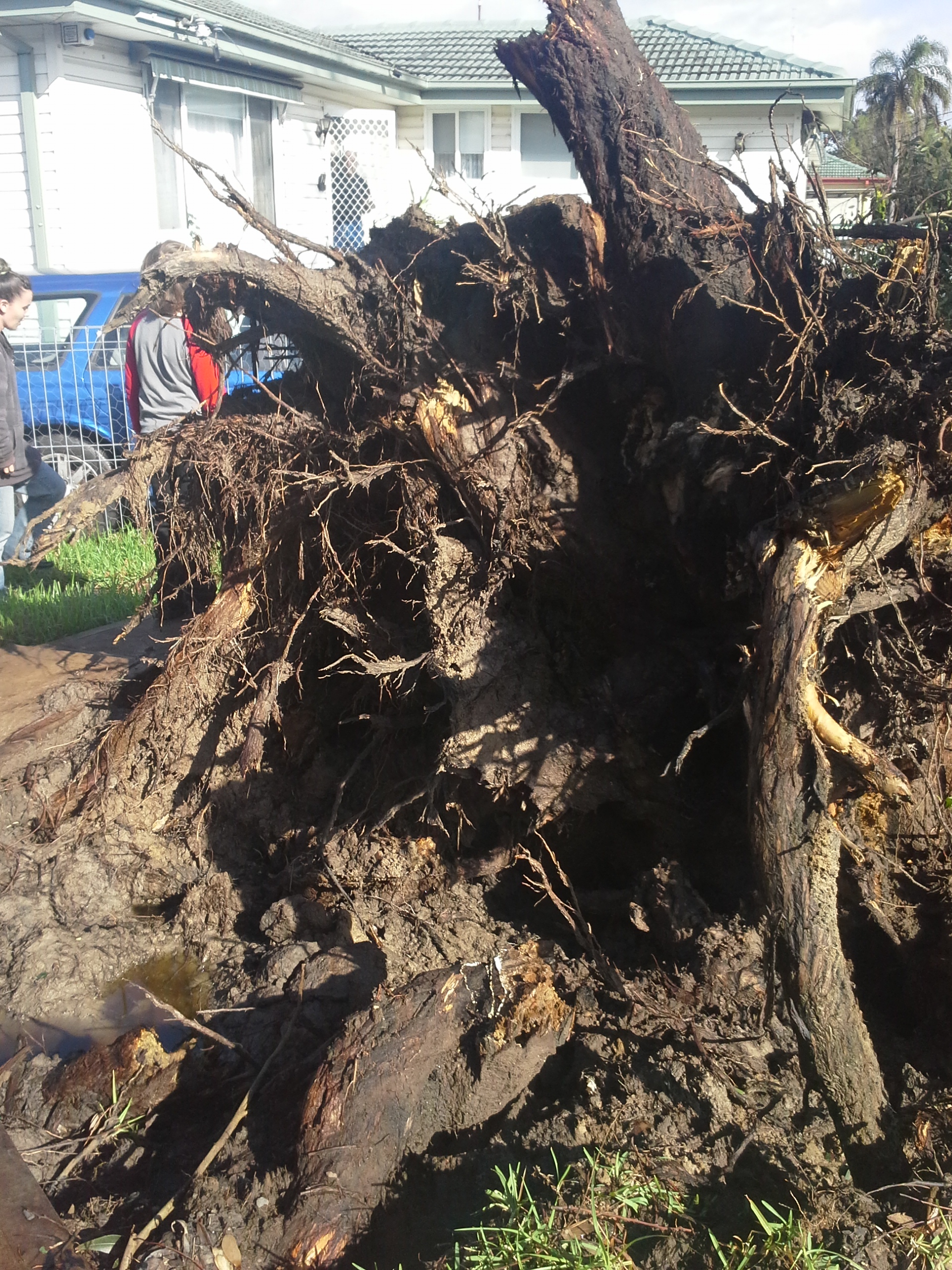
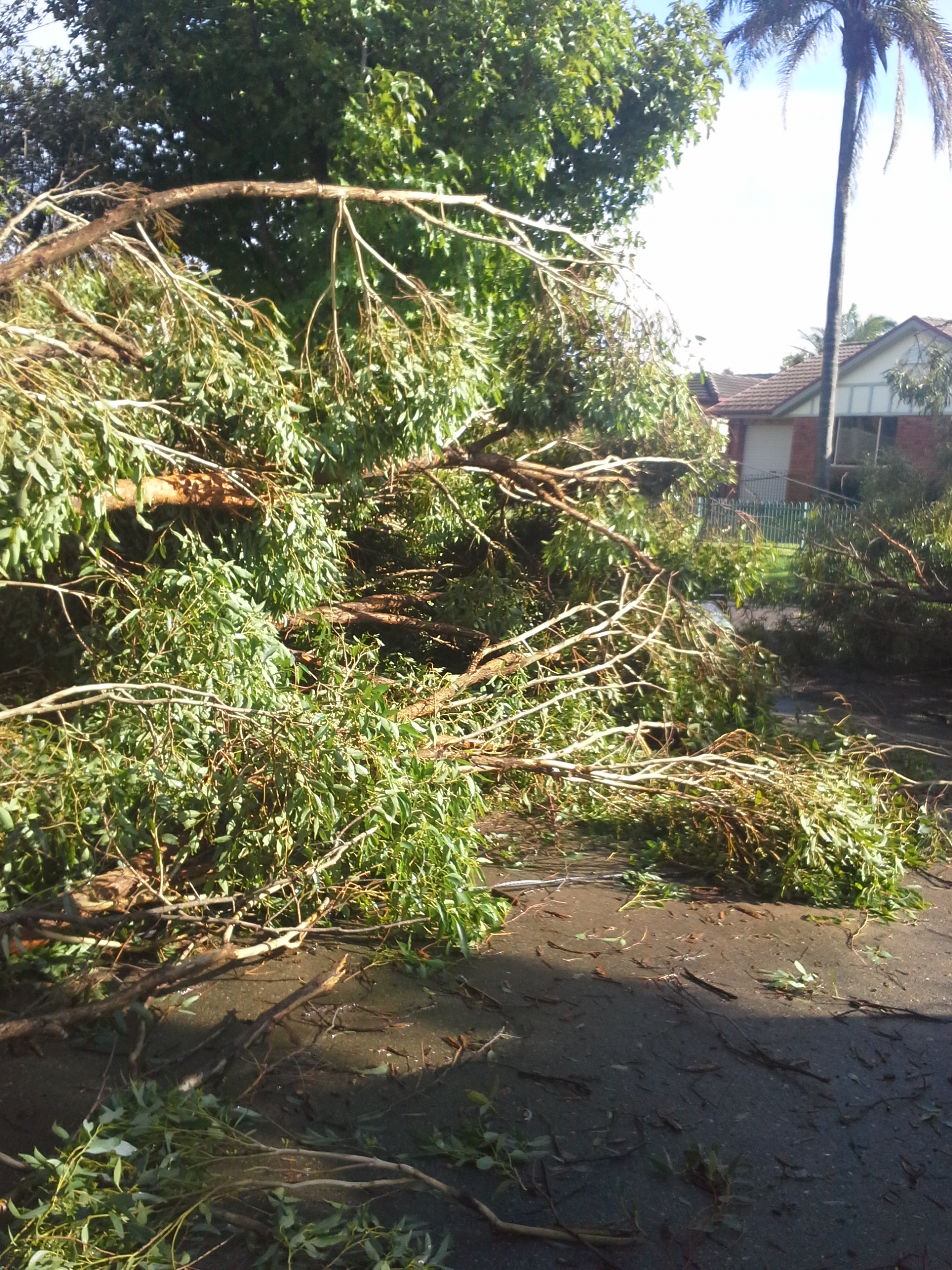
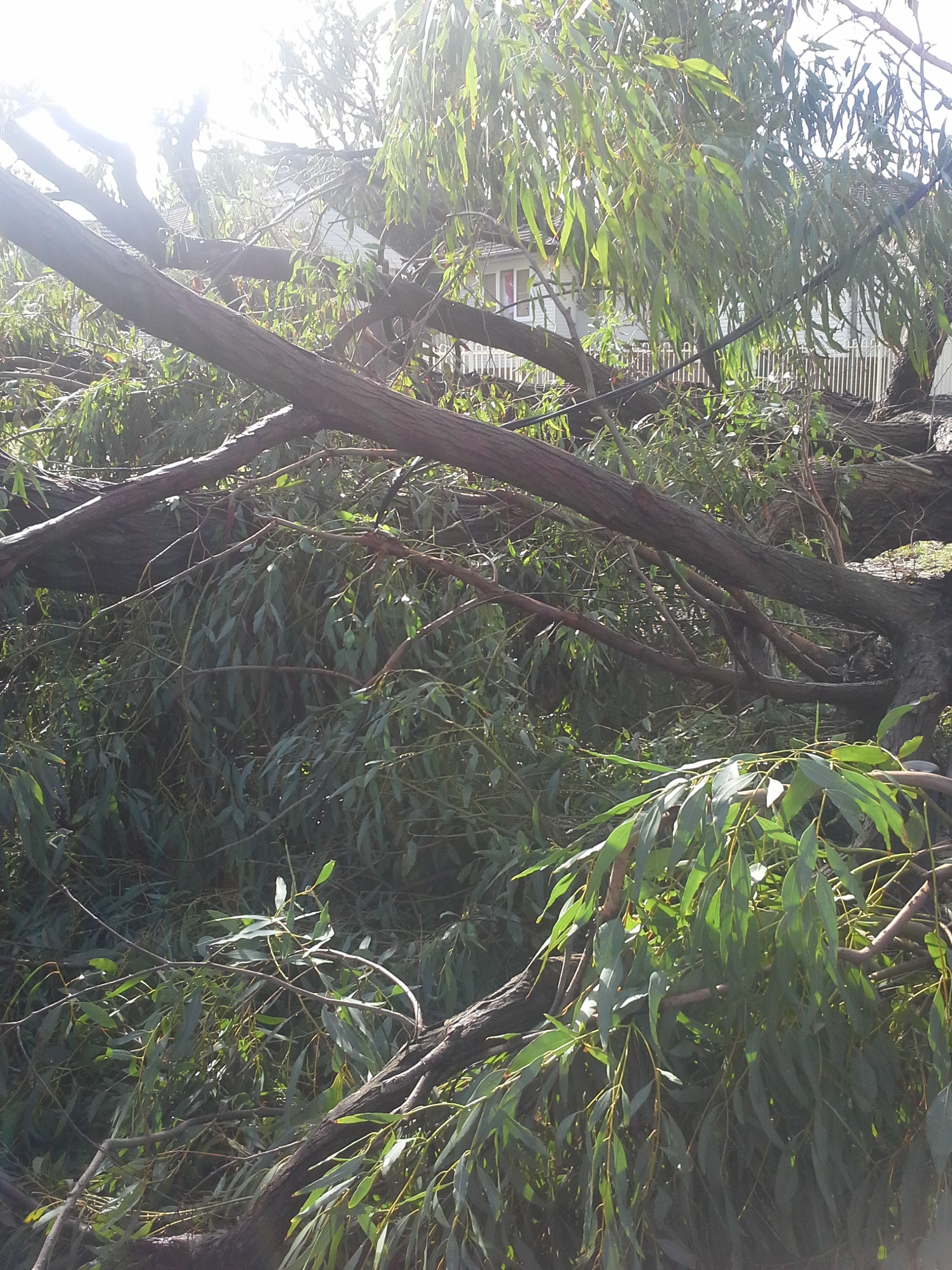
Ok I have some news to share, my daughter Jessica was operated on yesterday afternoon, she is recovering ok still has drainage tube in her stomach but is off the pain-relieving drip but still not feeling that great, she doesn’t know when she will be home as yet. However, that is probably a good thing as this is what her front lawn looks like and her street is without electricity and the street is still cornered off due to fallen trees. Leo of course is here and he is fine not distressed in any way about his mum not being here and being in hospital.

Jessica's house after storm (14)

In other news some may have heard about the elderly lady who was killed in Maitland due to her car being swept away in flood waters. Well it turns out the woman is my sister in-laws grandmother, so her family are shocked and sadden by this, they were worried yesterday about her when they saw the car on the news and realised it looked like her car, so they tried to ring her and were unable to contact her.

https://www.facebook.com/hashtag/nbnnews?source=feed_text&story_id=362917457243869

Jessica's house after storm (4)

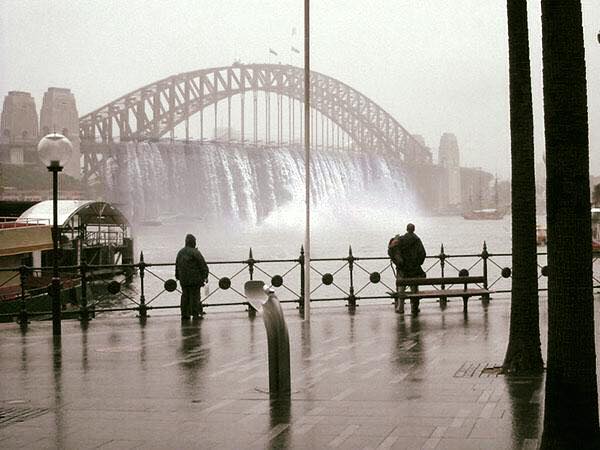
This is a photo from Facebook of Sydney harbour bridge, thought it was a wow photo so sharing it as well.

Sydney harbour bridge

Natasha is working five nights a week at her new cleaning job and either me or Jono have Blain while she is at work,he is suppose to be picked up by his dad this afternoon sometime I don’t know when though I was told between 4-5pm but it is now 5.10pm and he still isn’t here.

Jessica's house after storm (8)

Blain will be off school till Monday while they continue to clean up the school after the storm, Leo went back to school today but there are a number of school still closed till Monday.

Jessica's house after storm (11)

Wet, Windy, Cold and in hospital

storm

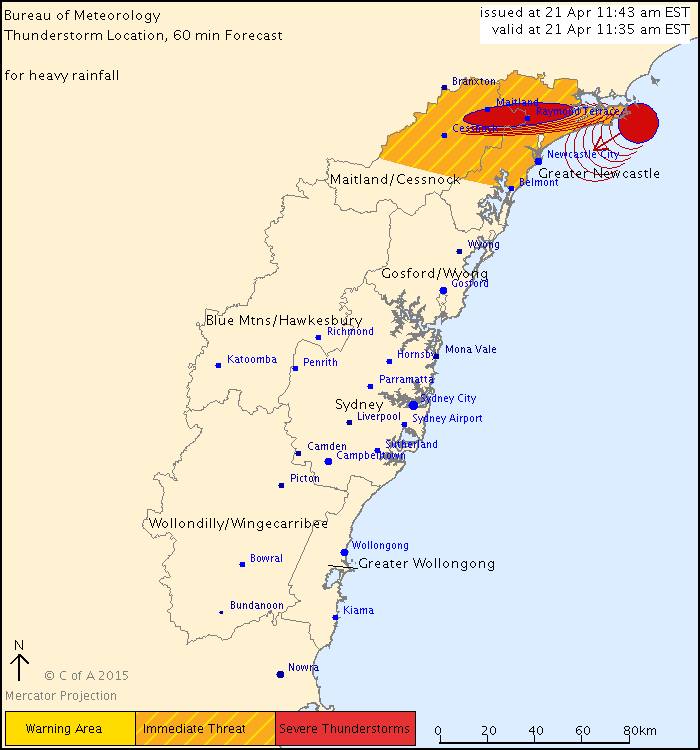
Here I am on a very wet, windy and cold Tuesday afternoon at last writing a post for the day, and what a day has it been, some of you might here on the news about the terrible storm that has it the Hunter Valley today and yes I live in the Hunter Valley, Newcastle is part of the Hunter Valley it is the lower part of the Hunter Valley.

Now let’s go back to last night, that is when the bad weather started and my daughter Jessica was yet again in a great deal of pain and I had no car so was unable to go to her, it got that bad that she managed to drive herself here, yes she had rung the ambo’s but the paramedic told her it was stress and muscle pain and did nothing. Well after about an hour my niece Kelli turned up to drop Blain off for the night while Tasha was at work, and because Jessica was in so much pain screaming and crying she decided to take her to the John Hunter Hospital (our main hospital).

This morning I woke up to a note from Kelli that said Jessica had been admitted to the hospital and would tell me more later. Seems Jessica has pancreatitis and will need her gallbladder removed, that hopefully will happen tomorrow. More about that later.

Power lines

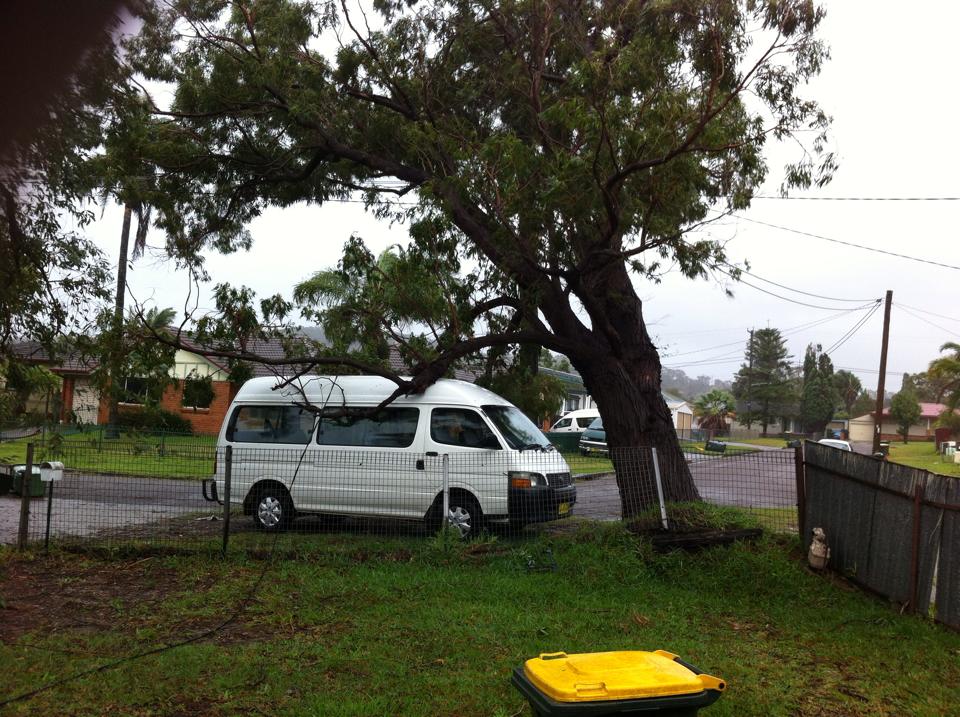
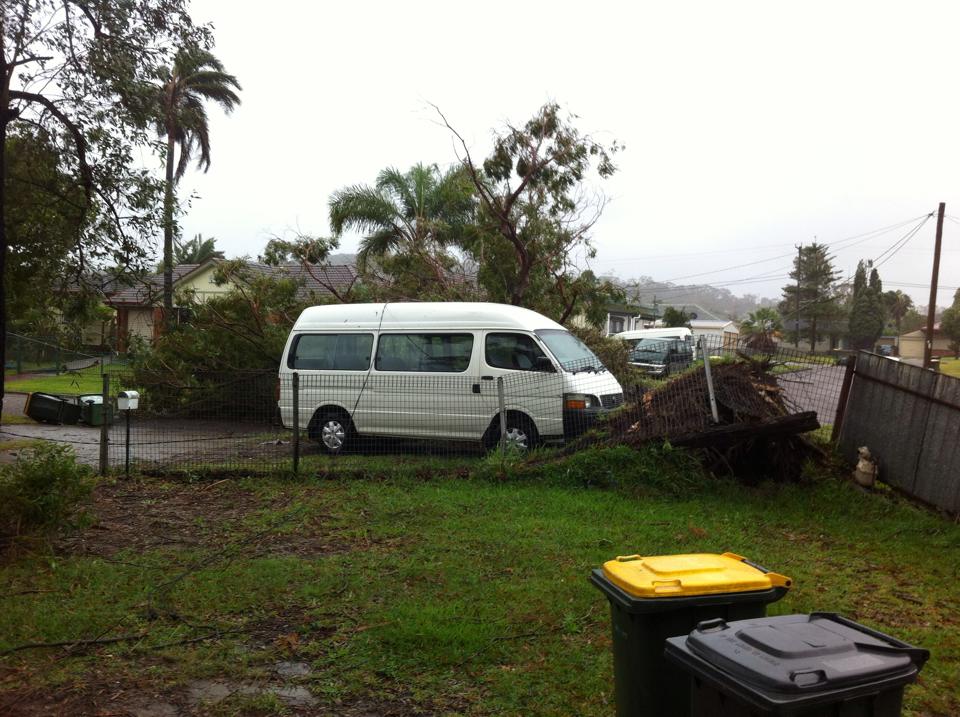
Back to the weather it has been very bad here, Tasha went to Jessica’s place to meet some guy who was suppose to be picking up the work van, (he never turned up) and while there the tree next to the van was uprooted and the power lines came down. The tree missed Natasha by centimetres and gave her a terrible fright, all she could thing was that if it had hit her it would have killed her, she managed to get her car out of the driveway and came back here very shaken up and crying.

When Kelli went back to pick up some clothes for Jessica the road was closed and the SES would not let her pass.

Jes tree

Tim rode the motorbike to work this morning silly man, and wanted me to go and get him at 7.30 tonight but at 4pm he walked in the door, another driver drove him home as all the buses had been pulled off the road. I will have to drive him to work in the morning and he is hoping that by the time he knocks off it will be ok and he will be able to ride the bike home safely.

road closed