Somalia

This week we are looking at Somalia, I was asked by Debby over at https://myshastahome.blogspot.com/ if I was going to post about Somalia so that’s what I am doing.

Somalia, officially the Federal Republic of Somalia, is the easternmost country in continent of Africa. The country is located in the Horn of Africa and is bordered by Ethiopia to the west, Djibouti to the northwest, Kenya to the southwest, the Gulf of Aden to the north, and the Indian Ocean to the east.

The population is 18.14 million it has two official languages Somali and Arabic.

Based on gross domestic product, in 2021 Somalia was the third-poorest country in the world (after Burundi and South Sudan). In international assessments of its business climate, Somalia regularly lands on one of the last places.

The Somali shilling is the official currency of Somalia. It is subdivided into 100 senti, cents or centesimi.
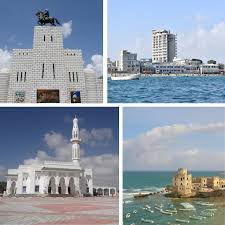
The capital is Mogadishu, locally known as Xamar or Hamar, it is the most populous city of Somalia. The city has served as an important port connecting traders across the Indian Ocean for millennia and has an estimated urban population of 2,610,483.

The Somalia flag features a blue base with a white five-pointed star at its center. The flag was adopted on October 12, 1954 and was inspired by the flag of the United Nations. Somalia gained independence from Italy in 1960 and united with the former British Somaliland to form the current Somalia.

The national animal of Somalia is the African leopard. Leopards are commonly seen in Somalia and are featured on the country’s coat of arms.

The national flower of Somalia is the endangered King Protea flower which symbolizes change and transformation.

The coat of arms of Somalia was adopted on October 10, 1956 and features a golden framed shield of the Somali flag supported by two Leopards standing on spears. The Leopard is a common animal seen in Somalia. Leopards are a common motif in Somali culture.

Somalia’s current constitution, the Provisional Constitution of the Federal Republic of Somalia, was adopted on August 1, 2012. It was created as a provisional document and has been under review for a long time. 

The constitution was based on a political settlement that included: Federalism, Clan power-sharing, Regular elections, and an inclusive spirit to build consensus. 

The constitution established Somalia as a parliamentary system of government, with the President as head of state and the Prime Minister as head of government. It also established Islam as the state religion and required all laws to comply with shari’a. 

In 2022, President Mohamud pledged to create a new constitution and said that further delays were “not an option”. 

The majority of people in Somalia are Sunni Muslim, with the Federal Ministry of Endowments and Religious Affairs estimating that over 99% of the population identify as such. The country’s constitution makes Islam the state religion, and converting to another religion is illegal in some areas and socially unacceptable in all.

Christianity is a minority religion in Somalia, In 2020, the US Department of State estimated that there were about 1,000 Christians in Somalia. Most modern-day Christians are from the Bantu ethnic minority group or are descended from Italian colonists. 

Christians in Somalia have faced persecution, including the kidnapping and rape of Christians in 2008. The Somali Church was driven underground during the Islamist uprising of 1991. There is one Catholic diocese for the entire country, the Diocese of Mogadishu. Orthodox Christianity came to coastal areas of the Somalia in early 2nd and 3rd century.

Do not travel to Somalia due to crime, terrorism, civil unrest, health issues, kidnapping, piracy, and lack of availability of routine consular services. Country Summary: Violent crime, such as kidnapping and murder, is common throughout Somalia. Illegal roadblocks are widespread.

Ethiopia

Hi all, how is everyone doing, I hope all is good with and those you care about, this week we are still in Africia and the country is Ethiopia a county that many will have heard of in different commercials for UNICEF.

Ethiopia, in the Horn of Africa, is a rugged, landlocked country split by the Great Rift Valley. With archaeological finds dating back more than 3 million years, it’s a place of ancient culture. Among its important sites are Lalibela with its rock-cut Christian churches from the 12th–13th centuries. Aksum is the ruins of an ancient city with obelisks, tombs, castles and Our Lady Mary of Zion church.

In 1931, Emperor Haile Selassie formally requested that the international community use the name Ethiopia instead of the exonym Abyssinia, and the issuing Bank of Abyssinia also became the Bank of Ethiopia.

The capital is Addis Ababa, which is in the highlands bordering the Great Rift Valley, is the country’s commercial and cultural hub.

Located in the capital is a National Museum which exhibits Ethiopian art, traditional crafts and prehistoric fossils, including replicas of the famous early hominid, “Lucy.”

It has a population of around 126 million, this may be due to a very high fertility of 4.4 children per woman. The combination of a high birth rate and relatively low life expectancy means that Ethiopia is a young country. 41.5 percent of the population is below 15 years and only 3.3 percent is above 65.

The currency is the birr it is subdivided into 100 santims.

The national animal is the lion, and its national flower is the calla lily. The national bird is the Stresemann’s bush crow, also known as the Abyssinian pie, bush crow.

The Flag of Ethiopia consists of a green, yellow, and red tricolour with the national emblem, a golden pentagram on a blue disc, superimposed at the centre.

The star represents the unity of all Ethiopian nationalities, its rays the bright prospects for their future. Blue is for peace, yellow for hope, justice, and equality. Red represents sacrifice for freedom and equality, while green is equated with labour, development, and fertility.

Religion in Ethiopia consists of a number of faiths. Among these mainly Abrahamic religions, the most numerous is Christianity totalling at 67.3%, followed by Islam at 31.3%. There is also a longstanding but small Ethiopian Jewish community.

Christianity in Ethiopia dates back to the ancient Kingdom of Aksum, when the King Ezana first adopted the faith in the 4th century AD. This makes Ethiopia one of the first regions in the world to officially adopt Christianity. Various Christian denominations are now followed in the country.

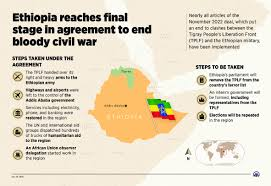
This is not a country you want to go visiting in face a search online will tell you to avoid non-essential travel to Ethiopia due to civil unrest, violence, armed conflict and crime. The security situation can deteriorate without warning. This advisory excludes Addis Ababa where you should exercise a high degree of caution.

The government of Ethiopia is the federal government of Ethiopia. It is structured in a framework of a federal parliamentary republic, whereby the prime minister is the head of government and the commander-in-chief of the Ethiopian Armed Forces. The prime minister is the most powerful political figure in Ethiopian politics. The official residence of the prime minister is the Menelik Palace in Addis Ababa.

Sudan

Well let’s move from Egypt to Sudan, officially the Republic of the Sudan, it’s a country in Northeast Africa. It borders the Central African Republic to the southwest, Chad to the west, Libya to the northwest, Egypt to the north, the Red Sea to the east, Eritrea and Ethiopia to the southeast, and South Sudan to the south.

Sudan is both an African and Arab country, with Arabic being the most widely spoken language. Over 97% of the population are Sunni Muslims with a small Christian minority.

The Sudanese pound is the currency of the Republic of the Sudan. The pound is divided into 100 piastres. It is issued by the Central Bank of Sudan.

Khartoum or Khartum is the capital of Sudan. With a population of 6,344,348, the metropolitan area is the largest in Sudan. It is located in the centre of the country, at the point where the Blue Nile and White Nile rivers meet.

The population of Sudan is estimated to be 50,467,278 in 2024, with a population density of 21.3 people per square kilometre.

The flag of Sudan was adopted on 20 May 1970 and consists of a horizontal red-white-black tricolour with a green triangle at the hoist

The national flower of Sudan is the hibiscus. The hibiscus flower is also known as the Sudan rose or Hibiscus sabdariffa. The flower’s dried petals are steeped in water to make an herbal tea called karkade, which is popular in Sudan, South Sudan, and Egypt. 

I searched for Sudan’s coat of arms what I found was their national symbol which follows the rules of heraldry (whatever that is) it could be considered a national coat of arms instead of a national emblem.

It shows a secretary bird bearing a shield from the time of Muhammad Almad, the self-proclaimed Mahdi who briefly ruled Sudan in the 19th century.

Two scrolls are placed on the arms; the upper one displays the national motto, the English translation is “Victory is ours”, and the lower one displays the title of the state, which is Republic of the Sudan.

The coat of arms is also the Presidential seal.

It is not a safe country to visit due to A civil war between two major rival factions of the military government of Sudan, the Sudanese Armed Forces under Abdel Fattah al-Burhan and the paramilitary Rapid Support Forces and its allies under the Janjaweed leader Hemedti, began during Ramadan on 15 April 2023. 

Egypt

Well, we are moving out of Europe and into North Africa this is the second largest and second most populated continent after Asia. North Africa is naturally the northmost region of the African continent it is separated from the rest of Africa by the Sahara Desert.

Egypt is one of the most populated countries in Africa and the Middle East, a great majority of the population live near the banks of the river Nile. It is famous for its ancient civilisation and some of the world’s most famous monuments such as the Pyramids and Great Sphinx.

It is a country linking northeast Africa with the Middle East, dates to the time of the pharaohs.

The capital, Cairo, is home to Ottoman landmarks like Muhammad Ali Mosque and the Egyptian Museum. It is set on the Nile River. At its heart is Tahrir Square and the vast Egyptian Museum, a trove of antiquities including royal mummies and gilded King Tutankhamun artifacts. Nearby, Giza is the site of the iconic pyramids and Great Sphinx, dating to the 26th century BC. In Gezira Island’s leafy Zamalek district, 187m Cairo Tower affords panoramic city views.

The Egyptian pound is the official currency of Egypt. The 10  and 20-pound notes are made out of polymer plastic paper as of July 6, 2022.

The official language of Egypt is Arabic, and most Egyptians speak one of several vernacular dialects of that language. As is the case in other Arab countries, the spoken vernacular differs greatly from the literary language.

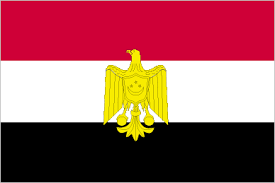
The national flag of Egypt is a tricolour consisting of the three equal horizontal red, white, and black bands of the Egyptian revolutionary flag that dates back to the 1952 Egyptian Revolution. The flag bears Egypt’s national emblem, the Egyptian eagle of Saladin, centred in the white band.

While looking for the country’s national animal I got two responses one being the Dorcas Gazell the other being the Steppe Eagle, which is the country’s national bird.

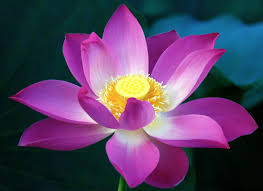
The national flower of Egypt is the Egypt Lotus Flower. This stunning flower has been an important symbol in Egyptian culture for thousands of years, and it is often associated with rebirth and regeneration.

Football is the most popular sport in Egypt, by football I mean soccer many Egyptians gather around to watch various Egyptian clubs and the Egyptian national football team play on an almost daily basis. Zamalek and Al Ahly are amongst the most popular in the country, both of which are based in Cairo.

Throughout much of ancient history Egyptian religion was polytheistic, meaning it recognized many gods and goddesses, as well as a variety of other divine beings.

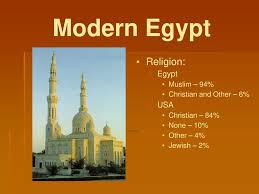
Now days most experts and media sources estimate approximately 90 percent of the population is Sunni Muslim and 10 percent is Christian. Scholars and NGOs estimate Shia Muslims comprise approximately 1 percent of the population. There are also small numbers of Dawoodi Bohra Muslims and Ahmadi Muslims.

 There is also a new post over at Random Stuff