This week we are looking at the national anthem of Eritrea, but I wasn’t able to find much information about it.
The national anthem is called, “Eritrea, Eritrea, Eritrea”, it was written by poet Solomon Tsehaye Beraki and composed by organist Isaac Abraham Meharezghi. This was back in 1986 and was updated in 1993 after Eritrea gained independence.
The anthem represents the common national consciousness that developed among the people of Eritrea during their nearly three-decade war of independence.
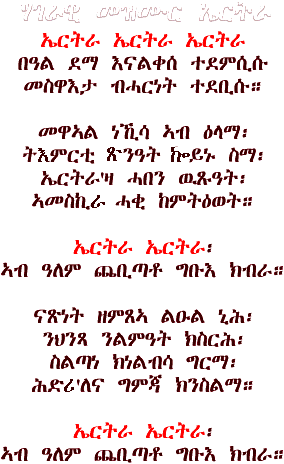
These are the lyrics.
The English translation is this.
Ertra, Ertra, Ertra, The barbarian enemy humiliatingly defeated And martyrdom has paid for freedom
Decades of devotion for purpose Your name became challenger, miraculous Ertra, comfort for the oppressed Proved that truth can win after all
Ertra, Ertra A sovereign state on earth after all
Dedication that led to liberation Will build up and make her green We shall honour her with progress We have a word to her to embellish
This week we are still in Africa, and this is a country I only recently heard of while watching something on YouTube about modern day slavery.
So, we are looking at the country of Eritrea.
Eritrea is a northeast African country on the Red Sea coast. It shares borders with Ethiopia, Sudan and Djibouti. The capital city, Asmara, is known for its Italian colonial buildings, like St. Joseph’s Cathedral, as well as art deco structures. Italian, Egyptian and Turkish architecture in Massawa reflect the port city’s colourful history. Notable buildings here include St. Mariam Cathedral and the Imperial Palace.
It has a population of 3.7 million and has no official language, as it is a multilingual country, and as the Constitution establishes the “equality of all Eritrean languages”. Tigrinya, Arabic, and English serve as de facto working languages, with English used in university education and many technical fields.
The flag of Eritrea is made up of a red triangle, a green triangle, and a blue triangle, with a yellow olive branch and wreath in the centre. The first Eritrean flag was adopted in 1952, but was replaced by Ethiopia in 1958, The Eritrean People’s Liberation Front (EPLF) adopted a flag in 1977, the current flag was adopted on December 5, 1995.
The country’s official religions are Eritrean Orthodox Tewahedo Christianity, Sunni Islam, Roman Catholicism, and Evangelical Protestantism. However, the government restricts the activities of these religions and persecutes members of unregistered religious groups.
What does this mean? Well, the government’s constitution and laws prohibit discrimination based on religion. However, the government restricts the activities of the officially recognized religions. The government intimidates and prosecutes people who practice unregistered religions, it also prevents unregistered religions from building houses of worship or practicing their religion. Also, the government detains people for their religious beliefs, including minors.
The currency is the nakfa and was introduced on 15 November 1997 to replace the Ethiopian birr at par. It takes it name from then place of Nakfa were the first victory in their war of independence took place.
Like many other African countries, it is not a safe place to visit.
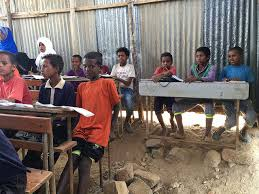
The country’s education system includes basic, secondary, and tertiary education. The government has been working to improve the quality of education and increase access to schools. Due to the country’s geography which include remote areas education is difficult.
Other problems are the amount of poverty, and many children living in nomadic areas also children with disabilities have difficulty accessing education.
In fact, many children are unable to read and understand what they are reading, and it is not unusual for as much as 48% of primary school-aged children to not attend school.
Eritrea has been involved in several wars and conflicts, including the Eritrean–Ethiopian War, the Djiboutian–Eritrean conflict, and the Tigray War.
Eritrean–Ethiopian War lasted from 1998 to 2000 and was between Eritrea and Ethiopia. The war resulted in the Algiers Agreement, tens of thousands lost their lives on both sides. The war resulted in minor changes to the border between the two countries.
Eritrean–Ethiopian border conflict this was a violent standoff and proxy conflict between Eritrea and Ethiopia that lasted from 1998 to 2018. In 2018, Ethiopia agreed to cede Badme to Eritrea.
Eritrean War of Independence as armed conflict that lasted from 1961 to 1991 this war ended in 1991 with the fall of the Derg regime.
Djiboutian–Eritrean conflict occurred in 2008 between Eritrea and Djibouti it lasted only three days of indecisive fighting.
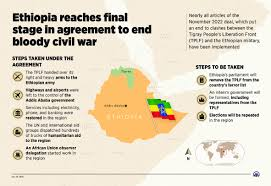
Lastly there was the Tigray War a conflict that occurred from 2020 to 2022 between Ethiopia and Eritrea it ended with the Ethiopia–Tigray peace agreement.
This week we are looking at Somalia, I was asked by Debby over at https://myshastahome.blogspot.com/ if I was going to post about Somalia so that’s what I am doing.
Somalia, officially the Federal Republic of Somalia, is the easternmost country in continent of Africa. The country is located in the Horn of Africa and is bordered by Ethiopia to the west, Djibouti to the northwest, Kenya to the southwest, the Gulf of Aden to the north, and the Indian Ocean to the east.
The population is 18.14 million it has two official languages Somali and Arabic.
Based on gross domestic product, in 2021 Somalia was the third-poorest country in the world (after Burundi and South Sudan). In international assessments of its business climate, Somalia regularly lands on one of the last places.
The Somali shilling is the official currency of Somalia. It is subdivided into 100 senti, cents or centesimi.
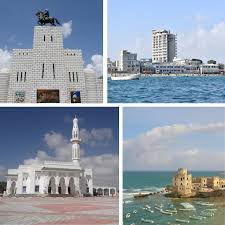
The capital is Mogadishu, locally known as Xamar or Hamar, it is the most populous city of Somalia. The city has served as an important port connecting traders across the Indian Ocean for millennia and has an estimated urban population of 2,610,483.
The Somalia flag features a blue base with a white five-pointed star at its center. The flag was adopted on October 12, 1954 and was inspired by the flag of the United Nations. Somalia gained independence from Italy in 1960 and united with the former British Somaliland to form the current Somalia.
The national animal of Somalia is the African leopard. Leopards are commonly seen in Somalia and are featured on the country’s coat of arms.
The national flower of Somalia is the endangered King Protea flower which symbolizes change and transformation.
The coat of arms of Somalia was adopted on October 10, 1956 and features a golden framed shield of the Somali flag supported by two Leopards standing on spears. The Leopard is a common animal seen in Somalia. Leopards are a common motif in Somali culture.
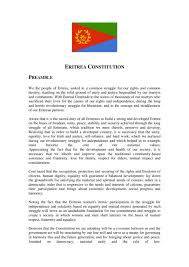
Somalia’s current constitution, the Provisional Constitution of the Federal Republic of Somalia, was adopted on August 1, 2012. It was created as a provisional document and has been under review for a long time.
The constitution was based on a political settlement that included: Federalism, Clan power-sharing, Regular elections, and an inclusive spirit to build consensus.
The constitution established Somalia as a parliamentary system of government, with the President as head of state and the Prime Minister as head of government. It also established Islam as the state religion and required all laws to comply with shari’a.
In 2022, President Mohamud pledged to create a new constitution and said that further delays were “not an option”.
The majority of people in Somalia are Sunni Muslim, with the Federal Ministry of Endowments and Religious Affairs estimating that over 99% of the population identify as such. The country’s constitution makes Islam the state religion, and converting to another religion is illegal in some areas and socially unacceptable in all.
Christianity is a minority religion in Somalia, In 2020, the US Department of State estimated that there were about 1,000 Christians in Somalia. Most modern-day Christians are from the Bantu ethnic minority group or are descended from Italian colonists.
Christians in Somalia have faced persecution, including the kidnapping and rape of Christians in 2008. The Somali Church was driven underground during the Islamist uprising of 1991. There is one Catholic diocese for the entire country, the Diocese of Mogadishu. Orthodox Christianity came to coastal areas of the Somalia in early 2nd and 3rd century.
Do not travel to Somalia due to crime, terrorism, civil unrest, health issues, kidnapping, piracy, and lack of availability of routine consular services. Country Summary: Violent crime, such as kidnapping and murder, is common throughout Somalia. Illegal roadblocks are widespread.
Hi all, how is everyone doing, I hope all is good with and those you care about, this week we are still in Africia and the country is Ethiopia a county that many will have heard of in different commercials for UNICEF.
Ethiopia, in the Horn of Africa, is a rugged, landlocked country split by the Great Rift Valley. With archaeological finds dating back more than 3 million years, it’s a place of ancient culture. Among its important sites are Lalibela with its rock-cut Christian churches from the 12th–13th centuries. Aksum is the ruins of an ancient city with obelisks, tombs, castles and Our Lady Mary of Zion church.
In 1931, Emperor Haile Selassie formally requested that the international community use the name Ethiopia instead of the exonym Abyssinia, and the issuing Bank of Abyssinia also became the Bank of Ethiopia.
The capital is Addis Ababa, which is in the highlands bordering the Great Rift Valley, is the country’s commercial and cultural hub.
Located in the capital is a National Museum which exhibits Ethiopian art, traditional crafts and prehistoric fossils, including replicas of the famous early hominid, “Lucy.”
It has a population of around 126 million, this may be due to a very high fertility of 4.4 children per woman. The combination of a high birth rate and relatively low life expectancy means that Ethiopia is a young country. 41.5 percent of the population is below 15 years and only 3.3 percent is above 65.
The currency is the birr it is subdivided into 100 santims.
The national animal is the lion, and its national flower is the calla lily. The national bird is the Stresemann’s bush crow, also known as the Abyssinian pie, bush crow.
The Flag of Ethiopia consists of a green, yellow, and red tricolour with the national emblem, a golden pentagram on a blue disc, superimposed at the centre.
The star represents the unity of all Ethiopian nationalities, its rays the bright prospects for their future. Blue is for peace, yellow for hope, justice, and equality. Red represents sacrifice for freedom and equality, while green is equated with labour, development, and fertility.
Religion in Ethiopia consists of a number of faiths. Among these mainly Abrahamic religions, the most numerous is Christianity totalling at 67.3%, followed by Islam at 31.3%. There is also a longstanding but small Ethiopian Jewish community.
Christianity in Ethiopia dates back to the ancient Kingdom of Aksum, when the King Ezana first adopted the faith in the 4th century AD. This makes Ethiopia one of the first regions in the world to officially adopt Christianity. Various Christian denominations are now followed in the country.
This is not a country you want to go visiting in face a search online will tell you to avoid non-essential travel to Ethiopia due to civil unrest, violence, armed conflict and crime. The security situation can deteriorate without warning. This advisory excludes Addis Ababa where you should exercise a high degree of caution.
The government of Ethiopia is the federal government of Ethiopia. It is structured in a framework of a federal parliamentary republic, whereby the prime minister is the head of government and the commander-in-chief of the Ethiopian Armed Forces. The prime minister is the most powerful political figure in Ethiopian politics. The official residence of the prime minister is the Menelik Palace in Addis Ababa.








 Jo-AnneRamplings