Largest Horse Breeds

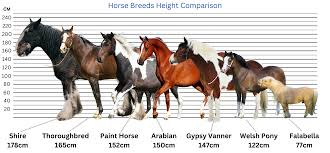
This week we are looking at the world’s largest horse breeds with the Shire horse often considered the largest horse breed. It is a British breed known for its impressive size and strength, with some individuals reaching heights of 18 to 21 hands. The largest Shire on record, Sampson (later Mammoth), stood at 21.5 hands. They usually black, bay, or grey.

This horse originated in England and are known for their large size and powerful build. They can weigh up to 2,200 pounds and stand up to 18 hands tall. Historically used for pulling heavy carts and ploughing fields. 

They are now used for horse riding, show events, as well as still being used for work in some areas. They are known for their gentle and calm temperament. 

The Shire breed have held world records for both the largest and tallest horse. 

They are primarily found in the United Kingdom, Australia, Canada, and the United States. While the breed originated in England, they have been exported and bred in other countries as well. 

In addition to the Shire, other large horse breeds include the Clydesdale which is another British draft horse breed, known for its size and strength, and often used in parades and horse shows. Clydesdale horses are found in several countries around the world, most notably in their native Scotland, Oklahoma State University, as well as in Australia, New Zealand, Canada and the United States.

They were also exported to other countries like Russia and South America. Today, the breed is particularly popular in Australia, where it’s known as “the breed that built Australia”. 

Then there is the Belgian Draft Horse, known for its large size and strong build, used for farm work and heavy hauling. They are primarily found in Belgium, where they originated, and the United States, particularly the American Brabant. The breed is also found in other parts of Europe and North America. 

Next week we will look at the smallest horses 

Island Fox

This will be the last post about foxes we are ending with the Island Fox.

The Island fox is native to six of the eight Channel Islands in California it is considered critically endangered by the IUCN, it is threaten by golden eagles, disease, and habitat destruction.

The Catalina Island Conservancy and Institute for Wildlife Studies have established a fox recovery program for the island fox. This program includes vaccination, relocation, and captive breeding. 

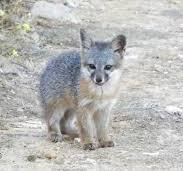
The island fox is a small fox species that is endemic to six of the eight Channel Islands of California. There are six subspecies, each unique to the island it lives on, reflecting its evolutionary history. They are generally docile, show little fear of humans, and are easily tamed.

The island fox has similar markings to the gray fox. They have gray colouring on the back, rust colouring on the sides, and white underneath. The face has a distinctive black, white, and rufous-coloured patterns.

In March 2004, four subspecies of the island fox were classified as a federally protected endangered species: the Santa Cruz Island fox, Santa Rosa Island fox, San Miguel Island fox and the Santa Catalina Island fox.

Island foxes reach sexual maturity at 10 months, and females usually breed within the first year. These foxes can live for up to 10 years in the wild, but four to six years is more typical.

They are generally docile, show little fear of humans, and are easily tamed. Island foxes played an important role in the spiritual lives of native Channel Islanders. They have been likely semi-domesticated as pets, used as pelts, or for other functions, like pest control.

They are omnivorous, eating both plants and other animals. They eat a large amount of insects, some island deer mice, reptiles, and fruit from native plants. New evidence is showing marine resources may be important for island foxes. Their diet also changes with the seasons.

 The primary threat to the island fox is predation by invasive golden eagles. The species is also very vulnerable to canine distemper transmitted by domestic dogs, habitat fragmentation due to development, and habitat loss to introduced livestock and game species.

Sierra Nevada Red Fox

This week we are looking at the Sierra Nevada red fox. 

Then we have the Sierra Nevada red fox which is found in the mountainous regions of California’s Sierra Nevada, it is also considered endangered. It is threatened by unpredictable events like wildfire and drought, competition with coyotes, and hybridization with non-native foxes, as well as habitat loss from logging and livestock grazing, disturbance by recreational vehicles, and climate change.

The Sonora Pass population of the Sierra Nevada red fox may be one of the most endangered species in the U.S. When FWS listed this population as endangered in 2021, the agency estimated that as few as 39 individuals may remain in the wild.

They appear to be opportunistic predators and foragers, with a diet primarily composed of small rodents. Their favorite foods are hares and gophers, but they also eat manzanita berries and deer carrion, particularly in winter and spring.

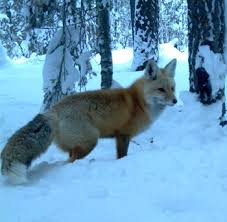
They have a small, slender body and legs; long, pointed ears; an elongated snout; and a long, white-tipped tail. They’re typically smaller than lowland red fox subspecies, with males weighing up to 9.2 pounds and measuring up to 3.4 feet long and females up to 7.7 pounds and 3.2 feet.

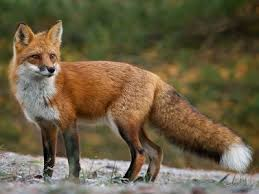
The biggest difference between it and the Red Fox is the Sierra Nevada red fox’s specialized adaptations for cold and snow. They have well-furred paws as part of their winter coat, longer hind legs and are slightly smaller.

They mate between December and March, with most mating occurring in January and February. They are believed to be monogamous. 

They are sexually mature at 10 months they have a gestation period of 52–54 days, they can give birth to litters of 1–12 kits, with an average of 3–6 kits they are born in early to mid-April the pups move outside the den by June and are dependent on parents for 6 months.

They prepare multiple dens after mating and may share a burrow with another pair.

A conservation strategy is being developed to help recover the Sierra Nevada red fox. The strategy includes translocations and introducing other alpine foxes to support breeding.

The Forest Service, Park Service, and Department of Defence have resource management plans to minimize forest fragmentation.

Week 10 of 2025

I slept well woke only once to pee, a cool morning we are in for another hot day, with a top of 29C, it is currently 6am and 23C.

Tim took the car in for its first service, I noticed after he left that he forgot his phone, that would be annoying as who doesn’t scroll through Facebook while waiting. Those who left their phone at home that’s who.

I changed the sheets and by the time I was done I was dripping sweat and felt exhausted. So I turned the air con on.

I have answered 6 letters today.

Tim went and cashed in cans and bottles.

Steps:11,150s

It was midnight before I fully settle last night, at 5am I got up and took my meds then went back to bed for an hour.

Around 10am Tim and I went to Sue’s so he could change her flat tyre, however, he wasn’t able to get the lug nuts off as the tool he had was too big as was the one Sue had. Although the one Sue had, come with the car so you would have thought it would fit.

We called into the shops so I could get the scrips and some bread before coming home.

I have been tired on and off all day and it has been stinking hot.

Steps: 6,085

I had a much better night, last night, felt a little heavy headed when I first got up, but I am doing better now.

I made myself an egg and cheese roll for breakie but only managed to eat half of it.

Tim went to Sue’s after his morning school run to change her tyre, but he wasn’t able to do it as he couldn’t get the lug nuts off as they were on too tight.

This afternoon Dawson called in to see me and make sure I knew had another car.

Been raining this afternoon.

Steps: 9,822

Another good night, I can’t have my morning egg flip as we have no milk till the groceries are delivered and I have no bread, but I did have a stale bread roll which I have used to make a grilled cheese.

So, I managed to only eat half of the bread roll, nothing wrong with it just no appetite.

I had a wagon wheel hot cross bun for lunch, but it was too rich for me, in future I will only have half at a time.

It started out cool but warmed up by 11am.

By 5.45pm I was falling asleep, I will stay up till 7.30pm.

Steps:7,947

Another good night, I slept straight through waking only when my alarm went off.

I have both front and back sliding doors opened and it is nice just a slight breeze.

It started raining while I was wait for Sam this afternoon.

Tasha drove Blain’s girlfriend’s car to Tafe and on her way home the car stopped, and she couldn’t get it going and was in a state. Tim was able to go and help her turned out it was a flat battery.

Kathy rang Tim via Facebook as she does every Wednesday just to see him and have a short chat.

Steps:9,999

Another good night, I slept straight through waking only when my alarm went off.

I had a shower after Tim left for work, then I vacuumed before making breakie.

Sue rang the mobile tyre place, she had to buy a new tyre as they wouldn’t put the spare on in place of the flat one, well the guy turned up he was a friend of Ed and Les, she got the number of the mobile tyre mob from Sandy. Anyway, he told her for only $20 more she could have got two tyres as they would waive the call out fee.

It started to rain here around 1.45pm it didn’t last long maybe 10-minutes. It then started raining again at 3.30pm.

Steps:12,201

Had a reasonable night’s sleep, although when the alarm went off, I didn’t want to get up.

This morning I was sitting here reading blogs when I heard a loud squark and I jumped, when I turned round there was a cockatoo standing a foot away from me, I said what do you want, it walked over to bird seed and looked at me, so I feed it and all the others out the front.

It has been a nice day, haven’t done much not much motivation today. I started to feel real tied by 6pm.

It is 8.30pm and I am off to bed.

Steps: 5,945               

I had a good night, woke at 5am with the alarm but after taking my meds I went back to bed for another 40-minutes.

It is raining this morning; it looks like it will be a wet day.

I have been feel blah all day.

Bat-Eared Fox

This week we are look at the bat-eared fox, another fox I hadn’t heard of.

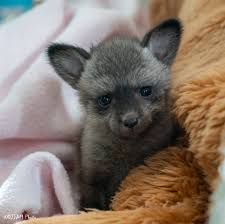
The bat-eared fox is a species of fox found on the African savanna. It is the only extant species of the genus Otocyon and a basal species of canid. Fossil records indicate this canid first appeared during the middle Pleistocene.

As the name indicates, this fox has unusually enormous ears in proportion to its head, like those of many bats. Their bodies are generally yellow-brown with a pale throat and under parts. The outsides of the ears, the racoon-like “face-mask,” lower legs, feet, and tail tip are all black. 

They can be found living in groups of mating pairs and their young. They are a very social species and spend lots of time grooming each other, as well as playing and sleeping together.

Their hearing is remarkable, but bat-eared foxes are also known for their social nature. They often live in family groups of up to 15 animals. They do not mark or defend territories aggressively against other packs.

They seldom drink water as they obtain most of the moisture they need from their food; 3. Unlike other canids, the male undertakes most parental care duties, while the female forages for food that maintains her milk production

Termites and dung beetles make up about 80 percent of their diets. In addition to termites and dung beetles, they also eat other insects and arthropods, small rodents, lizards, the eggs and chicks of other birds, and plant matter. They obtain much of their water from the body fluid of the insects they consume.

Predators include cheetahs, jackals, spotted hyenas, rock pythons, African wild dogs, and leopards. Bat-eared foxes are named for their large ears, which are also used for thermoregulation. To escape from predators, bat-eared foxes rely on speed and their incredible dodging ability.

They typically live for 6 years in the wild but can be up to 13 years in captivity. 

They reach sexual maturity at 8–9 months old, both male and female. They usually leave their family groups at 5–6 months old. 

They breed annually, producing litters of 3–6 pups, with a gestation period of 60–75 days. 

Crab-eating fox

This is week we are looking at the crab-eat fox, also known as the forest dog, wood fox, bushfox or maikong, is an extant species of medium-sized canid endemic to the central part of South America since at least the Pleistocene epoch. Like South American foxes, which are in the genus Lycalopex, it is not closely related to true foxes. 

They can be found in the ranges in savannas; woodlands; subtropical forests; prickly, shrubby thickets; and tropical savannas such as the caatinga, plains, and campo, from Colombia and southern Venezuela in the north to Paraguay, Uruguay and northern Argentina at the southernmost reaches of its range.

They can be solitary but can also form couples or even families of up to disturbed by human activities. The species gets its name because during the wet season it searches for crabs on muddy floodplains.

Crab-eating foxes are omnivorous; their diet includes many fruits, vertebrates, insects, amphibians, crabs and other crustaceans, birds and carrion.

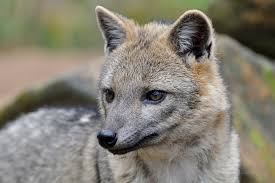
The crab-eating fox is predominantly greyish-brown, with areas of red on the face and legs, and black-tipped ears and tail. It has short, strong legs and its tail is long and bushy. The head and body length averages 64.3 centimetres (25.3 in), and the average tail length is 28.5 centimetres (11.2 in).

They reach sexual maturity within 9–10 months. Adult females give birth to one or two litters per year, depending on the climate and the availability of food. The reproductive period most often begins in November or December, and again in July.

The birth of offspring follows after an approximately 56-day gestation, typically in January, February or sometimes March then again from September to October. If giving birth to one litter, they typically give birth in the early spring. The parents are monogamous and raises the pups together, which are weaned at around three months old and become independent of their parents around 5–8 months old.

Grey Fox

The gray fox, or grey fox, is an omnivorous mammal of the family Canidae, widespread throughout North America and Central America.

They live in a wide variety of places. They prefer to live in places they can blend in, like canyons and ridges. Though they will also live in wooded areas, open desert and grasslands. They can be found from Quebec to Northern Columbia and Venezuela.

They are common, but very elusive and rare to spot in the wild. They are primarily nocturnal but may forage during the day.

They are smaller than red foxes. They weigh between 7 and 13 pounds and average 3 to 4 feet in length including the tail. They are stockier and have shorter legs than the red fox. Their color is grizzled gray with a distinctive black streak along the top to the black tip of the tail.

They have a white throat and belly. Their chest and lower sides of the body, undersurface of the tail, backs of the ears, parts of the legs, feet and neck are reddish or yellowish brown. The claws are sharp, and on the forefeet recurved.

Due to their more aggressive behavior, they prefer to hunt thicker cover than the more timid red fox. The gray fox’s preference for thicker cover, aggressive behavior, and the ability to climb trees minimizes the effect that eastern coyotes have on their population.

It often lines the den with shredded bark or leaves and will return to the same one year after year. The gray fox is nocturnal and crepuscular, which means it is most active at dusk and dawn. During the day, it remains in the den.

The gray fox is a solitary hunter and eats a wide variety of foods. A large part of its diet is made up of small mammals like mice, voles and eastern cottontail rabbits. It also eats birds; insects; and plants like corn, apples, nuts, berries and grass.

The gray fox has few natural predators. Bobcats, coyotes, great horned owls, and golden eagles may occasionally prey upon young gray foxes.

Week 3 of 2025

Another good night and nice morning it’s 20 degrees, my BGL is 5.3

Tim and I went over to Lake Fair, he wanted to cash in empty bottles, and I wanted to go to the dollar store to see what cheap Christmas things they had.

I only found a couple of things but that’s ok.

By the time we got home it was stinking hot.

Steps:6,499

I had a decent enough sleep, up at 5, showered and dressed, I have to see the neurologist is Sydney at 12.40pm so we will leave here around 9.30am

It is currently 18 degrees, but it is expected to reach 30 degrees today. My BGL was 5.1

When I saw the neurologist, she was pleased with how I am doing and isn’t making any change to my medication. The only thing that annoyed me was that she was running 70 minutes late.

We arrived home around 5pm, to a stinking hot house, we should have asked one of the girls to come and turn the air con around 4.30, that was the first thing I did after walking into the house.

LIARNA’S BIRTHDAY SHE IS 15 TODAY

I had a good night didn’t wake at all, it is 21 degrees this morning and my BGL was 5.1, we are headed for a top temp of 29 degrees.

Kathy will be dropping Summer off for the day, Summer would rather stay home alone like she did yesterday, but her mum said no.

Ok in the last how the temp has dropped to 19 degrees.

Thankfully I remember this morning that the water will be cut off from 8am to 3pm and made sure the kettle was filled as well as a jug of water.

As it turned out we didn’t have the water cut off.

There was an incident out the front, Tim was walking over to Jess’s place and the woman in unit 14 was driving out and Tim said she made like she was going to run him over. I watched the video caught on the door-bell camera, but I didn’t notice anything. I am not saying she didn’t do something just that I couldn’t see it. Anyway, he rang the cops to report it, and they came out to talk to him at 10.30pm.

Another mostly good night.

The temp is 25 degrees and my GL is 5.1. We are in for another hot day it reached a top of 33 degrees.

So, I went and had my care plan reviewed and then I went and had an Xray of my elbow done as well as the CT scan done of my left knee. Sue drove me.

I was glad that Tim turned the air con on before he went to work, as that meant I came home to a cool house.

Tim is working today; he should be home around 3pm. 

I managed to walk up and check the mail without my cane or my walker, I felt exhausted by the time I got back inside the house.

I am having a very restless night; I just can’t settle.

Steps:8,346

After a restless start to the night, I ended up sleeping good enough, I got up at 5am, showered and dressed for the day.

It is a nice 20 degrees, only looking at a top of 22 degrees today.

Around 11am it started raining and has been raining on and off all day. It has also been very windy and cold.

Steps:6,502

Another good night woke twice to pee.

It is a coldish 18 degrees and have long pants on, so I can have the sliding doors open. My BGL was 5.1

Damn it is a cold day feels more like winter then summer today. In fact, after Tim left for work, I turned the heater on for about an hour to warm the room up.

This afternoon I started to feel off, headache and aching chest and back area and just not feeling right.

Steps:4,510

Another good night woke only once to pee, it is another cool and wet morning raining as I write this. I still don’t feel great but I’m ok. It is only 19 degrees and my BGL was 4.8

It stopped raining around 12.45pm and warmed up some, but around 5pm it started raining.

I went to bed at 8.30pm but woke at 10.22, tossing and turning so I got up for an hour and half.

Tim is working he left before I got up, I think he left around 4.15am.

Steps:10, 509

Kit Fox

Hello everyone, this week we are having a look at the Kit Fox, anyone heard of this fox before, I haven’t till now.

The kit fox is a fox species that inhabits arid and semi-arid regions of the southwestern United States and northern and central Mexico. These foxes are the smallest of the four species of Vulpes occurring in North America and are among the smallest of the vulpines worldwide.

It has a narrow nose and a small, slim body. The foot pads of kit foxes are small by comparison with other canids. They weigh only about three to six pounds, making them about the size of a full-grown jackrabbit, and ​​the smallest fox in North America​.

It is specially adapted for its desert habitat. Its large, close-set ears help dissipate heat, keeping it cool in the hot desert.

​They closely resemble swift foxes found on the eastern plains of Colorado but have larger ears and a more angular appearance.

They live for up to seven years in the wild, while captive animals can live up to 12 years.

Their primary food is kangaroo rats, but it also actively hunts white-footed mice, pocket mice, ground squirrels, rabbits and ground-nesting birds. During certain times of the year, kit foxes will also eat insects. They are nocturnal animals finding shelter in dens to avoid the heat of the day and hunt at night.

They rarely drink water since they get all the water and electrolyte they need from their diet. They also have a digestive tract that is super-efficient at absorbing every last millilitre of water from the food they eat.

Coyotes are the biggest predatory threat to kit foxes. Some estimates suggest that three out of four kit fox deaths can be associated with coyote attacks.

In September and October, the female will prepare a natal den, where the male will meet the female. Pair bonds last at least one breeding season. After birth, parents bring food to the dens for the pups. The pups emerge from the dens when they are about five weeks old then forage alongside the parents once they reach four months, by seven months they are ready to leave their parents. They mate for life and have intricate family situations where kits from previous years often stay with the family and help with the new pups.

Week 2 of 2025

TEMIKA’S BIRTHDAY SHE IS 15 TODAY

I had another good night, sleeping straight through. It is a pleasant 18 degrees here although we are in for another pretty hot day.

Tim said he should be home by around 7pm, last night he thought he would be home by 10pm but it 11pm before he got home.

He arrived home at 6.15pm

Steps: 9,471

Took me a while to settle last night but once I did, I slept well. Although when I got up at 5am I still felt tired, so I went back to bed for half an hour.

It is a nice 18 degrees; it is supposed to get to 33 degrees. My BGL was 5.0

I booked in to have my hearing checked on the 28th at 9am.

I turned the air con on at 10am, it has been a hot day the temp got up to 35 degrees. 7,670

I had a good night, woke to rain and much cooler with the temp at 22 degrees, although I still had to turn the fan on. My BGL was 4.9.

Sue is taking Archi to be desexed, I did want to go with her, but Tim is working, and I have groceries coming sometime this morning.

Sue was annoyed that she had only been home 45-minutes when the vet rang, and she could pick him up in an hours’ time. So, she pretty much had to drive straight back as it is nearly an hours’ drive from her place to the vet. If they had told her that it, he would only need to be there 90-minutes she would have taken a book and went to Macca’s for a coffee and just waited.

It has been raining pretty much all day, it has also felt sticky unless I have the doors open.

Steps:4,935

SAM’S BIRTHDAY SHE IS 17 TODAY

I had a good night, woke when the alarm went off, I have both front and back doors open, however due to the wind I have the screen doors closed.

It is 20 degrees and my BGL was 5.1

It has been raining on and off all day and it is a cold day.

Sam came down and I gave her a birthday card with $20 in it, she had Bailey with her, that’s the new boyfriend.

Steps:8,264

I woke to the sound of rain again, and it is cold still. I had a hot shower. I am glad we still have the heater in the bathroom as I needed it this morning.

It is 18 degrees and raining, my BGL was 5.1

Tim has changed the position of the lounge at first, I wasn’t sure it gave us more room but after I moved a couple of things it does.

Not as cold as yesterday and it has stopped raining, I am hoping tomorrow it isn’t raining.

Steps:7,808

There was no sound of rain this morning the ground is mostly dry so that’s good and it’s not cold nor is it hot. Only supposed to reach 24 degrees today, at the moment it is 19 degrees and my BGL was 5.1.

Sue drove me the doctors, he wants me to have an Xray on my left elbow and a CT scan of my left knee.

After the doctors we went to Big W and the Reject shop I managed to get a few Chrissy things that have been put away till next Christmas.

Yet again this afternoon I am feeling sad, and I don’t know why.

Steps:6,962                   

Another good night and nice morning it’s 20 degrees, my BGL is 4.9 and my body will not stop moving.

Kathy and the girls came over around 1pm for a visit it was nice seeing them.

I asked Tim if he would go to Maccas for me, but he said he has been drinking so he can’t. So, I asked Tasha if she got my bread roll, she said she thought Tim would get it, but I didn’t ask him, so he didn’t.

This put me in a right foul mood for the rest of the day.

Steps: 4,548