Zebra

                                                                    PLAINS ZEBRA

Hi everyone, yesterday I forgot to post this so I’m doing it now and if I manage to write Wednesday’s post I will post it this afternoon, if not then tomorrow.

                    AREA’S WHERE ZEBRA’S ARE FOUND

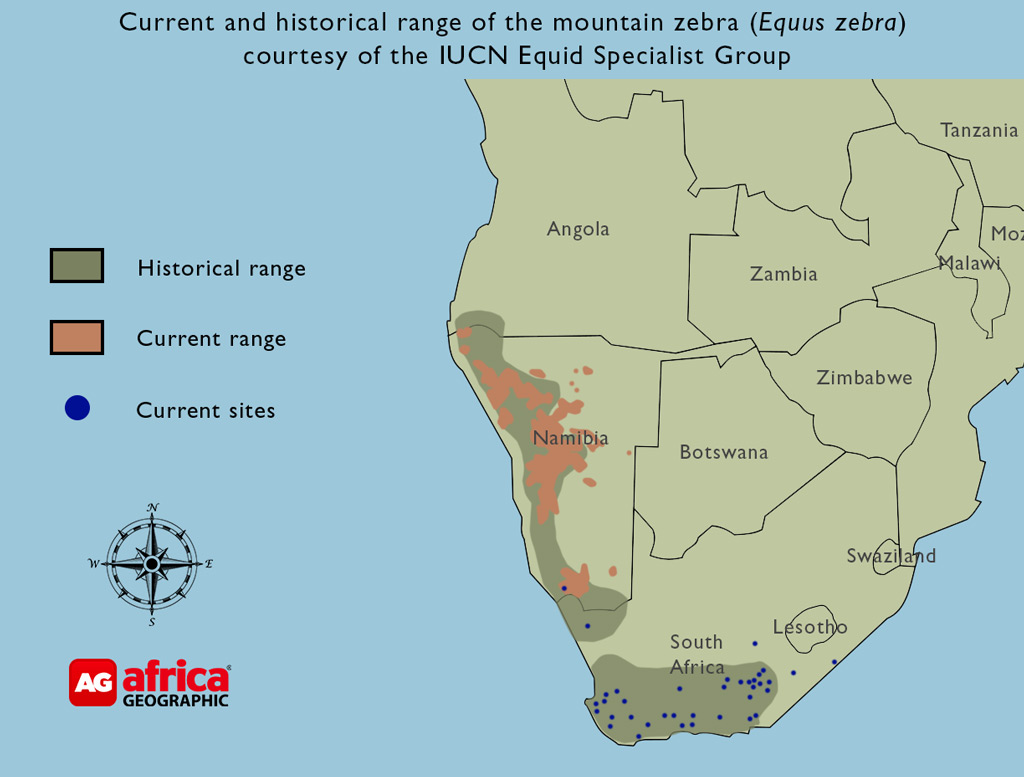
This week we are looking at the zebra, a mammal they are found in various countries across the African continent. Specifically, they inhabit regions within Kenya, Ethiopia, Somalia, Namibia, Angola, and South Africa. Different zebra species, like Grevy’s zebras and Mountain zebras, have more specific ranges within these areas, while Plains zebras are the most widespread. 

They look similar to horses. They stand between 47 and 55 inches (120 and 140 centimetres) tall at the shoulder. Each species of zebra has its own pattern of stripes. The plains zebra has broad stripes that are widely spaced. The stripes of Grevy’s zebra are narrow and closely spaced, and the belly is white. The mountain zebra has a grid like pattern of stripes on the rump.

                        MOUNTAIN ZEBRA

Zebra stripes are like fingerprints. No two zebras are alike. This helps to identify individuals.

They eat mostly tall, rough grasses. Some types also eat shrubs, herbs, and bulbs. Unlike many ungulates in Africa, zebras do not require short grass to graze. Instead, they eat a wide variety of different grasses, sometimes even eating leaves and young trees. As a result, they can range more widely than many other species, often venturing into woodlands. They are considered to be “pioneer grazers” preparing plains for more specialized grazers who rely on short, nutritional grasses.

                        GREVY ZEBRA

Zebras communicate with each other using calls and facial expressions. They often greet each other with nose-to-nose contact. Plains zebras have at least 6 different vocal calls. A two-syllable call is used to alert herd members to predators while snorts indicate happiness. They also use facial expressions to communicate. When greeting each other, they will stick their ears up and push their faces forward. When feeling threatened, they will press their ears against their heads.

Female zebras may have one foal each year. Females and their young usually live in small family groups headed by one male. Thes groups are called “harems.”. Harems generally remain together for months or even years, making it an incredibly stable family unit.

But female Grevy’s zebras may form family groups without head males. Family groups sometimes join together in larger herds. Zebras also may form mixed herds with antelopes.

A male zebra is called a stallion. Female zebras are called mares, and their young are called foals. 

Every year, hundreds of thousands of zebras gather up their young and begin the long journey from Tanzania’s Serengeti plains, north to Kenya. This annual trek to find food and water covers a distance of around 2,900 kilometres (1,800 miles) and exposes them to a myriad of dangers. River crossings leave herds vulnerable to crocodiles, while the size of the migration itself brings lions, hyenas, and wild dogs.

Hippo’s

This week we are looking at hippo’s aka hippopotamus they are what some refer to as stout and naked-skinned. They are semiaquatic artiodactyl mammals, possessing three-chambered stomachs and walking on four toes on each foot. While they resemble pigs physiologically, their closest living relatives are the cetaceans. They are sometimes referred to as hippopotamids.

Their hooves are different from other ungulates, as they are more like fingernails. Their feet are webbed, which helps them move about in water.

They are found in the heart of Africa’s wetlands. These semi-aquatic creatures live in and around lakes, rivers, and grassland swamps. There are two species of hippopotamuses, the common river hippopotamus and the smaller pygmy hippopotamus.

Common river hippopotamuses are native to sub-Saharan Africa. They live in waterways like rivers, lakes, swamps, and estuaries. These semi-aquatic mammals can be found in various African countries, with populations in both East and West Africa.

Pygmy hippos, unlike their larger relatives, are found in the tropical rainforests and swamps of four West African countries: Côte d’Ivoire, Guinea, Liberia, and Sierra Leone. Their slightly smaller bodies have adapted to allow them to easily navigate the vegetation in rainforests.

Hippos must keep their skin wet with mud or water for most of the day to stay hydrated. While they don’t have sweat glands, they secrete a red substance called blood sweat. This helps protect their reddish-brown, thick yet sensitive skin from sunburn and keeps it moisturised. Despite their need to spend most of their time in the water, hippos can’t swim. Instead, they run or walk along riverbeds. When they’re rafting—napping while submerged in water—a subconscious reflex keeps them near the water’s surface.

They are formidable creatures and considered the second largest land mammal, smaller only than elephants. The average male hippo can weigh around 3,200 kilos (7,000 pounds, they’re typically around 3.5 metres (11 feet) long and 1.5 metres tall (5 feet).

While adult pygmy hippos stand about 75–100 cm (2.46–3.28 ft) high at the shoulder, are 150–175 cm (4.92–5.74 ft) in length and weigh 180–275 kg (397–606 lb). Their lifespan in captivity ranges from 30 to 55 years, though it is unlikely that they live this long in the wild.

Hippos have bulky, barrel-shaped bodies, short and stout legs, large heads, and enormously powerful jaws. Their jaws can open to 180 degrees and their bite is three times stronger than a lion. They have incredible sharp teeth that can grow up to 50cms long, which are used for eating and defence. The common hippopotamus has four webbed toes adapted to support them on land and in water. On the other hand, pygmy hippos tend to have less webbing and slightly longer legs. A hippo’s eyes and nostrils sit on top of its head, which helps it stay mostly submerged in water while breathing and keeping an eye on its surroundings. Although hippos can’t breathe underwater, they can hold their breath for up to five mins.

Hippos exhibit strong social bonds and typically live in groups of anywhere between 40 to 200, known as bloats, pods, or herds.

They are territorial creatures and use their dung to mark their territory. Male hippos have been known to flick their dung around to assert dominance. This dung is actually important to their aquatic ecosystems, as it transfers vital nutrients from land to water, allowing insects, plants, and other microorganisms to flourish. 

They play a crucial role in the ecosystem it inhabits in other ways, too. These herbivores graze on the vegetation surrounding wetlands, helping prevent overgrowth, which can clog water sources, disrupt the natural flow of water, and threaten the biodiversity of aquatic ecosystems. 

Healthy wetlands act as effective carbon sinks and remove excess carbon from the atmosphere. By maintaining the balance of these delicate ecosystems, hippos help mitigate the effects of climate change.

Hippos are facing several threats to their survival as a species. Global conservation efforts are critical to ensuring the well-being of the species and the ecosystems it inhabits. 

Pigs

This weeks, hooved animal is the pig also called swine or hog, is an omnivorous, domesticated, even-toed, hoofed mammal. It is named the domestic pig when distinguishing it from other members of the genus Sus. Some authorities consider it a subspecies of Sus scrofa; other authorities consider it a distinct species.

Including outbred and inbred breeds, there are currently approximately 730 pig breeds or lines worldwide of which two-thirds reside in China and Europe and over 270 are considered as being endangered or at critical levels.

                            Wild Boar

The most common pig species in the world is the wild boar (Sus scrofa ). This species is also known as the common wild pig and is native to Eurasia and North Africa. It has been introduced to the Americas and Oceania as well. 

The most common pig breeds in Australia are the Duroc, Landrace, and Large White. These breeds are commonly used in commercial pork production and are often crossbred to create hybrids with desirable traits.  Here is a little more about these three.

                          Landrace

Duroc: This breed is known for its fast growth rates, good maternal abilities, and excellent carcase quality. 

Landrace: Landrace pigs are known for their large litters and good mothering skills. 

Large White: This breed is a popular choice for meat production due to its lean carcass and fast growth rate. 

While other breeds like Berkshire, Hampshire, and Tamworth are also available, they are generally less common than the Duroc, Landrace, and Large White. Many commercial producers choose to utilize crossbreeding to benefit from the strengths of multiple breeds, resulting in pigs with desirable characteristics like faster growth rates, leaner carcasses, and higher litter sizes. 

                        American Yorkshire    

The most-recorded breed of swine in North America, is the Yorkshires which are white with erect ears. They are found in almost every state, with the highest populations being in Illinois, Indiana, Iowa, Nebraska and Ohio. Yorkshires are known for their muscle, with a high proportion of lean meat and low backfat.

The British Landrace is one of the most common pig breeds in the UK. It’s a pink breed known for its heavy, drooping ears that cover most of its face. Other popular breeds include the Welsh pig and the Berkshire pig. 

The most common pig in Asia, both in terms of wild and domestic populations, is the wild boar (Sus scrofa). While domestic pigs are also prevalent, particularly in regions like China, the wild boar remains the most widespread native species in the continent

                                                           Visayan Warty

The Visayan warty pig is the rarest pig in the world and there are fewer than 200 left in the wild.

Cuba Pt 2

This week we are looking at Cuba’s national things.

The coat of arms of Cuba features a shield prominently displayed in front of a fasces crowned with a Phrygian cap. The shield is supported by an oak branch on one side and a laurel wreath on the other. This heraldic design, created by Miguel Teurbe Tolón in 1849, is the official symbol of Cuba.

The national bird of Cuba is the Cuban Trogon, also known as the Tocororo. This vibrant bird features a green back, a blue crest, a red belly and beak, and a white throat and chest. Its distinctive colours mirror those of the Cuban flag, which is why it was chosen as the national symbol. 

The national flower of Cuba is the white ginger lily, also known as the White Mariposa or Butterfly Jasmine. Its scientific name is Hedychium conarium. 

The national dish of Cuba is Ropa Vieja, which translates to “old clothes” in Spanish. It’s a flavourful stew made from shredded beef, tomatoes, bell peppers, onions, and spices. The dish is often served with rice, black beans, and plantains. 

While Cuba doesn’t have a single officially designated national drink, the Mojito and the Cuba Libre are widely recognized as its most iconic and popular cocktails. The Mojito, a blend of rum, mint, lime, and sugar, is a classic Cuban drink often associated with the country’s hot weather and vibrant culture. The Cuba Libre, a simple mixture of rum and Coca-Cola, is another beloved beverage that symbolizes Cuba’s struggle for independence and remains a symbol of Cuban identity. 

The national colours of Cuba are red, white, and blue. These colours are prominently featured on the Cuban flag, which consists of three blue stripes, two white stripes, and a red triangle with a white star. 

Symbolism of the Colours:

  • Blue: Represents the country’s maritime location and the ideals of its people.
  • Red: Symbolizes the blood spilled by those who fought for Cuban independence.
  • White: Represents the purity of the revolutionary cause. 

The national sport of Cuba is baseball. While football (soccer) is also popular, baseball has a strong cultural significance and is considered the national sport. It was introduced in the 1860s from the United States and quickly became a beloved pastime. 

Largest Horse Breeds

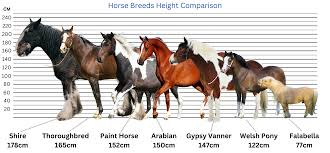
This week we are looking at the world’s largest horse breeds with the Shire horse often considered the largest horse breed. It is a British breed known for its impressive size and strength, with some individuals reaching heights of 18 to 21 hands. The largest Shire on record, Sampson (later Mammoth), stood at 21.5 hands. They usually black, bay, or grey.

This horse originated in England and are known for their large size and powerful build. They can weigh up to 2,200 pounds and stand up to 18 hands tall. Historically used for pulling heavy carts and ploughing fields. 

They are now used for horse riding, show events, as well as still being used for work in some areas. They are known for their gentle and calm temperament. 

The Shire breed have held world records for both the largest and tallest horse. 

They are primarily found in the United Kingdom, Australia, Canada, and the United States. While the breed originated in England, they have been exported and bred in other countries as well. 

In addition to the Shire, other large horse breeds include the Clydesdale which is another British draft horse breed, known for its size and strength, and often used in parades and horse shows. Clydesdale horses are found in several countries around the world, most notably in their native Scotland, Oklahoma State University, as well as in Australia, New Zealand, Canada and the United States.

They were also exported to other countries like Russia and South America. Today, the breed is particularly popular in Australia, where it’s known as “the breed that built Australia”. 

Then there is the Belgian Draft Horse, known for its large size and strong build, used for farm work and heavy hauling. They are primarily found in Belgium, where they originated, and the United States, particularly the American Brabant. The breed is also found in other parts of Europe and North America. 

Next week we will look at the smallest horses 

Island Fox

This will be the last post about foxes we are ending with the Island Fox.

The Island fox is native to six of the eight Channel Islands in California it is considered critically endangered by the IUCN, it is threaten by golden eagles, disease, and habitat destruction.

The Catalina Island Conservancy and Institute for Wildlife Studies have established a fox recovery program for the island fox. This program includes vaccination, relocation, and captive breeding. 

The island fox is a small fox species that is endemic to six of the eight Channel Islands of California. There are six subspecies, each unique to the island it lives on, reflecting its evolutionary history. They are generally docile, show little fear of humans, and are easily tamed.

The island fox has similar markings to the gray fox. They have gray colouring on the back, rust colouring on the sides, and white underneath. The face has a distinctive black, white, and rufous-coloured patterns.

In March 2004, four subspecies of the island fox were classified as a federally protected endangered species: the Santa Cruz Island fox, Santa Rosa Island fox, San Miguel Island fox and the Santa Catalina Island fox.

Island foxes reach sexual maturity at 10 months, and females usually breed within the first year. These foxes can live for up to 10 years in the wild, but four to six years is more typical.

They are generally docile, show little fear of humans, and are easily tamed. Island foxes played an important role in the spiritual lives of native Channel Islanders. They have been likely semi-domesticated as pets, used as pelts, or for other functions, like pest control.

They are omnivorous, eating both plants and other animals. They eat a large amount of insects, some island deer mice, reptiles, and fruit from native plants. New evidence is showing marine resources may be important for island foxes. Their diet also changes with the seasons.

 The primary threat to the island fox is predation by invasive golden eagles. The species is also very vulnerable to canine distemper transmitted by domestic dogs, habitat fragmentation due to development, and habitat loss to introduced livestock and game species.

Sierra Nevada Red Fox

This week we are looking at the Sierra Nevada red fox. 

Then we have the Sierra Nevada red fox which is found in the mountainous regions of California’s Sierra Nevada, it is also considered endangered. It is threatened by unpredictable events like wildfire and drought, competition with coyotes, and hybridization with non-native foxes, as well as habitat loss from logging and livestock grazing, disturbance by recreational vehicles, and climate change.

The Sonora Pass population of the Sierra Nevada red fox may be one of the most endangered species in the U.S. When FWS listed this population as endangered in 2021, the agency estimated that as few as 39 individuals may remain in the wild.

They appear to be opportunistic predators and foragers, with a diet primarily composed of small rodents. Their favorite foods are hares and gophers, but they also eat manzanita berries and deer carrion, particularly in winter and spring.

They have a small, slender body and legs; long, pointed ears; an elongated snout; and a long, white-tipped tail. They’re typically smaller than lowland red fox subspecies, with males weighing up to 9.2 pounds and measuring up to 3.4 feet long and females up to 7.7 pounds and 3.2 feet.

The biggest difference between it and the Red Fox is the Sierra Nevada red fox’s specialized adaptations for cold and snow. They have well-furred paws as part of their winter coat, longer hind legs and are slightly smaller.

They mate between December and March, with most mating occurring in January and February. They are believed to be monogamous. 

They are sexually mature at 10 months they have a gestation period of 52–54 days, they can give birth to litters of 1–12 kits, with an average of 3–6 kits they are born in early to mid-April the pups move outside the den by June and are dependent on parents for 6 months.

They prepare multiple dens after mating and may share a burrow with another pair.

A conservation strategy is being developed to help recover the Sierra Nevada red fox. The strategy includes translocations and introducing other alpine foxes to support breeding.

The Forest Service, Park Service, and Department of Defence have resource management plans to minimize forest fragmentation.

Week 10 of 2025

I slept well woke only once to pee, a cool morning we are in for another hot day, with a top of 29C, it is currently 6am and 23C.

Tim took the car in for its first service, I noticed after he left that he forgot his phone, that would be annoying as who doesn’t scroll through Facebook while waiting. Those who left their phone at home that’s who.

I changed the sheets and by the time I was done I was dripping sweat and felt exhausted. So I turned the air con on.

I have answered 6 letters today.

Tim went and cashed in cans and bottles.

Steps:11,150s

It was midnight before I fully settle last night, at 5am I got up and took my meds then went back to bed for an hour.

Around 10am Tim and I went to Sue’s so he could change her flat tyre, however, he wasn’t able to get the lug nuts off as the tool he had was too big as was the one Sue had. Although the one Sue had, come with the car so you would have thought it would fit.

We called into the shops so I could get the scrips and some bread before coming home.

I have been tired on and off all day and it has been stinking hot.

Steps: 6,085

I had a much better night, last night, felt a little heavy headed when I first got up, but I am doing better now.

I made myself an egg and cheese roll for breakie but only managed to eat half of it.

Tim went to Sue’s after his morning school run to change her tyre, but he wasn’t able to do it as he couldn’t get the lug nuts off as they were on too tight.

This afternoon Dawson called in to see me and make sure I knew had another car.

Been raining this afternoon.

Steps: 9,822

Another good night, I can’t have my morning egg flip as we have no milk till the groceries are delivered and I have no bread, but I did have a stale bread roll which I have used to make a grilled cheese.

So, I managed to only eat half of the bread roll, nothing wrong with it just no appetite.

I had a wagon wheel hot cross bun for lunch, but it was too rich for me, in future I will only have half at a time.

It started out cool but warmed up by 11am.

By 5.45pm I was falling asleep, I will stay up till 7.30pm.

Steps:7,947

Another good night, I slept straight through waking only when my alarm went off.

I have both front and back sliding doors opened and it is nice just a slight breeze.

It started raining while I was wait for Sam this afternoon.

Tasha drove Blain’s girlfriend’s car to Tafe and on her way home the car stopped, and she couldn’t get it going and was in a state. Tim was able to go and help her turned out it was a flat battery.

Kathy rang Tim via Facebook as she does every Wednesday just to see him and have a short chat.

Steps:9,999

Another good night, I slept straight through waking only when my alarm went off.

I had a shower after Tim left for work, then I vacuumed before making breakie.

Sue rang the mobile tyre place, she had to buy a new tyre as they wouldn’t put the spare on in place of the flat one, well the guy turned up he was a friend of Ed and Les, she got the number of the mobile tyre mob from Sandy. Anyway, he told her for only $20 more she could have got two tyres as they would waive the call out fee.

It started to rain here around 1.45pm it didn’t last long maybe 10-minutes. It then started raining again at 3.30pm.

Steps:12,201

Had a reasonable night’s sleep, although when the alarm went off, I didn’t want to get up.

This morning I was sitting here reading blogs when I heard a loud squark and I jumped, when I turned round there was a cockatoo standing a foot away from me, I said what do you want, it walked over to bird seed and looked at me, so I feed it and all the others out the front.

It has been a nice day, haven’t done much not much motivation today. I started to feel real tied by 6pm.

It is 8.30pm and I am off to bed.

Steps: 5,945               

I had a good night, woke at 5am with the alarm but after taking my meds I went back to bed for another 40-minutes.

It is raining this morning; it looks like it will be a wet day.

I have been feel blah all day.

Bat-Eared Fox

This week we are look at the bat-eared fox, another fox I hadn’t heard of.

The bat-eared fox is a species of fox found on the African savanna. It is the only extant species of the genus Otocyon and a basal species of canid. Fossil records indicate this canid first appeared during the middle Pleistocene.

As the name indicates, this fox has unusually enormous ears in proportion to its head, like those of many bats. Their bodies are generally yellow-brown with a pale throat and under parts. The outsides of the ears, the racoon-like “face-mask,” lower legs, feet, and tail tip are all black. 

They can be found living in groups of mating pairs and their young. They are a very social species and spend lots of time grooming each other, as well as playing and sleeping together.

Their hearing is remarkable, but bat-eared foxes are also known for their social nature. They often live in family groups of up to 15 animals. They do not mark or defend territories aggressively against other packs.

They seldom drink water as they obtain most of the moisture they need from their food; 3. Unlike other canids, the male undertakes most parental care duties, while the female forages for food that maintains her milk production

Termites and dung beetles make up about 80 percent of their diets. In addition to termites and dung beetles, they also eat other insects and arthropods, small rodents, lizards, the eggs and chicks of other birds, and plant matter. They obtain much of their water from the body fluid of the insects they consume.

Predators include cheetahs, jackals, spotted hyenas, rock pythons, African wild dogs, and leopards. Bat-eared foxes are named for their large ears, which are also used for thermoregulation. To escape from predators, bat-eared foxes rely on speed and their incredible dodging ability.

They typically live for 6 years in the wild but can be up to 13 years in captivity. 

They reach sexual maturity at 8–9 months old, both male and female. They usually leave their family groups at 5–6 months old. 

They breed annually, producing litters of 3–6 pups, with a gestation period of 60–75 days. 

Crab-eating fox

This is week we are looking at the crab-eat fox, also known as the forest dog, wood fox, bushfox or maikong, is an extant species of medium-sized canid endemic to the central part of South America since at least the Pleistocene epoch. Like South American foxes, which are in the genus Lycalopex, it is not closely related to true foxes. 

They can be found in the ranges in savannas; woodlands; subtropical forests; prickly, shrubby thickets; and tropical savannas such as the caatinga, plains, and campo, from Colombia and southern Venezuela in the north to Paraguay, Uruguay and northern Argentina at the southernmost reaches of its range.

They can be solitary but can also form couples or even families of up to disturbed by human activities. The species gets its name because during the wet season it searches for crabs on muddy floodplains.

Crab-eating foxes are omnivorous; their diet includes many fruits, vertebrates, insects, amphibians, crabs and other crustaceans, birds and carrion.

The crab-eating fox is predominantly greyish-brown, with areas of red on the face and legs, and black-tipped ears and tail. It has short, strong legs and its tail is long and bushy. The head and body length averages 64.3 centimetres (25.3 in), and the average tail length is 28.5 centimetres (11.2 in).

They reach sexual maturity within 9–10 months. Adult females give birth to one or two litters per year, depending on the climate and the availability of food. The reproductive period most often begins in November or December, and again in July.

The birth of offspring follows after an approximately 56-day gestation, typically in January, February or sometimes March then again from September to October. If giving birth to one litter, they typically give birth in the early spring. The parents are monogamous and raises the pups together, which are weaned at around three months old and become independent of their parents around 5–8 months old.