Burundi

Ok let’s move onto central and southern Africa and area that includes Burundi, Chad, Central African Republic, South Africa, the Republic of Congo, Rwanda, Zimbabwe and Namibia.

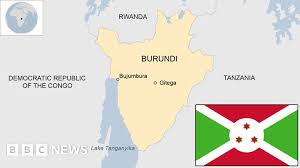
Let’s start with Burundi, officially the Republic of Burundi, it is a landlocked country in the Great Rift Valley at the junction between the African Great Lakes region and Southeast Africa, with population of over 14 million people.

It is considered by some to be the poorest country in the world and is one of the least developed countries. Over 1 million of its people are facing crisis levels of hunger today. This is due to poverty, climate shocks, soaring inflation and fuel shortages.

The town of Gitega, located in the central part of Burundi as the Political Capital, while Bujumbura, which is in the southwestern of the country, adjacent to the Lake Tanganyika is the Economic Capital.

Prior to 2019 Bujumbura served as Burundi’s national capital, but legislation passed that year designated Gitega as the country’s political capital and Bujumbura as the economic capital. The transfer of government functions to Gitega proceeded in the following years.

The original flag was adopted after the country’s independence from Belgium on 1 July 1962. It went through several revisions and now consists of a white saltire which divides the field into alternating red and green areas. The centre of the saltire merges into a white disk, on which there are three red solid six-pointed stars outlined in green. The current ratio is 3:5, which was changed from 2:3 on 27 September 1982.

The franc is the currency of Burundi. It is nominally subdivided into 100 centimes, although coins have never been issued in centimes since Burundi began issuing its own currency.

Burundi’s political system is that of a presidential representative democratic republic based upon a multi-party state. The president of Burundi is the head of state and head of government. The president is elected by absolute majority vote through a two round system. The supreme court is the highest court of the land. Judges are nominated by the judicial service commission and then appointed by the president with the approval of the senate.

Burundi has a diverse religious population, with the majority identifying as Christian and a minority identifying as Muslim: 

Christianity is the most common religion in Burundi, with about three-fifths of the population identifying as Roman Catholic and more than one-eighth identifying as Protestant. 

Islam is a minority religion in Burundi, with Muslims making up less than one-twentieth of the population. The majority of Muslims in Burundi are Sunni, but there are also Shia and Ismaili communities. 

A large minority of the population, including some Roman Catholics, practice traditional religions. 

The government of Burundi has granted tax waivers to religious groups for the purchase of materials for development projects and for imported religious items. The government has also provided opportunities for religious leaders to preach about scriptures and moral issues. 

This is another country that is not considered a safe destination for tourists due to a number of risks, such as a threat of terrorism, political violence, violent crime, including mugging, purse snatching, pickpocketing, assault, carjacking, home invasion, grenade attacks, and armed robbery and there is a risk of kidnapping for ransom, and criminals have targeted foreigners in the past.

Not somewhere I would go.

National Anthems

National Anthems    

I have decided to do a new Friday series on national anthems of different countries, but first we will start with this.

The Netherlands has the oldest national anthem in use today, Wilhelmus van Nassouwe, also known as Wilhelmus. It was written between 1568 and 1572 during the Dutch Revolt, but it wasn’t officially adopted until 1932. 

Anthems were originally devotional verses sung during religious services. One of the first songs to be called a “national anthem” was Great Britain’s “God Save the King”. 

Here are some other facts about national anthems:

  • Most national anthems are either hymns or marches.
  • Anthems are usually in the country’s national or most common language.
  • Some countries have multiple versions of their anthem if they have more than one national language. For example, Switzerland’s national anthem, the Swiss Psalm, has different lyrics for each of the country’s four official languages.
  • Some national anthems were written by famous composers. For example, Germany’s Das Lied der Deutschen uses a melody written by Joseph Haydn. 

I will start with the first country next week.

Libya

Good morning, everyone, this Monday we are looking at Libya another country in Northern Africa. It borders the Mediterranean Sea to the north, Egypt to the east, Sudan to the southeast, Chad to the south, Algeria to the West and Tunisia.

It is a country blessed with oil but not with water, it has a population of 6.8 million most of who live in the two major cities of Tripoli which is the capital and Banghazi.

It’s man-made river project it the biggest of its kind in the world. Generally known as The Great Man-Made River is a network of pipes that supplies fresh water obtained from the Nubian Sandstone Aquifer System fossil aquifer across Libya.

The flag consists of a triband red-black-green design, the central black band being twice the width of the outer bands. A white star and crescent is located in the center of the flag. The flag was designed by Omar Faiek Shennib and adopted in 1951 after Libya’s independence. It was abolished in 1969 after the monarchy was overthrown by Col. Muammar al-Qaddafi. Qaddafi implemented several different flags, including a plain green flag in 1977 to symbolize the “Green Revolution”. The flag was reinstated in 2011 after the fall of Qaddafi. 

The currency is The dinar it divided into 1,000 dirhams

Libya’s climate is influenced by the Mediterranean Sea to the north and the Sahara Desert to the south and, as a result, abrupt transitions of weather conditions are experienced across the country. The Mediterranean coastal strip experiences dry summers and relatively wet winters.

The Government of National Unity is a provisional government for Libya formed on 10 March 2021 to unify the rival Government of National Accord based in based in Tobruk. Abdul Hamid Dbeibeh is Prime Minister of the unity government and was selected in the Libyan Political Dialogue Forum on 5 February 2021. This is a de facto backed by the governments of Turkey, Qatar, Algeria and Pakistan.

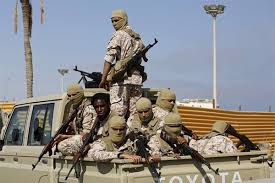
Wondering if you should visit Libya well the advice online is, do not travel to Libya due to crime, terrorism, unexploded landmines, civil unrest, kidnapping, and armed conflict. Country Summary: Crime levels in Libya remain high, including the threat of kidnapping for ransom.

It is not on my list of places to visit.

The majority of Libyans are of Arab or mixed Arab-Berber descent. The Sunni branch of Islam is the official and nationally dominant political, cultural and legal force. Imazighen, who retain the Tamazight language and customs, are indigenous to North Africa and constitute the largest non-Arab minority.

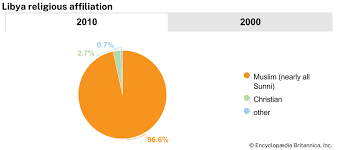
Islam is the main religion in Libya, with the majority of the population identifying as Sunni Muslim. Libya’s religious freedom is limited, and there are restrictions on the ability to practice other religions: 

There is no law that allows people to choose or change their religion 

The criminal code prohibits proselytization and missionary activities 

The criminal code prohibits insulting Islam or the Prophet Muhammad, and can result in the death penalty 

Authorities have restricted the liberties of religious minorities 

Libya’s ancient Jewish population has been gone since 2002, when the last community member died.

Somalia

This week we are looking at Somalia, I was asked by Debby over at https://myshastahome.blogspot.com/ if I was going to post about Somalia so that’s what I am doing.

Somalia, officially the Federal Republic of Somalia, is the easternmost country in continent of Africa. The country is located in the Horn of Africa and is bordered by Ethiopia to the west, Djibouti to the northwest, Kenya to the southwest, the Gulf of Aden to the north, and the Indian Ocean to the east.

The population is 18.14 million it has two official languages Somali and Arabic.

Based on gross domestic product, in 2021 Somalia was the third-poorest country in the world (after Burundi and South Sudan). In international assessments of its business climate, Somalia regularly lands on one of the last places.

The Somali shilling is the official currency of Somalia. It is subdivided into 100 senti, cents or centesimi.

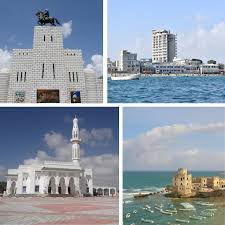
The capital is Mogadishu, locally known as Xamar or Hamar, it is the most populous city of Somalia. The city has served as an important port connecting traders across the Indian Ocean for millennia and has an estimated urban population of 2,610,483.

The Somalia flag features a blue base with a white five-pointed star at its center. The flag was adopted on October 12, 1954 and was inspired by the flag of the United Nations. Somalia gained independence from Italy in 1960 and united with the former British Somaliland to form the current Somalia.

The national animal of Somalia is the African leopard. Leopards are commonly seen in Somalia and are featured on the country’s coat of arms.

The national flower of Somalia is the endangered King Protea flower which symbolizes change and transformation.

The coat of arms of Somalia was adopted on October 10, 1956 and features a golden framed shield of the Somali flag supported by two Leopards standing on spears. The Leopard is a common animal seen in Somalia. Leopards are a common motif in Somali culture.

Somalia’s current constitution, the Provisional Constitution of the Federal Republic of Somalia, was adopted on August 1, 2012. It was created as a provisional document and has been under review for a long time. 

The constitution was based on a political settlement that included: Federalism, Clan power-sharing, Regular elections, and an inclusive spirit to build consensus. 

The constitution established Somalia as a parliamentary system of government, with the President as head of state and the Prime Minister as head of government. It also established Islam as the state religion and required all laws to comply with shari’a. 

In 2022, President Mohamud pledged to create a new constitution and said that further delays were “not an option”. 

The majority of people in Somalia are Sunni Muslim, with the Federal Ministry of Endowments and Religious Affairs estimating that over 99% of the population identify as such. The country’s constitution makes Islam the state religion, and converting to another religion is illegal in some areas and socially unacceptable in all.

Christianity is a minority religion in Somalia, In 2020, the US Department of State estimated that there were about 1,000 Christians in Somalia. Most modern-day Christians are from the Bantu ethnic minority group or are descended from Italian colonists. 

Christians in Somalia have faced persecution, including the kidnapping and rape of Christians in 2008. The Somali Church was driven underground during the Islamist uprising of 1991. There is one Catholic diocese for the entire country, the Diocese of Mogadishu. Orthodox Christianity came to coastal areas of the Somalia in early 2nd and 3rd century.

Do not travel to Somalia due to crime, terrorism, civil unrest, health issues, kidnapping, piracy, and lack of availability of routine consular services. Country Summary: Violent crime, such as kidnapping and murder, is common throughout Somalia. Illegal roadblocks are widespread.

Newcastle Attacked 1942

This week we are looking again as Newcastle during the second world war, back then many incidents of the war remained unknown to most Aussies until authorities thought it was safe to discuss them.

Those running the country thought there would be fear and panic and damage to morale, so it was better the general public knew pretty much nothing.

                        A MINI SUBMARINE

However, when the Japanese attacked the east coast, it was impossible to hide that it happened.  On the 31 May and 1 June 1942 mini submarine attacked Sydney harbour. This caused havoc in the harbour and cost 21 lives before they were destroyed, a few days later another attack happen of the Central Coast this time a merchant ship the Iron Chieftain was sunk killing 12 crew.

On the 8 June 1942 shells were fired at Sydney Harbour with just one exploding this caused defence authorities to fear a wider attack, so a message was sent to Newcastle to be prepared for an attack.

                        FORT SCRATCHLEY
Novocastrians heard the sirens and emergency personnel were put on alert, the all clear was sounded many hours later but the threat had not passed. Newcastle had shells fired at them from a position in Stockton Bight at around 2.15am.

Japanese records show that 34 shells from a position about nine kilometres north-east of Fort Scratchley. Eight-star shells burst one by one in the sky to illuminate potential same goes for two others that landed in the east end tram terminus.

As it turns out only two of the shell fired at Newcastle exploded on land one shattering against the sea wall just north of Newcastle Baths and one in Parnell Place which is at the top end of Newcastle. This hurled a shower of metal splinters towards near by homes and peppering walls with metal shards, damaging rainwater downpipes and blowing out house windows. The attack lasted around 20 minutes until just after the guns at Fort Scratchley returned fire.

             FORT SCRATCHLEY GUN YES IT STILL WORKS
The guns at Fort Scratchley were built more than half a century earlier when an invasion was feared by Russia.

After the attack the ports of Newcastle and Sydney were temporarily closed.

In February 1943 the east coast of Australia was attacked again which caused the death of 36 merchant mariners many of whom were from Newcastle.  

Ethiopia

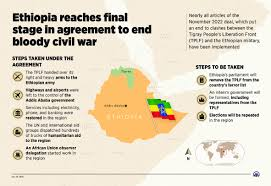
Hi all, how is everyone doing, I hope all is good with and those you care about, this week we are still in Africia and the country is Ethiopia a county that many will have heard of in different commercials for UNICEF.

Ethiopia, in the Horn of Africa, is a rugged, landlocked country split by the Great Rift Valley. With archaeological finds dating back more than 3 million years, it’s a place of ancient culture. Among its important sites are Lalibela with its rock-cut Christian churches from the 12th–13th centuries. Aksum is the ruins of an ancient city with obelisks, tombs, castles and Our Lady Mary of Zion church.

In 1931, Emperor Haile Selassie formally requested that the international community use the name Ethiopia instead of the exonym Abyssinia, and the issuing Bank of Abyssinia also became the Bank of Ethiopia.

The capital is Addis Ababa, which is in the highlands bordering the Great Rift Valley, is the country’s commercial and cultural hub.

Located in the capital is a National Museum which exhibits Ethiopian art, traditional crafts and prehistoric fossils, including replicas of the famous early hominid, “Lucy.”

It has a population of around 126 million, this may be due to a very high fertility of 4.4 children per woman. The combination of a high birth rate and relatively low life expectancy means that Ethiopia is a young country. 41.5 percent of the population is below 15 years and only 3.3 percent is above 65.

The currency is the birr it is subdivided into 100 santims.

The national animal is the lion, and its national flower is the calla lily. The national bird is the Stresemann’s bush crow, also known as the Abyssinian pie, bush crow.

The Flag of Ethiopia consists of a green, yellow, and red tricolour with the national emblem, a golden pentagram on a blue disc, superimposed at the centre.

The star represents the unity of all Ethiopian nationalities, its rays the bright prospects for their future. Blue is for peace, yellow for hope, justice, and equality. Red represents sacrifice for freedom and equality, while green is equated with labour, development, and fertility.

Religion in Ethiopia consists of a number of faiths. Among these mainly Abrahamic religions, the most numerous is Christianity totalling at 67.3%, followed by Islam at 31.3%. There is also a longstanding but small Ethiopian Jewish community.

Christianity in Ethiopia dates back to the ancient Kingdom of Aksum, when the King Ezana first adopted the faith in the 4th century AD. This makes Ethiopia one of the first regions in the world to officially adopt Christianity. Various Christian denominations are now followed in the country.

This is not a country you want to go visiting in face a search online will tell you to avoid non-essential travel to Ethiopia due to civil unrest, violence, armed conflict and crime. The security situation can deteriorate without warning. This advisory excludes Addis Ababa where you should exercise a high degree of caution.

The government of Ethiopia is the federal government of Ethiopia. It is structured in a framework of a federal parliamentary republic, whereby the prime minister is the head of government and the commander-in-chief of the Ethiopian Armed Forces. The prime minister is the most powerful political figure in Ethiopian politics. The official residence of the prime minister is the Menelik Palace in Addis Ababa.

Sudan

Well let’s move from Egypt to Sudan, officially the Republic of the Sudan, it’s a country in Northeast Africa. It borders the Central African Republic to the southwest, Chad to the west, Libya to the northwest, Egypt to the north, the Red Sea to the east, Eritrea and Ethiopia to the southeast, and South Sudan to the south.

Sudan is both an African and Arab country, with Arabic being the most widely spoken language. Over 97% of the population are Sunni Muslims with a small Christian minority.

The Sudanese pound is the currency of the Republic of the Sudan. The pound is divided into 100 piastres. It is issued by the Central Bank of Sudan.

Khartoum or Khartum is the capital of Sudan. With a population of 6,344,348, the metropolitan area is the largest in Sudan. It is located in the centre of the country, at the point where the Blue Nile and White Nile rivers meet.

The population of Sudan is estimated to be 50,467,278 in 2024, with a population density of 21.3 people per square kilometre.

The flag of Sudan was adopted on 20 May 1970 and consists of a horizontal red-white-black tricolour with a green triangle at the hoist

The national flower of Sudan is the hibiscus. The hibiscus flower is also known as the Sudan rose or Hibiscus sabdariffa. The flower’s dried petals are steeped in water to make an herbal tea called karkade, which is popular in Sudan, South Sudan, and Egypt. 

I searched for Sudan’s coat of arms what I found was their national symbol which follows the rules of heraldry (whatever that is) it could be considered a national coat of arms instead of a national emblem.

It shows a secretary bird bearing a shield from the time of Muhammad Almad, the self-proclaimed Mahdi who briefly ruled Sudan in the 19th century.

Two scrolls are placed on the arms; the upper one displays the national motto, the English translation is “Victory is ours”, and the lower one displays the title of the state, which is Republic of the Sudan.

The coat of arms is also the Presidential seal.

It is not a safe country to visit due to A civil war between two major rival factions of the military government of Sudan, the Sudanese Armed Forces under Abdel Fattah al-Burhan and the paramilitary Rapid Support Forces and its allies under the Janjaweed leader Hemedti, began during Ramadan on 15 April 2023. 

Newcastle War Years

 Today we are going to have a look at Newcastle, New South Wales in 1939 when World War 11 started.

It was considered by some that the part Newcastle was to play in the national war effort was inevitably this was due to the city’s heavy industries represented the vital heart of the country’s ability to fight fire with fire.

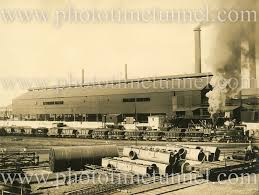
It wasn’t long before BHP, its subsidiaries and a surprising wide array of smaller industrial plants were flat out making shells, gun barrels, bombs and parts for everything from tanks to aircraft.

As the war progressed the NSW government pressed Newcastle back into shipbuilding and repair business.

BHP chief Essington Lewis had anticipated Japan’s entry into the war and the cities industries were ready to accelerate production after the attack on Pearl Harbour in 1941.

War activity reached hectic levels in 1942 when Japanese submarines prowled of the east coast sinking ships and attacking Newcastle and Sydney.

It was during this time that the RAAF established a base at Williamstown in order to defend the oh so important industries in Newcastle. A seaplane base was also established at Rathmines which is part of Lake Macquarie and the US-built Catalina aircraft did long-range patrols and anti-submarine work.

During the war years military and civil defence infrastructure appeared all over the Hunter, also air raid shelters popped up in streets and tank traps were established on beaches and slit trenches were dung in schools and parks.

Blackouts were enforced and many households dug their own shelters.

Of course, many men signed up to serve their country, going overseas to fight, while U S troops arrived in the city.

Women also went off to war with many joining the Land Army as well as other military forces, operating searchlights and working in radar and communications installations. While others filled the caps left by the men gone off to fight, this was radical change that continued well into the postwar years.

Epilepsy

This week I am going to share a little about the condition Epilepsy, my nephew Dawson has this condition.

Epilepsy happens as a result of abnormal electrical brain activity, also known as a seizure, kind of like an electrical storm inside the head. And because the brain controls so much, a lot of different things can go wrong. Suffers may have periods of unusual behaviours, feelings and sometimes loss of awareness.

Epilepsy may occur as a result of a genetic disorder or an acquired brain injury, such as a trauma or stroke. Other brain related causes are things like meningitis, encephalitis or a brain abscess. Then there are brain diseases such as Alzheimer’s. It is also believed that alcohol or drug use as well as high or low blood sugar levels.

In fact, in around half of all cases the cause is unknown. It may take years after an injury for seizures to develop.

During a seizure, a person experiences abnormal behaviour, symptoms and sensations, sometimes including loss of consciousness caused by fainting. It isn’t uncommon to see the suffers having rhythmic muscle contractions or muscle spasms. Some people say they experience an aura or the sensation of pins and needles.

Also common: seizures, amnesia, anxiety, depression, headache, sleepiness, staring spells, or temporary paralysis after a seizure.

After a seizure the person may feel really tired.

Most people have none or only a few symptoms between seizures.

Epilepsy is usually treated by medication and in some cases by surgery, devices or dietary changes.

You should see a doctor this is your first seizure, or you have repeated seizures, you have seizures more often than is normal for you, you are not sure if you’ve had a seizure or if you have a diagnosis of epilepsy but feel like your medicine is not helping.

You should seek medical attention after a seizure if you are injured, if you are pregnant or have diabetes.

Next week I will post about the different types of seizures.

Hunter Street, Newcastle NSW,Australia

When I was young it was considered to be a big deal to go into town to go the movies or to do some shopping and by in town I mean into Newcastle mainly Hunter Street.

So, this week I will write a bit about Hunter Street’s history and present.

Hunter Street is a major road in the Newcastle central business district, in New South Wales. The street, formerly three separate thoroughfares, extends from Pacific Street in the city’s east, to Selma Street in Newcastle West and since 2008 has been the focus of community-led creative enterprises and projects.

Hunter Street runs in the vicinity of an early nineteenth-century track known as Wellington Street that extended from Watt Street (formerly George Street) in the east to Perkins Street in the west. The strip was renamed Hunter Street by Henry Dangar in 1823 and by the mid nineteenth-century commercial and residential properties had been built on most addresses east of Perkins Street.

By 1900, Hunter Street had stretched a long way and had 26 hotels operating along the street. In 1887the first steam trams came into operation by 1898 the first restrictions on vehicular traffic drawn by animals were introduced

Drainage problems and raw sewerage necessitated the sealing of Hunter Street, first carried out with wooden blocks, concrete and asphalt.

After the opening of the Newcastle Steelworks in 1915, Newcastle became increasingly suburban, and Hunter Street developed as a destination for commerce and retail. The size and extravagance of Newcastle’s early twentieth-century department stores demonstrates the popularity of city shopping.

Established as the city’s main street for commercial and retail activity, Hunter Street entered a period of severe decline after World War II. However, it recovered over time.

Hunter Street developed as the commercial and civic hub of the region. Along its spine were the pubs, banks, insurance houses, shops, department stores, and cooperative societies that formed the civic and cultural life of Newcastle.

In 1989 an earthquake hit Newcastle and due to the damage making Hunter Street inaccessible for two weeks.

The in 1990 there was a recession which coupled with record youth unemployment, brought the emptying of Hunter Street to a terrible low in 2008, with the vacancy rate at 20% and chronically vacant properties beginning to deteriorate.

In recent years there have been efforts to clean up and bring life back into Hunter Street, as I haven’t been there myself I can’t say what it is like now.