Week 47 of 2024

It is 12.50am, I went to bed at 9pm but fully fall asleep I dosed on and off till midnight when I got up to pee. I decided to use the powerfit and now I am starting today’s diary enter as even though I am tired I don’t know if I will fall asleep, so I am staying up for a bit.

I went back to bed at 2am slept ok and when the alarm went off at 5am I got up. The temp is 19 degrees and my BGL is 5.1

At around 8am I went back to bed for an hour; after getting up Tim and I went to the shops.

I have done bugga all today, Tim did cut my hair though.

LEIGH’S BIRTHDAY

I had a good night slept well and woke to a cold wet morning so different from yesterday.

It is 19 degrees and my BGL is 5.0

I walked up with Sam in the rain, thankfully I have my rain poncho, so I didn’t get wet.

Jess came down and said she would take me to Kmart tomorrow to look at dresses.

It stopped raining and warmed up.

I decided I would do a load of washing and hang it up before I go to bed.

Steps:6,950

I had a good night slept well, however, while taking my morning meds I had problems swallowing and this resulted in tablets melting in my mouth, not nice.

It is 18 degrees and fine, my BGL was 4.8. like

Jess and I went to Kmart she bought me a couple of dresses and a nightie she also paid for my face cream.

Blain was supposed to be coming home today but he overslept and missed his flight. Tasha said she has no idea when he will be able to come home since neither her nor Jono have money to pay for his flight.

Tried on the dresses one is perfect and one is a bit big, I am going to see if I can find someone to go and exchange it for me.

Steps: 9,170

I had another good night the temp this morning was 16 degrees and my BGL was 5.2.

I am feeling energic this morning wonder how long that will last.

Sam brought down her mother’s heavy fluoro work jacket and asked me if it could go in the washing machine, we checked the label, and it said do not machine wash. So, I told her to leave it with me, I washed it in the washing machine, but I know how to change the settings so was done on a quick delicate wash.

I sent both Sydney-May and Summer a message this morning, asking how the holiday is going, both replied which was nice. I had a long voice message from Summer, Syd sent a written message it was good hearing from them.

Steps: 9,111

I had another good night the temp this morning was 16 degrees and my BGL was 4.9

It turned out to be a nice day I have done very little as just not a lot of motivation today

Steps:6,884

I had another good night the temp this morning was 16 degrees and my BGL was 4.9

I felt great this morning and managed to not only vacuum and clean the bathroom and my computer desk. I also cleaned the sliding glass doors.

Tim suggested we got to the Eastern Tiger for lunch tomorrow and suggested we ask Sue if she would like to come, she does so I made a booking for 11.30am tomorrow.

Realise when I was folding up the new blue dress to go in a bag that it is size 18 not a 16, we went by what was on the hanger and didn’t look at the dress.

Got the Christmas decorations out and will put the up over the weekend.

I went to bed at 9pm but at 10.20pm I got up and used the powerfit as I was restless.

Steps: 9,894

I am having a shocking night, it is 1.15am and I have little to no sleep, if I did does off at any point, I am unaware of it. At 1am I got fed up with the tossing and turning and decided t get up for a while. Thankfully today is Saturday so if I need to go back to bed after I take my 5am meds I can.

Yeah, I did go back to bed for an extra hour, after taking my meds. I felt ok when I got up.

Tim, Sue and I went to the Eastern Tiger for lunch that was great. After lunch I went and exchanged the dress that was a size to big.

The first thing I did after getting home was turn the air con on, it was 30 degrees in the house. It is now around 25 degrees inside the house.

I am feeling worn out and drained and a little sad, nothing that I can put my finger on.

My steps are low today as with the heat and feeling worn out and tired I just didn’t do much.

Steps: 4,289

Week 46 of 2024

I slept right through the night and woke up tired, what is with that, it’s so damn annoying when that happens.

It is 16 degrees this morn my BGL was 5.0

It did get pretty warm but with front and back doors opened it was nice inside. Although by 5pm it started to get pretty cool in fact I started to get cold and asked Tim to turn the fan   off which annoyed him. I had to go and put some longer pants on.

Steps:9,558

I had a so so night was a bit restless around 11pm so got up for an hour or so, on returning to bed I slept well till the alarm went off.

It is 18 degrees and my BGL was 4.2

It is a coolish start to the day warmed up to about 22 degrees. I found myself real tired around midday so had lunch and folded clothes and put them away tried to do something online, it wasn’t working so gave up and exercised instead then I went to meet Sam now trying to decide what I want to do next.

The plumber came to fix Jessica’s toilet, it turned out that the problem was tree roots, he said he was putting a report into housing as the problem will return, he did say what has to be done but I don’t remember what he said.

Steps: 8,542

I had another so so night was a bit restless around 11pm so got up for an hour or so, on returning to bed I slept well till the alarm went off.

The temp is 19 degrees and my BGL was 4.5

I am starting to feel real tired and it’s only 6.15am, I am dosing off while trying to do stuff here at the computer.

Sam walked in at 7am she spent some time here before going home to get ready for school and returned at 7.40am. I walked up with Sam as it looked like it might rain again.

No rain till after Sam got home from school, so a nice day with a top temp of 22 degrees.

I had a good night, slept straight through till the alarm went off. A wet morning, it was raining when Tim left for work. 

It is 18 degrees, my BGL is 5.0

By 9am it had warmed up and by midday it was 25 degrees.

At 4.30pm it came over real dark and there was some thunder and lightning followed by a downpour, it didn’t last long about 15-20 minutes.

It is 11.550pm and I am restless will use the powerfit then go back to bed.

Steps: 6,2450.

I had a rough night, when I went back to bed at 1.15am, I found it difficult to settle tossing and turning for an hour or so.

When I got up, I found Tim already up.

The temp is 17 degrees and my BGL was 4.9

Sue and I went over to Lake Fair and did some shopping, I bought a pair of denim shorts, some light weight pj bottoms which I will wear as house pants and a pair of black slip of dress shoes all fit although the shoes  are tight across the toes but I will wear them around the house for a few minutes at a time to stretch them a bit.

It warmed up enough to wear shorts when I got home from shopping.

Steps: 11,044

I had a good night went to bed at 9.20 slept through the night till 5am.

Looking outside the ground is wet so I hope it doesn’t rain. The temp is degrees and my BGL was 5.6.

Sam’s phone went straight to voicemail, so I had to ring Jess to make sure Sam was up.

I walked down and posted my mail this afternoon.

It was a cool overcast day.

Jess is in for a long night she is doing OT and won’t be home till around 5am tomorrow.

Steps:9,983

MY BIRTHDAY I AM 62 TODAY

I had a good night went to bed at 9pm slept through the night till 5am. It is raining this morning, so I don’t want to go out. It was 19 degrees when I got up.

By 7am I had a headache

Tim left for work at 10.15am he will be home late.

I received many birthday wishes from my siblings and blog friends and pen friends via the phone and Facebook.

Kathy and the girls came over to see me and sung happy birthday to me, not long after they left Jess and Sam came over and did the same.

Steps:8,117

Newcastle Attacked 1942

This week we are looking again as Newcastle during the second world war, back then many incidents of the war remained unknown to most Aussies until authorities thought it was safe to discuss them.

Those running the country thought there would be fear and panic and damage to morale, so it was better the general public knew pretty much nothing.

                        A MINI SUBMARINE

However, when the Japanese attacked the east coast, it was impossible to hide that it happened.  On the 31 May and 1 June 1942 mini submarine attacked Sydney harbour. This caused havoc in the harbour and cost 21 lives before they were destroyed, a few days later another attack happen of the Central Coast this time a merchant ship the Iron Chieftain was sunk killing 12 crew.

On the 8 June 1942 shells were fired at Sydney Harbour with just one exploding this caused defence authorities to fear a wider attack, so a message was sent to Newcastle to be prepared for an attack.

                        FORT SCRATCHLEY
Novocastrians heard the sirens and emergency personnel were put on alert, the all clear was sounded many hours later but the threat had not passed. Newcastle had shells fired at them from a position in Stockton Bight at around 2.15am.

Japanese records show that 34 shells from a position about nine kilometres north-east of Fort Scratchley. Eight-star shells burst one by one in the sky to illuminate potential same goes for two others that landed in the east end tram terminus.

As it turns out only two of the shell fired at Newcastle exploded on land one shattering against the sea wall just north of Newcastle Baths and one in Parnell Place which is at the top end of Newcastle. This hurled a shower of metal splinters towards near by homes and peppering walls with metal shards, damaging rainwater downpipes and blowing out house windows. The attack lasted around 20 minutes until just after the guns at Fort Scratchley returned fire.

             FORT SCRATCHLEY GUN YES IT STILL WORKS
The guns at Fort Scratchley were built more than half a century earlier when an invasion was feared by Russia.

After the attack the ports of Newcastle and Sydney were temporarily closed.

In February 1943 the east coast of Australia was attacked again which caused the death of 36 merchant mariners many of whom were from Newcastle.  

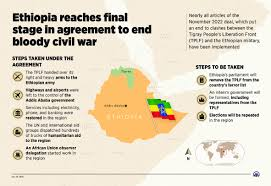
Ethiopia

Hi all, how is everyone doing, I hope all is good with and those you care about, this week we are still in Africia and the country is Ethiopia a county that many will have heard of in different commercials for UNICEF.

Ethiopia, in the Horn of Africa, is a rugged, landlocked country split by the Great Rift Valley. With archaeological finds dating back more than 3 million years, it’s a place of ancient culture. Among its important sites are Lalibela with its rock-cut Christian churches from the 12th–13th centuries. Aksum is the ruins of an ancient city with obelisks, tombs, castles and Our Lady Mary of Zion church.

In 1931, Emperor Haile Selassie formally requested that the international community use the name Ethiopia instead of the exonym Abyssinia, and the issuing Bank of Abyssinia also became the Bank of Ethiopia.

The capital is Addis Ababa, which is in the highlands bordering the Great Rift Valley, is the country’s commercial and cultural hub.

Located in the capital is a National Museum which exhibits Ethiopian art, traditional crafts and prehistoric fossils, including replicas of the famous early hominid, “Lucy.”

It has a population of around 126 million, this may be due to a very high fertility of 4.4 children per woman. The combination of a high birth rate and relatively low life expectancy means that Ethiopia is a young country. 41.5 percent of the population is below 15 years and only 3.3 percent is above 65.

The currency is the birr it is subdivided into 100 santims.

The national animal is the lion, and its national flower is the calla lily. The national bird is the Stresemann’s bush crow, also known as the Abyssinian pie, bush crow.

The Flag of Ethiopia consists of a green, yellow, and red tricolour with the national emblem, a golden pentagram on a blue disc, superimposed at the centre.

The star represents the unity of all Ethiopian nationalities, its rays the bright prospects for their future. Blue is for peace, yellow for hope, justice, and equality. Red represents sacrifice for freedom and equality, while green is equated with labour, development, and fertility.

Religion in Ethiopia consists of a number of faiths. Among these mainly Abrahamic religions, the most numerous is Christianity totalling at 67.3%, followed by Islam at 31.3%. There is also a longstanding but small Ethiopian Jewish community.

Christianity in Ethiopia dates back to the ancient Kingdom of Aksum, when the King Ezana first adopted the faith in the 4th century AD. This makes Ethiopia one of the first regions in the world to officially adopt Christianity. Various Christian denominations are now followed in the country.

This is not a country you want to go visiting in face a search online will tell you to avoid non-essential travel to Ethiopia due to civil unrest, violence, armed conflict and crime. The security situation can deteriorate without warning. This advisory excludes Addis Ababa where you should exercise a high degree of caution.

The government of Ethiopia is the federal government of Ethiopia. It is structured in a framework of a federal parliamentary republic, whereby the prime minister is the head of government and the commander-in-chief of the Ethiopian Armed Forces. The prime minister is the most powerful political figure in Ethiopian politics. The official residence of the prime minister is the Menelik Palace in Addis Ababa.

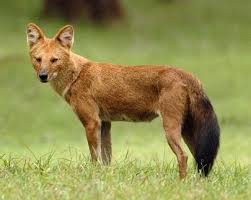
This week’s wild dog the Dhole

This week we are looking at the dhole, it is a canid native to South, East and Southeast Asia. It is anatomically distinguished from members of the genus Canis in several aspects: its skull is convex rather than concave in profile, it lacks a third lower molar, and the upper molars possess only a single cusp as opposed to between two and four.

It is a highly social animal, living in large clans without rigid dominance hierarchies and containing multiple breeding females.

This highly elusive and skilled jumper is classified with wolves, coyotes, jackals, and foxes in the taxonomic family Canidae. Dholes are unusual dogs for a few reasons. They don’t fit neatly into any of the dog subfamilies (wolf and fox, for instance).

They are very social animals that live in packs of 5–12 members, but packs can be as large as 25 members. They can also be cooperative with a few splitting off from the pack to hunt together. They are apex predators that are highly skilled hunters, they are agile, strong, and can leap up to seven feet vertically and are also excellent swimmers and have high endurance. 

It is believed that they are one of the most talkative canid species, using a variety of vocalizations to communicate, including whistles, clucks, screams, growls, yaps, and squeaks. 

Since their territory is often shared with larger predators like tigers and leopards, the pack must be alert at all times.

They are a medium-sized wild dogs about the size of a border collie. They have a rusty red coat; they are born with a brownish colour which turns more reddish when around three months old. They can also have dark, almost black bushy tails.

They are not generally dangerous to humans and are usually docile and skittish and will typically retreat when they see a person. However, dholes can attack livestock, and humans may retaliate by poisoning the carcasses. This can lead to the deaths of entire packs of dholes, as well as other carnivores and scavengers. 

Newcastle War Years

 Today we are going to have a look at Newcastle, New South Wales in 1939 when World War 11 started.

It was considered by some that the part Newcastle was to play in the national war effort was inevitably this was due to the city’s heavy industries represented the vital heart of the country’s ability to fight fire with fire.

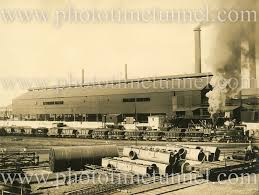
It wasn’t long before BHP, its subsidiaries and a surprising wide array of smaller industrial plants were flat out making shells, gun barrels, bombs and parts for everything from tanks to aircraft.

As the war progressed the NSW government pressed Newcastle back into shipbuilding and repair business.

BHP chief Essington Lewis had anticipated Japan’s entry into the war and the cities industries were ready to accelerate production after the attack on Pearl Harbour in 1941.

War activity reached hectic levels in 1942 when Japanese submarines prowled of the east coast sinking ships and attacking Newcastle and Sydney.

It was during this time that the RAAF established a base at Williamstown in order to defend the oh so important industries in Newcastle. A seaplane base was also established at Rathmines which is part of Lake Macquarie and the US-built Catalina aircraft did long-range patrols and anti-submarine work.

During the war years military and civil defence infrastructure appeared all over the Hunter, also air raid shelters popped up in streets and tank traps were established on beaches and slit trenches were dung in schools and parks.

Blackouts were enforced and many households dug their own shelters.

Of course, many men signed up to serve their country, going overseas to fight, while U S troops arrived in the city.

Women also went off to war with many joining the Land Army as well as other military forces, operating searchlights and working in radar and communications installations. While others filled the caps left by the men gone off to fight, this was radical change that continued well into the postwar years.

Dingo

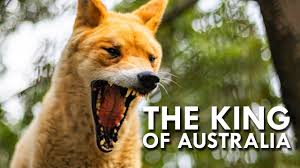
Well, here we are at another Monday and time to look at another wild dog, this week it is the Australian Dingo.

Dingoes have a lifespan from as few as 3yrs to usually around 16yrs but some have been known to live for 20yrs.

The dingo is an ancient lineage of dog found in Australia, however, compared with the skull of the dog, the dingo possesses a longer muzzle, longer carnassial teeth, longer and more slender canine teeth, larger auditory bullae, a flatter cranium with a larger sagittal crest, and larger nuchal lines.

The dingo’s three main coat colourations are light ginger or tan, black and tan, or creamy white. The skull is wedge-shaped and appears large in proportion to the body.

The dingo is closely related to the New Guinea singing dog. The oldest remains of dingoes in Australia are around 3,500 years old.

A dingo pack usually consists of a mated pair, their offspring from the current year, and sometimes offspring from the previous year.

Dingoes do not bark like a dog but howl, chortle, yelp, whine, growl, chatter, snort, cough and purr.

Dingoes are largely terrestrial carnivores they have a broad diet including fresh meat, fish, eggs and carrion they occasionally eat plants and fruits. They’re opportunistic hunters but will also scavenge food. The bulk of their diet is made up of meat: they eat kangaroos, wallabies, feral pigs, wombats, small mammals (rabbits, rodents), birds and lizards.

Their strong jaw and large canines permit the dingo to procure and machinate rather tough prey, allowing them to tear meat from carcasses and crush bones to obtain calcium and fat.

Dingoes have a strict social hierarchy and regularly mate for life. Female dingoes have one annual breeding cycle, March to June. The dingo pack helps with the rearing of pups which are weaned at about 2 months, at which time the pups may be abandoned or can stay with the parents for up to a year. Dingo pups are fully grown by 7 months.

They are primarily killed by humans, crocodiles, and sometimes by other canid species, such as jackals and domestic dogs. They are also killed by Dingoes from other packs. Pups may be taken by large birds of prey.

They are highly intelligent and intuitive animals that have a high capacity to solve problems and plan.

With this high intelligence and foresight comes a strong sense of self-awareness and independence.

Egypt

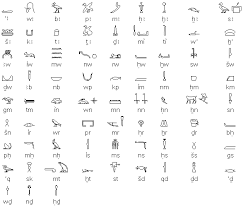
Well, we are moving out of Europe and into North Africa this is the second largest and second most populated continent after Asia. North Africa is naturally the northmost region of the African continent it is separated from the rest of Africa by the Sahara Desert.

Egypt is one of the most populated countries in Africa and the Middle East, a great majority of the population live near the banks of the river Nile. It is famous for its ancient civilisation and some of the world’s most famous monuments such as the Pyramids and Great Sphinx.

It is a country linking northeast Africa with the Middle East, dates to the time of the pharaohs.

The capital, Cairo, is home to Ottoman landmarks like Muhammad Ali Mosque and the Egyptian Museum. It is set on the Nile River. At its heart is Tahrir Square and the vast Egyptian Museum, a trove of antiquities including royal mummies and gilded King Tutankhamun artifacts. Nearby, Giza is the site of the iconic pyramids and Great Sphinx, dating to the 26th century BC. In Gezira Island’s leafy Zamalek district, 187m Cairo Tower affords panoramic city views.

The Egyptian pound is the official currency of Egypt. The 10  and 20-pound notes are made out of polymer plastic paper as of July 6, 2022.

The official language of Egypt is Arabic, and most Egyptians speak one of several vernacular dialects of that language. As is the case in other Arab countries, the spoken vernacular differs greatly from the literary language.

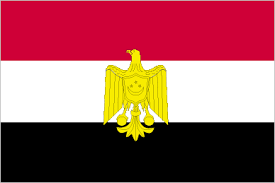
The national flag of Egypt is a tricolour consisting of the three equal horizontal red, white, and black bands of the Egyptian revolutionary flag that dates back to the 1952 Egyptian Revolution. The flag bears Egypt’s national emblem, the Egyptian eagle of Saladin, centred in the white band.

While looking for the country’s national animal I got two responses one being the Dorcas Gazell the other being the Steppe Eagle, which is the country’s national bird.

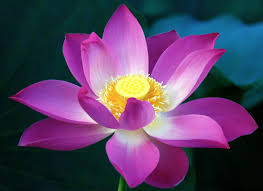
The national flower of Egypt is the Egypt Lotus Flower. This stunning flower has been an important symbol in Egyptian culture for thousands of years, and it is often associated with rebirth and regeneration.

Football is the most popular sport in Egypt, by football I mean soccer many Egyptians gather around to watch various Egyptian clubs and the Egyptian national football team play on an almost daily basis. Zamalek and Al Ahly are amongst the most popular in the country, both of which are based in Cairo.

Throughout much of ancient history Egyptian religion was polytheistic, meaning it recognized many gods and goddesses, as well as a variety of other divine beings.

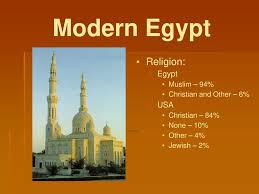
Now days most experts and media sources estimate approximately 90 percent of the population is Sunni Muslim and 10 percent is Christian. Scholars and NGOs estimate Shia Muslims comprise approximately 1 percent of the population. There are also small numbers of Dawoodi Bohra Muslims and Ahmadi Muslims.

 There is also a new post over at Random Stuff

The very sinkable Boambee

Ok this week I am going to share a bit about the steamer Boambee one unlucky vessel.

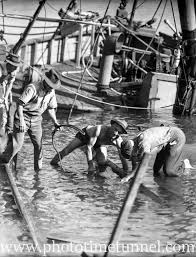
The 236-tonne wooden steamer was built in 1908 and by the time it ran aground and was dismantled forty years later it had sunk four times, including once at Newcastle’s wharf.

Records show that its first mishap happened at Tweed Heads on 20 December 1923 it was driven ashore by strong gale winds but was able to be refloated. Tweed Heads is a border town between New South Wales and Queensland.

Moving on, it is said to have sunk at Clarence Town Wharf in 1939 while loaded with gravel and wooden sleepers, again it was refloated only to sink again sometime during World War 11 at Hexham. Clarence Town is on the Williams River in New South Wales; the town of Hexham is also in NSW. Hexham is about a half hour drive from where I live.

Later on, it was hit by a ship in Newcastle Harbour and written off, however it would be bought by the Hunter River Steamship Company in 1947 to be used on the Newcastle to Sydney trade.

On its first trip it sprang a leak which was more than the pumps could handle so the captain decided to return to Newcastle while it slowly sank. By the time it reached Newcastle Harbour it was very low in the water and there were no tugs available to help. So, by the time she reached the wharf she began to list and sank ten minutes after reaching its berth.

It took five days, but she was able to be refloated, repaired and renamed.

Now called the Illalong it became the property of the Manning River Steamship Company. In March of 1948 while on route from Sydney to Newcastle with a cargo of brattice cloth for coalminers it went too close inshore during a thick fog and ran aground at Nine Mile Beach which is near Belmont.

This time it was written off again and quickly dismantled   

Greece

Good morning, everyone who read this, hope you are doing well this week we are off to Greece.

People have lived in Greece for more than 5,000 years and it has been considered a civilised country for 2,500 years.

Greece is a country in southeastern Europe with thousands of islands throughout the Aegean and Ionian seas. Influential in ancient times, it’s often called the cradle of Western civilization.

The capital is Athens, which retains landmarks including the 5th-century B.C. Acropolis citadel with the Parthenon temple. Greece is also known for its beaches, from the black sands of Santorini to the party resorts of Mykonos.

The country has a population of around 11 million, the official currency is the euro. The euro replaced the Greek modern drachma as Greece’s official currency in 2002, following the country’s introduction into the Eurozone in 2001.

The national flag of Greece, popularly referred to as the Blue-and-White or the Cyan-and-White, is officially recognised by Greece as one of its national symbols and has 5 equal horizontal stripes of blue alternating with white. Blue and white are the national colours of Greece, as blue symbolizes the sky and seas and white denotes the purity of the Greek independence struggle. The cross represents the Christian religion.

Due to its deep connection to the sea, it has adopted the dolphin as its national animal. Revered in ancient mythology and folklore, the dolphin symbolizes intelligence, harmony, and the maritime heritage of Greece.

The little owl is the national bird of Greece, is also known as the owl of Athena and is believed to provide knowledge and wisdom worthy of the goddess.

While looking for the national flower of Greece I found some sites saying it is the Bear’s Breech which is also as the Sea Dock, Oyster Plant, and by its biological name, Acanthus Mollis. Others said it was the lily. Specifically, the white lily is often associated with purity and has historical significance in Greek culture. Additionally, the oleander is also commonly linked to Greece, particularly in its natural landscapes.

In ancient Greek religion and mythology, there were 12 gods called Zeus, Hera, Poseidon, Demeter, Athena, Apollo, Artemis, Ares, Hephaestus, Aphrodite, Hermes, and either Hestia or Dionysus.

Now days religion in Greece is dominated by Christianity, particular the Greek Orthodox Church, which is within the larger communion of the Eastern Orthodox Church. It represented 90% of the total population in 2015 and is constitutionally recognized as the “prevailing religion” of Greece.

Many people will think of the Trojan Horse when thinking about Greece it was in case you do not know a wooden horse said to have been used by the Greeks during the Trojan War to enter the city of Troy and win the war.

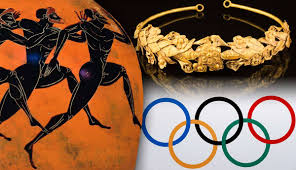
Also, many people when they think of Greece will comment that it is home to the first Olympic games, way back when the ancient Games were staged in Olympia, Greece, from 776 BC through 393 AD, it took 1503 years for the Olympics to return. 

The first modern Olympics were held in Athens, Greece, in 1896. The man responsible for its rebirth was a Frenchman named Baron Pierre de Coubertin, who presented the idea in 1894.

That will do for Greece.