Giant Panda

This week we are looking at the giant panda, which is a bear, I never thought of them as being part of the bear family.

Giant pandas belong to the bear family, whereas red pandas are in their own family, and they are more closely related to raccoons. Interestingly, giant pandas are more closely related to polar bears than to red pandas.

Giant pandas are typically 4 to 6 feet long and stand 2 to 3 feet tall at the shoulder. They can weigh between 220 and 330 pounds, with males tending to be larger than females,  Newborn pandas are very small, about the size of a stick of butter. 

Giant pandas live in the mountain ranges of southwestern China, specifically in the provinces of Sichuan, Shaanxi, and Gansu. They inhabit bamboo forests at elevations between 5,000 and 10,000 feet. Their habitat is characterized by humid, wet conditions and is often shrouded in mist and clouds.

A panda’s daily diet consists almost entirely of the leaves, stems and shoots of various bamboo species. Bamboo contains very little nutritional value so pandas must eat 12-38kg every day to meet their energy needs.

Scientists are not sure how long giant pandas live in the wild, but they are sure it is shorter than lifespans in zoos. They estimate that lifespan is about 15-20 years for wild pandas and about 30 years for those in human care. Chinese scientists have reported zoo pandas as old as 35.

Pandas are dependent on their mothers for the first few months of their lives and are fully weaned at 8 to 9 months. Most pandas leave their mothers when she becomes pregnant again, usually at about 18 months. Gestation takes from 95-160 days. Pandas normally give birth to single young. Twins seem to be born more frequently in captivity, when artificial insemination is used. The reproductive rate is about 1 cub every 2 years.

They are friendly and cheerful, Pandas have bundles of energy and warmth. They are confident and love trying out new things. Sociable and party-loving, they enjoy seeing friends and often put their friends’ feelings ahead of their own.

While pandas are known for their clumsy and lazy behaviour often observed in captivity or during feeding, they are actually proficient tree climbers and swimmers. 

There are the only two panda species found the giant and the red.. Despite their similarity in name, the two are not scientifically connected. They share the same geographical area and similar food.

Haiti

I  have written about some countries in the Caribbean area but will do a few more, the Caribbean is comprised of 13 independent island nations: Antigua and Barbuda, Bahamas, Barbados, Cuba, Dominica, Dominican Republic, Grenada, Haiti, Jamaica, Saint Kitts and Nevis, Saint Lucia, Saint Vincent and the Grenadines, and Trinidad and Tobago, These nations are recognized for their shared cultural heritage and location within the Caribbean region. There are 12 dependencies and 7 overseas territories as well various disputed territories.

This week we will look at Haiti which is a country located in the Caribbean. It shares the island of Hispaniola with the Dominican Republic, located to its east. While it was once a plantation colony of France based upon slavery of Africans, Haiti gained its independence in the year 1804.

The population is 11.77millon, Haiti has two official languages, Haitian Creole and French, everyone in Haiti speaks Haitian Creole. Some scholars estimate that approximately 90-95% of the population is monolingual, speaking Haitian Creole.

The Haitian Gourde (HTG) is the official currency of Haiti, a nation located on the western part of the island of Hispaniola in the Caribbean.

Haiti’s capital city is Port-au-Prince, it sits on the Gulf of Gonâve. The Musée du Panthéon National Haïtien honours the nation’s history and founding fathers. The Iron Market, a large 1891 covered bazaar, has produce and handicraft vendors. Nearby is the immense Notre Dame de l’Assomption Cathedral, reduced to a ruin by a 2010 earthquake. Colourful gingerbread-style houses from the turn of the 19th century dot the city.

The Haitian flag is a bicolour flag with two equal horizontal bands of blue (top) and red (bottom). In the centre, there is a white rectangle containing the Haitian coat of arms. The coat of arms includes a palm tree topped with the liberty cap, surrounded by cannons, flags, and other weaponry. The motto “L’Union Fait La Force” (“Unity Makes Strength”) is displayed on a banner below the coat of arms. 

The Nullarbor


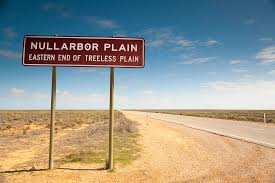
This week we are looking at the area of Australia called The Nullarbor Plain, which means “no trees” in Latin, is a vast, arid region in southern Australia with a rich history, both for Indigenous Australians and Europeans. 

Historically, it was seasonally occupied by the Mirning and Yinyila Indigenous peoples, who knew it as Oondiri, meaning “waterless”.

Europeans first charted the coast in the 17th century, but the interior remained largely unexplored until Edward Eyre’s epic crossing in 1841. The Nullarbor has since been a site of pastoralism, railway construction, and even nuclear testing, shaping its modern landscape and infrastructure.  They have a deep and continuing connection to the Nullarbor. 

The name “Nullarbor” was coined by surveyor Edmund Delissern in1865.  Pastoralists established stations along the telegraph and railway lines, and small settlements developed around these. 

The Nullarbor was used for nuclear testing in the 1950s, leading to the displacement of Indigenous populations.  The Trans-Australian Railway   completed in 1917, facilitated travel and trade across the Nullarbor. 

The Eyre Highway. A road across the Nullarbor, was completed in 1976, connecting South Australia and Western Australia. The highway is a 1,664-kilometre, it is signed as National Highways 1 and A1, it forms part of Highway 1 and the Australian National Highway network linking Perth and Adelaide.

Driving directly across the Nullarbor Plain (from Norseman to Ceduna) takes approximately 12.5 hours of non-stop driving. However, most travellers allocate 2-3 days for the journey to allow for stops at attractions, wildlife viewing, and enjoying the scenery. 

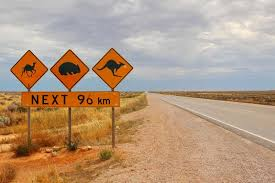
When driving across the Nullarbor people need to beware of trucks as there are triple-decker road trains which have brutal slipstreams, so slow down or pull over to let them pass. Also at night the road. turns into a marsupial rave party at night, from camels, kangaroos, dingoes and occasionally wombats. With no phone service, no other travellers, and emergency services hours away, getting into an accident could leave you stranded without help.

When camping Nullarbor, keep an eye out for scorpions, bird-eating spiders, eastern brown snakes, and death adders. Avoid setting up camp near bodies of water, high vegetation, rocks, fallen logs, or under trees. Also, remind curious kiddos that sticking hands in holes in the ground, under rocks, logs, or trees could disturb a creepy crawly!

If you run into trouble, do not leave your vehicle to search for help. Drones, planes, foot searches, and car trackers will see a vehicle and find you.

The area is known for its vast cave systems, some of which contain fossils and provide insights into the region’s past climate. 

The Nullarbor continues to be a place of both natural beauty and human activity, with tourism and transport playing a significant role. 

Andean or Spectacled Bear

This week we are looking at the Andean Bear also known as the Spectacled Bear, this is a species of bear native to the Andes Mountains in northern and western South America. It is the only living species of bear native to South America, and the last remaining short-faced bear.

The bears are an endangered species, listed as Vulnerable, and it is illegal to kill them. The Andean bear is the last remaining short-faced bear spectacled bears are the only surviving species of bear native to South America, and the only surviving member of the subfamily Tremarctinae.

They are technically the largest land carnivore on that continent, although as little as 5% of its diet is composed of meat. South America’s largest obligate carnivore is the jaguar. Among South America’s extant, native land animals, only the Baird’s and South American Tapirs are heavier than this species. They are a mid-sized species of bear.

Overall, its fur is blackish in colour, though bears may vary from jet black to dark brown and to even a reddish hue. The species typically has distinctive, beige-coloured marking across its face and upper chest, though not all Spectacled bears have “spectacle” markings. The pattern and extent of pale markings are slightly different on each individual bear and bears can be readily distinguished by this.

They are relatively small compared to other bear species. 

Males typically weigh between 220-440 pounds and are 5.5 to 6.5 feet long, while females weigh between 80-180 pounds and are slightly smaller. They stand 2 to 3 feet tall at the shoulder. 

They have relatively large heads compared to their body size, as well as powerful claws and paws that help them climb trees and build nests.  Despite their size, they are known for their adaptability to different environments within the Andes, from cloud forests to coastal deserts. 

They inhabit mountainous regions of South America, primarily the Andes Mountains, from Venezuela to Bolivia. They are found in a variety of habitats including rainforests, cloud forests, grasslands, and even scrublands. They are known to build platform nests in trees for eating and sleeping and are generally active year-round.

They feed on fruits and bromeliads being there favored foods, but also eat berries, grasses, bulbs, cactus flowers and small animals such as rodents, rabbits and birds. Near settlements, bears sometimes raid cornfields. Andean bears climb trees and forage on the ground.

They have a lifespan of around 20yrs in the wild but up to about 38yrs under human care they have a gestation of between 160 to 255 days and can have between 1 and 4 cubs they are considered mature between 4 and 7 years.

They are the only bears are the only known to eat bromeliads. Has rings of white or light fur around its eyes. The rest of the bear’s fur is black or dark brown.

Andean bears, also known as spectacled bears, are generally considered one of the least aggressive bear species towards humans. While they are capable of defending themselves if threatened, they typically avoid encounters with people and are known for their shy and elusive nature. Attacks on humans are rare, with only one confirmed human death attributed to a spectacled bear. They can run up to 30 mph.

Uzbekistan

Here we are at another Monday, I wasn’t sure I would do a post today due to feeling tired and worn out and not having a lot of motivation but here I am writing about the country of Uzbekistan, not a country I have heard of but I do like doing posts about places and other stuff I know little or nothing about.  This country has a population of around 36 million.

Uzbekistan is a Central Asian nation and former Soviet republic. It’s known for its mosques, mausoleums and other sites linked to the Silk Road, the ancient trade route between China and the Mediterranean. Samarkand, a major city on the route, contains a landmark of Islamic architecture: the Registan, a plaza bordered by 3 ornate, mosaic-covered religious schools dating to the 15th and 17th centuries

The capital city is Tashkent, it’s known for its many museums and its mix of modern and Soviet-era architecture. The Amir Timur Museum houses manuscripts, weapons and other relics from the Timurid dynasty. Nearby, the huge State Museum of History of Uzbekistan has centuries-old Buddhist artifacts. The city’s skyline is distinguished by Tashkent Tower, which offers city views from its observation deck.

The official currency is the Sum, the country replaced the ruble with the sum at par in on 16 July 1994. No subdivisions of this sum were initially issued and only banknotes were produced, in denominations of 1, 3, 5, 10, 25, 50, 100, 200, 500, 1,000, 5,000, and 10,000 sum. Further series, however, have introduced coins and a subunit, the tiyin. Because it was meant to be a transitional currency, the design was rather simplistic.

The flag of Uzbekistan is a horizontal triband with three equal bands of blue, white, and green, separated by two thin red stripes. In the upper left canton (hoist side), there’s a white crescent moon and twelve white stars. The blue band represents the sky and water and is also associated with the Turkic peoples. The white represents peace and purity. The green symbolizes nature and new life. The red stripes are a symbol of the power of life. The crescent moon is a traditional Uzbek symbol, and the twelve stars represent the twelve months of the Islamic calendar and the constellations. 

Islam is the predominant religion, with the vast majority of the population identifying as Muslim. While Islam is dominant, there are also other officially recognized faiths, and the country has a diverse religious landscape.

Other faiths are also present, including Russian Orthodox Christianity, Judaism, Buddhism, there are also significant populations of Baha’is, Zoroastrians, and Roman Catholics. 

Uzbekistan’s government acknowledges religious freedom, but it also maintains a system of state control over religious organizations, including registration requirements and oversight of religious literature. The Muslim Board of Uzbekistan (MBU) plays a significant role in managing Islamic affairs, and it works within a framework established by the government. 

Uzbek is a Karluk Turkic language spoken by Uzbeks. It is the official and national language of Uzbekistan and formally succeeded Chagatai, an earlier Karluk language endonymically called Türki or Türkçe, as the literary language of Uzbekistan in the 1920s.  However, many other native languages are spoken in the country. These include several other Turkic languages, Persian and Russian.

Alice Springs NT Australia

I have spent most of the day trying to decide what the topic of today’s post would be, and I ended up picking the town of Alice Springs.

Aussies commonly refer to Alice Springs as “The Alice” or simply “Alice”.

This is one town I would like to visit one day my parents visited the Alice and enjoyed the visit, I do remember mum & dad telling me that when the bought wine from a bottle shop, they were told to make sure it was covered so it couldn’t be seen by looking in a window and to get in their car and drive to a different area. This was because some of the local aboriginals would break into the car if they saw grog inside and if they were seen placing alcohol in the car and walking away the car would be broken into.

Alice Springs is a remote town in Australia’s Northern Territory, halfway between Darwin and Adelaide, both 1,500km away. It’s a popular gateway for exploring the Red Centre, the country’s interior desert region. Its 1872 origin as part of the Overland Telegraph Line (linking Darwin and Adelaide) is preserved in the vintage buildings and equipment at the Alice Springs Telegraph Station Historical Reserve.

It has an estimated population of around 28,922. This is based on the Alice Springs Town Council LGA profile, which was last updated in January 2025. The town is the major settlement in Central Australia and a significant population centre in the Northern Territory. 

The population of Alice Springs is an estimate because it is based on projections and statistical modelling rather than a direct head count. The Australian Bureau of Statistics (ABS) uses various methods, including census data and estimated resident population (ERP) figures, to calculate population numbers, but these are subject to revision and may not perfectly reflect the actual population at any given time, especially in smaller areas like Alice Springs. 

Alice Springs was established in 1872 with the construction of the Alice Springs Telegraph Station, part of the Australian Overland Telegraph Line (OTL) connecting Adelaide to Darwin. It was originally named Stuart, but the settlement near the telegraph station was later renamed Alice Springs in 1933. The name Alice Springs was given by W.W. Mills, after Alice Todd, wife of Sir Charles Todd, who was instrumental in the construction of the telegraph line. 

The Arrernte people are the traditional owners and custodians of Alice Springs, also known as Mparntwe in the Arrernte language. They have a deep and enduring connection to the land, dating back tens of thousands of years. The Arrernte have stories and significant sites related to the creation of the landscape, including the MacDonnell Ranges.

Alice Springs is famous for its unique location in the heart of Australia, its strong Aboriginal culture and art scene, and its stunning natural landscapes, including the MacDonnell Ranges. It’s also known as a hub for exploring the broader Red Centre region and for its outback character.

Alice Springs faces a complex combination of social and crime-related issues that contribute to a perception of danger. These include high rates of alcohol-related violence, property crime, and domestic violence, along with concerns about youth crime and the impact of past policies. While the town has a diverse population and attracts tourists, these issues have led to increased fear and anxiety among residents. 

While Alice Springs faces significant challenges, it’s important to acknowledge that it is also a place of cultural significance, with a diverse population and a strong community spirit. Efforts are underway to address the underlying issues and improve safety and well-being for all residents. 

Asiatic Black Bear

This week’s bear is the Asiatic Black Bear, these bears can be found in eastern Asia including Afghanistan, Bangladesh, Bhutan, Cambodia, China, India, Islamic Republic of Iran, Japan, Democratic People’s Republic of Korea, Lao People’s Democratic Republic, Malaysia, Mongolia, Myanmar, Nepal, Pakistan, Russian Federation, Taiwan and Vietnam.

They have long black fur with a distinct white patch on the ch

est that is often crescent-shaped. The fur around the shoulders and throat is particularly long, and their ears are relatively large. The tail is short and is barely visible under a long, coarse coat. The black pelage has a light beige to white “V” shape on the chest area, a small beige to white coloured crescent across the throat, and a small spot of white on the chin. The white fur on the muzzle seldom reaches the orbits of the bear. 

The size differs between males and females. Males typically weigh 110 to 150 kg, while females weigh 65 to 90 kg. The head and body measure 120 to 180 cm in length, while the tail is an additional 6.5 to 10.6 cm. The head is large and rounded, and the eyes are small. The ears are large and are set farther apart than on an American black bear. The body is heavy, the legs are thick and strong, and the paws are broad.

They are more carnivorous than their American counterparts, although only a small part of their diet is made up of meat. This includes small mammals, birds, fish, molluscs and carcasses. They also feed on grasses, fruits, berries, seeds, insects and honey. In autumn they fatten up for the winter by feeding on nuts. In northern climates they hibernate. In southern climates they do not hibernate.

Little is known about Asiatic black bears in the wild; most of what is known about their social and reproductive behaviour has been collected by observing the bears in zoos and environments other than their natural habitat.

In captive environments, the mating pattern of Asiatic black bears is classified as promiscuous. The gestation period is typically 6 to 8 months. This period includes a period of delayed implantation, where the fertilized egg floats freely in the uterus for a time before attaching to the uterine wall and developing further. 

In the wild, Asiatic black bears typically forage alone. However, during breeding season, pairs can be seen hunting and gathering together.

They have a lifespan on around 25yrs in the wild and around 35-40yrs in captive.

They are listed as “Vulnerable” by the IUCN, meaning they face a high risk of extinction in the wild. Their populations are decreasing due to habitat loss, poaching, and the illegal trade of bear parts, particularly bile for traditional medicine. Here are some regional estimates of numbers:

  • China: Estimates range from 16,000 to 50,000. 
  • Japan: Estimates range from 12,000 to 20,000. 
  • India: Estimates range from 5,000 to 7,000. 
  • Russia: Estimates range from 5,000 to 7,000. 
  • Iran: Around 100-200. 
  • South Korea: Approximately 40, following reintroduction efforts

They are generally considered dangerous to humans, with documented cases of both unprovoked and provoked attacks. While they are not as frequently involved in attacks as some other bear species, they are known to raid crops, damage property, and injure or kill people. Attacks are more common during late summer, coinciding with mating season. 

Polar Bear

This week we are looking at the polar bear, the polar bear is a large bear native to the Arctic and nearby areas. It is closely related to the brown bear, and the two species can interbreed. The polar bear is the largest extant species of bear and land carnivore, with adult males weighing 300–800 kg.

They are a powerful symbol of the strength and endurance of the Arctic. The polar bear’s Latin name, Ursus maritimus, means “sea bear.” It’s an apt name for this majestic species, which spends much of its life in, around, or on the ocean–predominantly on the sea ice. In the United States, Alaska is home to two polar bear subpopulations.

They are good swimmers and can sustain a pace of six miles per hour by paddling with their front paws and holding their hind legs flat like a rudder. They have a thick layer of body fat and a water-repellent coat that insulates them from the cold air and water.

These bears spend over 50% of their time hunting for food. A polar bear might catch only one or two out of 10 seals it hunts, depending on the time of year as well as other things. Their diet mainly consists of ringed and bearded seals because they need large amounts of fat to survive.

They rely heavily on sea ice for traveling, hunting, resting, mating and, in some areas, maternal dens. But because of ongoing and potential loss of their sea ice habitat resulting from climate change–the primary threat to polar bears Arctic-wide–polar bears were listed as a threatened species in the US under the Endangered Species Act in May 2008. As their sea ice habitat recedes earlier in the spring and forms later in the fall, polar bears are increasingly spending longer periods on land, where they are often attracted to areas where humans live.

 They can run as fast as 40 kilometres per hour—but only for short distances. Younger, leaner bears are the best runners and are able to cover two kilometres’ without stopping. Older and larger bears, on the other hand, quickly overheat. However, they can only swim up to 10 kilometres per hour.

They have 42 razor sharp teeth: With jagged back teeth and canines larger than grizzly teeth, that would be quite the bite. Their paws are 30 cm wide which is big which act as a natural snowshoe that helps the bear trek across treacherous ice and deep snow. They also have 3 eyelids: The third helps protect the bear’s eyes from the elements and they have 4 inches of fat under their skin to keep it warm. Their skin is black, and their fur is transparent, and they have a blue tongue.

During autumn pregnant polar bears make dens in earth and snowbanks, where they’ll stay through the winter and give birth to one to three cubs. In spring the mother emerges from her den followed by her cubs. During that time, she will protect them and teach them how to hunt. They have a gestation period of between 195 and 265 days. They can live 20 to 30 years, but only a small percentage live past 15 to 18 years.

The oldest known polar bear in the Arctic lived 32 years. The oldest known polar bear in a zoological park lived 45 years.

When it comes to predator’s adult polar bears have no natural predators except other polar bears. Cubs less than one year old sometimes are prey to wolves and other carnivores.

Newborn cubs may be cannibalized by malnourished mothers or adult male polar bears.

Mount Gambier

This week we are looking at the second largest city/town in South Australia, which is Mount Gambier, with a population of over 26,000. It is located on the Limestone Coast. It is in the southeastern corner of South Australia.

The town was founded by Hastings Cunningham and was first called “Gambierton” in 1854 by subdividing a block of 77 acres (31 ha). From 1861 to 1878, the Post Office was known by this name before reverting to Mount Gambier.

It’s known for its limestone, volcanic landscape and crater lakes. One of these, Blue Lake, turns cobalt blue in summer. Nearby, the Centenary Tower offers panoramic views of the area. The Umpherston Sinkhole contains a lush sunken garden. The Lady Nelson Visitor Centre houses a full-size replica of a late-18th-century ship.

Mount Gambier’s history is marked by its volcanic origins, early European exploration, and development as a significant regional centre in South Australia. The extinct volcano, Mount Gambier, was first sighted by Lieutenant James Grant in 1800 and named after Admiral James Gambier. European settlement began in the 1840s, with the area becoming a major agricultural and timber centre.

The traditional owners of the Mount Gambier area are the Boandik people, also known as the Bungandidj. They are the First Nations people of the region, and their language and culture are deeply connected to the land and waterways. The name “Bungandidj” is said to mean “people of the reeds”. 

Organizations like the City of Mount Gambier and headspace Mount Gambier formally acknowledge the Boandik people as the traditional custodians. 

There’s a growing movement to recognize the Boandik presence and connection to the land through dual naming of significant sites, alongside their European names. 

The Bungandidj language is being revitalized, and efforts are underway to reintroduce it into the community. 

The Boandik people have a long and rich history in the region, and their stories and cultural knowledge are important to the area’s identity. 

Mount Gambier is generally considered a safe place, but like any location, it has areas where caution is advised, especially at night or in more remote areas. While some crime statistics show increases in thefts and break-ins, these are not indicative of the overall safety of the city for residents and visitors. 

American Black Bear

This week we are looking at the American black bear, or simply black bear, it is a species of medium-sized bear which is endemic to North America. It is the continent’s smallest and most widely

They vary in size, with males typically weighing between 56 to 226 kilos (125 to 500) pounds and females between 40 to 136kilos (90 to 300) pounds. They generally measure 1.5 to 2.1 metres (5 to 7 feet) in length and stand less than1 metre (2 to 3 feet) tall at the shoulder on all fours. When standing upright, they can reach a height of 5 to 6 feet

Most of their diet consists of berries, fruit, sedges, and insects. They will also occasionally consume fish, honeycomb, and human food and garbage, so it is important to make sure to keep your items locked up with bear-proof equipment! In the spring, black bears may prey on young elk and deer.

They are typically shy and secretive towards humans, generally avoiding encounters. They are known for their intelligence and curiosity, exhibiting problem-solving skills and a tendency to explore. While they can be active at any time of day, they are often crepuscular, meaning they are most active during dawn and dusk. Black bears are also solitary animals for most of the year, except during mating season and when females are raising cubs. 

They inhabit a wide range of environments across North America, primarily favouring forested areas. They are commonly found in mountainous regions, woodlands, and swamps, often seeking out areas with ample food, water, and shelter. 

They may become prey to mountain lions, wolves, coyotes, bobcats, grizzly bears, humans, or other black bears. Cubs are especially vulnerable to predation by these other animals.

While they are generally not known to be aggressive towards humans and often try to avoid encounters, they can be dangerous in certain situations. They may act defensively if they feel threatened or cornered, or if they are protecting food or their young. However, fatal black bear attacks are rare, with only a small number occurring each year in North America. 

Black bear cubs are typically born in January or February, weighing less than a pound and hairless, inside their mother’s den. They are usually born in litters of one to three, and emerge from the den with their mother in the spring, weighing around five pounds. Cubs stay with their mother for about 18 months, learning essential survival skills