Dominica Pt 2

This week we are looking at a few more facts about the country of Dominica.

Their national animal is the Sisserou parrot, also known as the Imperial amazon or Dominican amazon. It is an endangered species, endemic to Dominica, and appears on the national flag and coat of arms.

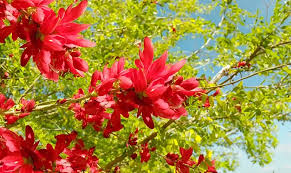
The national flower is the Sabinea carinalis, commonly known as Carib Wood or Bois Caraibe. It’s also referred to as Bwa Kwaib. 

They have an official national dish called Callaloo soup. This hearty, thick soup is made with dasheen leaves, coconut milk, and often includes yams, peppers, onions, salted meat or crab, and green bananas. It’s a staple in Dominican cuisine and is often served during special occasions. 

The coat of arms was adopted on July 21, 1961. It consists of a shield with two guardian sisserou parrots bracing the shield atop of which is a lion passant. The quarters of the shield depict a canoe, a banana tree, a palm and a frog of the native species known as the mountain chicken.

The country has made strides in protecting women’s rights through legal frameworks and international commitments, but challenges remain, particularly in areas like workplace discrimination and access to reproductive health services. The government has enacted legislation addressing violence, including domestic violence and sexual offenses, and has ratified international conventions like CEDAW. However, gaps exist in areas like employment discrimination and the availability of emergency contraception.

The age of consent for sexual relations is 16. The law prohibits using children for commercial sexual exploitation, including child sex trafficking, and related activity may be prosecuted under laws against prostitution or trafficking.

Dominica has a Westminster-style parliamentary government, and there are three political parties–the Dominica Labour Party (the majority party), the Dominica United Workers Party, and the Dominica Freedom Party. A president and prime minister make up the executive branch.

It is considered one of the safest Caribbean countries for travelers. Whether you’re a solo traveler, a same-sex couple, or a family with children, the island’s progressive laws, including legislation decriminalizing same-sex relations on 22 April 2024, ensure a safe and inclusive atmosphere for all demographics.  However, visitors should exercise caution at all times. Regarding outdoor activities, most beaches in Dominica are safe for swimming and snorkelling.

Adelaide

This week we are looking at the town of Adelaide the capital of South Australia, it has a population of around 1.4 million.

It is unique in Australia for being a planned city established as a free settlement, not a penal colony. Founded in 1836, it was named in honour of Adelaide of Saxe-Meiningen, wife of King William IV. The city’s layout, designed by Colonel William Light, features a grid pattern surrounded by parklands, making it a “city within a park”.

It was the first Australian city to be linked by telegraph to London (1872), and the first to allow women to vote (1895). 

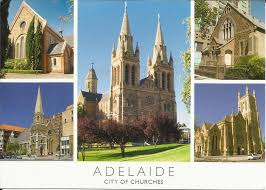
It is also known as the “City of Churches” due to the presence of numerous religious buildings. 

The River Torrens, flowing through the city, played a significant role in its development and is a landmark feature. That being its ring of parkland on the River Torrens is home to renowned museums such as the Art Gallery of South Australia, displaying expansive collections including noted Indigenous art, and the South Australian Museum, devoted to natural history. The city’s Adelaide Festival is an annual international arts gathering with spin-offs including fringe and film events.

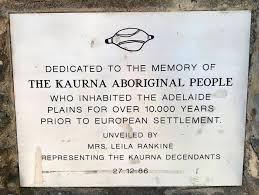
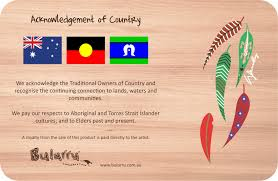
The traditional owners of the Adelaide region, specifically the Adelaide Plains, are the Kaurna people. They are recognized as the custodians of this land, with their traditional lands extending from Port Broughton to Cape Jervis. The City of Adelaide formally acknowledges the Kaurna people as the traditional owners and pays respect to their Elders, past and present. 

The traditional Kaurna name for Adelaide is Tarntanya, which translates to “red kangaroo place”. The Kaurna people are the Traditional Owners of the Adelaide Plains, and Adelaide was their central gathering place and area of movement and activity. While the city of Adelaide is now known by its European name, the Kaurna name is increasingly recognized and used, particularly in signage and dual naming efforts. 

So, what is the town known for well, its vibrant arts and cultural scene, particularly its extensive festival calendar. It’s also recognized for its high-quality education and beautiful natural landscapes, including beaches and wine regions. Furthermore, Adelaide is a city known for its charming architecture, exceptional coffee, and artisan produce.

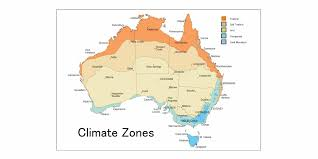
The Adelaide region has a Mediterranean climate, characterised with cold to mild wet winters and warm to hot dry summers. Most of the region’s rainfall occurs from mid-autumn to mid spring (April to October), which coincides with southern Australia’s wet season.

In May 1899, in a break with the common international practice of setting one-hour intervals between adjacent time zones, South Australia advanced Central Standard Time by thirty minutes after lobbying by businesses who wanted to be closer to Melbourne time and cricketers and footballers who wanted more daylight.

Melbourne

This week we are looking at the town of Melbourne.   Greater Melbourne’s area of approximately 9900 km² of suburbs spread more than 40 km to the south, 30 km to the east, 20 km to the north and sprawl across vast, flat basalt plains to the west.

Melbourne is the coastal capital of the southeastern Australian state of Victoria. At the city’s centre is the modern Federation Square development, with plazas, bars, and restaurants by the Yarra River. In the Southbank area, the Melbourne Arts Precinct is the site of Arts Centre Melbourne – a performing arts complex – and the National Gallery of Victoria, with Australian and indigenous art.

Melbourne’s population is estimated to be around 5.39 million people.

Melbourne is situated on the traditional lands of the Wurundjeri Woi-wurrung and Bunurong Boon Wurrung peoples, part of the Eastern Kulin Nation. These First Nations peoples have a strong connection to the land, water, and community, and their history and culture are integral to Melbourne’s identity. 

Melbourne has always been an important meeting place for events of social, educational, sporting, and cultural significance for the Wurundjeri Woi-wurrung and their Eastern Kulin neighbours. 

The Wurundjeri and Bunurong peoples continue to have a strong connection to their land, water, and community, and they are actively involved in cultural preservation and community engagement. 

Melbourne offers opportunities for visitors to learn about and experience Aboriginal culture through organizations like the Koorie Heritage Trust, Museums Victoria (Bunjilaka), and other cultural initiatives. 

Melbourne has a temperate oceanic climate, also known as a mild temperate climate. This means it experiences warm summers, cool winters, and relatively consistent rainfall throughout the year. It’s also known for its unpredictable weather, with locals often saying they can experience four seasons in a single day. 

The town’s location on the coast and its proximity to the Southern Ocean contribute to its changeable weather. It’s also located on the boundary of hot inland areas and the cool Southern Ocean, which further contributes to its unpredictable conditions. 

Melbourne is widely known for its vibrant street art, bustling laneways, world-class coffee culture, diverse culinary scene, and thriving arts and culture scene. It’s also renowned as a major sporting city, hosting major events like the Australian Open and Australian Grand Prix. Additionally, Melbourne is recognized for its liveability and multiculturalism, making it a popular destination for both residents and visitors. 

Melbourne’s history begins with its founding in 1835 by settlers from Tasmania who established a settlement on the Yarra River. The city was named in honour of the British Prime Minister, William Lamb, 2nd Viscount Melbourne. Melbourne experienced significant growth due to the 1850s Gold Rush, which brought in a large influx of people and fuelled economic prosperity. 

In the 1850’s the discovery of gold in the region led to the Gold Rush, dramatically transforming Melbourne into a bustling metropolis. The city’s population quadrupled, reaching 80,000 within three years.  

In 1851 Victoria separated from New South Wales and became a separate colony, with Melbourne as its capital. 

Between 1850 and 1880 Melbourne became a major trading and industrial centre, with the development of infrastructure like railways and the Melbourne Harbour Trust.  During 1901 and 1927 Melbourne served as the seat of government for the Commonwealth of Australia. 

Melbourne hosted the Summer Olympics in 1956, becoming the first city outside of Europe and North America to do so. 

During the 1990’s and 2000’s Melbourne continued to evolve, with the development of major infrastructure projects like CityLink and the construction of Federation Square.

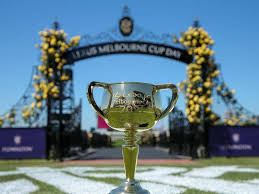
Melbourne is also famous for The Melbourne Cup which is a horse race held on the first Tuesday in November. It is an annual race held at the Flemington Racecourse. It is the richest two-mile handicup in the world and one of the richest turf races. The event starts at 3:00 pm on the first Tuesday of November and is known locally as “the race that stops the nation”.

The Melbourne Cup has cemented itself as a part of Melbourne and Australian culture, having been run every year since 1861 except for an intermission during both World Wars.

The day of the race has been a public holiday for much of Victoria since 1876.

Cuba Pt 2

This week we are looking at Cuba’s national things.

The coat of arms of Cuba features a shield prominently displayed in front of a fasces crowned with a Phrygian cap. The shield is supported by an oak branch on one side and a laurel wreath on the other. This heraldic design, created by Miguel Teurbe Tolón in 1849, is the official symbol of Cuba.

The national bird of Cuba is the Cuban Trogon, also known as the Tocororo. This vibrant bird features a green back, a blue crest, a red belly and beak, and a white throat and chest. Its distinctive colours mirror those of the Cuban flag, which is why it was chosen as the national symbol. 

The national flower of Cuba is the white ginger lily, also known as the White Mariposa or Butterfly Jasmine. Its scientific name is Hedychium conarium. 

The national dish of Cuba is Ropa Vieja, which translates to “old clothes” in Spanish. It’s a flavourful stew made from shredded beef, tomatoes, bell peppers, onions, and spices. The dish is often served with rice, black beans, and plantains. 

While Cuba doesn’t have a single officially designated national drink, the Mojito and the Cuba Libre are widely recognized as its most iconic and popular cocktails. The Mojito, a blend of rum, mint, lime, and sugar, is a classic Cuban drink often associated with the country’s hot weather and vibrant culture. The Cuba Libre, a simple mixture of rum and Coca-Cola, is another beloved beverage that symbolizes Cuba’s struggle for independence and remains a symbol of Cuban identity. 

The national colours of Cuba are red, white, and blue. These colours are prominently featured on the Cuban flag, which consists of three blue stripes, two white stripes, and a red triangle with a white star. 

Symbolism of the Colours:

  • Blue: Represents the country’s maritime location and the ideals of its people.
  • Red: Symbolizes the blood spilled by those who fought for Cuban independence.
  • White: Represents the purity of the revolutionary cause. 

The national sport of Cuba is baseball. While football (soccer) is also popular, baseball has a strong cultural significance and is considered the national sport. It was introduced in the 1860s from the United States and quickly became a beloved pastime. 

Darwin

This week we are looking at the town of Darwin which is the capital of the Northern Territory and has been since 1911 when the area was transferred from South Australia to the Commonwealth of Australia. The handover also included a renaming of the city from Palmerston to Darwin.  Darwin was also given city status in 1959.  It was a former frontier outpost.

The traditional owners of Darwin are the Larrakia (saltwater) people. Larrakia country runs far beyond the municipal boundaries of Darwin, covering the area from the Cox Peninsula in the west to the Adelaide River in the east. The Larrakia people established the first trade routes in the region, trading with the Tiwi, Wagait, and Wulna people as well as with Indonesian fishermen. Their stories, songs, and ceremonies echo the strong connection and understanding they have with the saltwater country.

Darwin is a gateway to massive Kakadu National Park. Its popular waterfront area has several beaches and green areas like Bicentennial Park. Also near the water is the Museum and Art Gallery of the Northern Territory, displaying Southeast Asian and Pacific art, plus a pearling lugger and other seafaring vessels. 

In 1839, the HMS Beagle with Lt. John Lort Stokes aboard sailed into the waters of what is now known as Darwin harbour. Stokes named the harbour after his former shipmate British evolutionist Charles Darwin but contrary to popular rumours, Darwin himself never visited the area.

Darwin was originally founded as Palmerston in 1869, although the port was always known as Port Darwin. The town’s growth was accelerated when gold was discovered at Pine Creek in 1871. 

In 1939 a Darwin Town Management Board was formed comprising three Commonwealth Government officers and a Citizens’ Advisory Committee. However, it ceased when Darwin was bombed during World War II.

Between February 1942 and October 1943, the Japanese launched more than 60 air raids over Darwin.

Since the early 1960s, Council has hosted a service on 19 February to commemorate the Bombing of Darwin. In 2011, the Governor General of Australia officially declared the 19 February ‘Bombing of Darwin Day – A National Day of Observance’.

When Darwin returned to civilian control after the war, a new Town Management Board was formed comprising officials and a representative group of residents.

On 1 July 1957 the people of Darwin elected for the first time a Mayor and 12 Councillors. There was much enthusiasm at the time for granting of self-governance with a voter turnout of more than 85 per cent on Election Day, 29 June 1957. Council’s first elected Mayor was Lucius (Bill) Richardson.

In May 1975, Darwin elected its first female Mayor, Dr Ella Stack, who also played a strong role in the Darwin Reconstruction Committee.

In 1978 the Commonwealth passed The Northern Territory (Self Government) Act 1978 establishing the Northern Territory as a distinct political entity under the Crown, with limited state-like powers, effective on 1 July 1978.
In November 1979 Dr Stack became Darwin’s first Lord Mayor.

Darwin was the scene of the biggest airlift in Australian history after Cyclone Tracy devastated the city in the early hours of Christmas Day 1974. Cyclone Tracy killed 66 people and injured thousands more. Many of those who died or were injured were struck by flying debris.

More than 30,000 of the city’s then 43,000 people were evacuated to cities and towns all over Australia immediately after the devastation of Tracy. But for many Darwin was a hard place to stay away from and people returned to resume their lives in the capital city of the Northern Territory. After the cyclone, the Darwin Reconstruction Commission (DRC), made up of Federal, Territory, and Local Government representatives, was involved with the running and rebuilding of the city which gradually turned Darwin into the most modern capital city in the nation.

The estimated usual resident population of Greater Darwin in 2021 was 139,902. This makes Darwin Australia’s smallest capital city. The city has nearly 53% of the Northern Territory’s population. 

Cuba

This week we going back to North American counties, there are 23 countries in North America, each with its own history and culture.

This week’s country is Cuba.

Cuba, officially the Republic of Cuba, is an island country, comprising the island of Cuba, Isla de la Juventud, and 4,195 islands, islets and cays surrounding the main island. It is located where the northern Caribbean Sea, Gulf of Mexico, and Atlantic Ocean meet.

The capital is Havana it has Spanish colonial architecture in its 16th-cecntury Old Havana core which includes the Castillo de la Real Fuerza, a fort and maritime museum. The National Capitol Building is an iconic 1920s landmark. Also in Old Havana is the baroque Catedral de San Cristóbal and Plaza Vieja, whose buildings reflect the city’s vibrant architectural mix.

The population is around 11 million and the language is Spanish.

In Cuba, religion is a vibrant and diverse aspect of culture, with Catholicism being the largest single religious group. While the government has a history of promoting atheism, today, religion thrives with a mix of Catholicism, Protestant Christianity, Afro-Cuban religions like Santería, and other syncretic practices.

The Cuban peso also known as moneda nacional, is the official currency of Cuba. The Cuban peso historically circulated at par with the Spanish-American silver dollar from the 16th to 19th centuries, and then at par with the U.S. dollar from 1881 to 1959. one and the country now has a single-currency economy. Until 1st January 2021, Cuba had spent nearly 20 years living and working with 2 currencies, the CUP ( Cuban Peso ) and the CUC ( Cuban Convertible Peso )

.

The Cuban flag, officially called the Bandera nacional de Cuba, features five alternating horizontal stripes of navy blue and white, with a red triangle at the hoist (the side with the pole) bearing a white five-pointed star in its centre. This design reflects Cuba’s history, particularly its struggle for independence and the unification of its regions. The flag was officially adopted on May 20, 1902.

Symbolism of the Colours:

Blue: Represents the country’s maritime location and the ideals of its people.

Red: Symbolizes the blood spilled by those who fought for Cuban independence.

White: Represents the purity of the revolutionary cause. 

Cuba is constitutionally defined as a single party Marxist–Leninist socialist republic with semi-presidential powers.

iguel Díaz-Canel. Miguel Díaz-Canel Bermúdez (Latin American Spanish: [miˈɣel ˈdi.as kaˈnel]; born 20 April 1960) is a Cuban politician and engineer. He has served as the 8th first secretary of the Communist Party of Cuba since 2021 and as the 17th president of Cuba since 2019.

The current Constitution of Cuba was adopted in 2019 after a public referendum, and it is considered the last socialist-inspired constitution with Soviet influence. The 2019 constitution aims to become a “normative constitution,” ensuring direct application of its principles, a challenge given Cuba’s history of weak legal culture. The constitution emphasizes socialism, communism, and the exploitation of man by man, while also promoting environmental protection and responding to climate change. 

Week 15 of 2025

I had another good night sleeping straight through although I woke with a runny nose and have a headache again. Also, up earlier than normal as the clocks changed and I was awake, only 20-minutes earlier so that’s ok.

The bird Tim was fussing over last night died this morning which is sad.

It is another hot day, and I am having a rough arvo, my left hearing aid keeps falling out which is annoying.

7,129

I slept well in fact at 4am I was getting up as I thought it was 5am, although when I realised my mistake, I got back into bed for another hour.

Tim home for a couple of hours, he got a stern talking to about an accident he had a work a week ago, damaged the bus and something on the street. He still has his job though; he was sure he would get the sack over it.

I have had another bad afternoon with the uncontrollable movement of my body. Did a video and shared it on Facebook so others can see what I have to cope with some days.

I turned the air con on around 1.15pm for a few hours as I was hot and didn’t want to deal with the heat.

Steps: 7,899

I woke up with a headache which is annoying it is a nice cool morning. I used a small, long-life milk to make my porridge this morning.

This morning Sam was picked up by a different driver in a different van, not sure if Joel is off sick or what.

I have felt ok for most of the day did the usual housework.

Sue rang she had a phone call from the hearing aid people who told her my appointment is for 12.30 tomorrow, I don’t know why I would make it for that time I don’t like appointments after midday. Sue managed to change the time till 8.45 instead.

This afternoon I am aching all over and feel extremely tired, I will be in bed by 7.30pm.

Steps:8,692

I woke up tired and my legs will not stop moving making it difficult to stand.

Sue and I went to the hearing aid place, me to have a check I all was good with my hearing aids. Sue had her hearing checked and yes, she needs hearing aids and thankfully she doesn’t need to pay as she is on a pension.

The difficulty with my legs went away by 9am.

After the hearing place we went to Coles so I could get a few things.

By 3pm I was extremely tied again, so tied I found concentrating on stuff almost impossible. I will be having another very early night.

Steps:7,399

I slept all night, and I am doing pretty good this morning, I am going to try and have an hour nap each day from midday to 1pm and see if that helps prevent the extreme tiredness I am feeling of an arvo.

I did have an hour nap, and it did help I am still very tired but not as bad as the last few days.

I did manage to write a few letters today.

The nap has helped I am tried this evening but not so much that I am falling asleep at 6pm.

Steps:6,988

I slept all night, and I am doing pretty good this morning, I had to wait till after Tim left for work to have a shower.

Received a wonderful text message from Sandy last night played it this morning and got all chocked up.

I had to ring Sue this morning as she wasn’t replying to my messages, she phone had restrictions on it as she hadn’t paid her bill yet. She went and spoke to someone about it, telling them she will pay it on the 17th but really needed to be able to receive messages as she was my carer, so they removed the restrictions.

We then went to her doctor’s appointment she has to see someone about her eyes as she needs three health professionals in order to get a care plan.

After that we went to the cemetery, Sue liked what I wrote and left on the headstone. She said I should send a copy of it to the other siblings.

Steps: 6,668

IT’S BEEN 4YRS TODAY SINCE MUM PASSED

I slept all night; I woke at 5.12am wondering where my phone was as it wasn’t next to the bed. I had left t in the lounge-room last night.

Tim and I went over to Lake Fair, I did some shopping while

Tim cashed in some bottles.

It has been a warm day, Tim did some more work in the back

yard and has started thinking about stuff he wants to do out

the front.

Steps:5,339

Sydney, New South Wales, Australia

This week we are looking at Sydney, which is the capital of New South Wales and one of Australia’s largest cities, is best known for its harbourfront Sydney Opera House, with a distinctive sail-like design. Massive Darling Harbour and the smaller Circular Quay port are hubs of waterside life, with the arched Harbour Bridge and esteemed Royal Botanic Garden nearby. Sydney Tower’s outdoor platform, the Skywalk, offers 360-degree views of the city and suburbs.

The estimated population of the Sydney metropolitan area in 2025 is around 5.248 million. 

Greater Sydney covers 12,368.7 sq km and is made up of 34 local councils. Over 650 suburbs make up the Greater Sydney region.

Sydney was founded 237yrs ago when in 1788, the First Fleet of convicts, led by Arthur Phillip, founded Sydney as a British penal colony, making it the first European settlement in Australia.

Sydney is also where Kirribilli House is, this is the secondary official residence of the prime minister of Australia. Located in the Northern Sydney suburb of Kirribilli, New South Wales, the cottage and its associated grounds are located at the far eastern end of Kirribilli Avenue. 

It commands impressive views across to the Sydney Harbour Bridge, Circular Quay and the Sydney Opera House and has been visited over the years by many important international dignitaries. Kirribilli House is open to the public on one day a year, courtesy of The Australiana Fund.

This year it will be open to the public for an open day on Saturday, June 3rd, 2025, from 10:00 am to 2:00 pm, along with Admiralty House, allowing visitors to explore the grounds and gardens.

There will be tours of both houses, and then lunch on the lawns. You can bring a packed lunch, or there will be food available to purchase. Entry is $15. 

Sydney has relatively low crime rates compared to many other major cities globally. Violent crime is uncommon, and the city is known for its safe streets.

Sydney’s public transportation system, including buses, trains, and ferries, is generally safe and mostly reliable all the services are well-monitored and have security measures in place. We also have transit officers that can tell people to leave stations and trains, demand full name and residential address when they suspect, on reasonable grounds that a person has committed a railway offence, Issue infringement notices (‘on-the-spot’ fines) for railway offences.

Northern Ireland

So here we are at the start of another week, this week’s country is Northern Ireland.

Northern Ireland is a part of the United Kingdom in the north-east of the island of Ireland that is variously described as a country, province or region. Northern Ireland shares an open border to the south and west with the Republic of Ireland.

The official currency is the pound sterling, Bank of England notes are the only banknotes that are legal tender in England and Wales. Scottish, Northern Ireland, Jersey, Guernsey and Manx banknotes are not legal tender in England and Wales. However, they are not illegal under English law and creditors and traders may accept them if they so choose.

Northern Ireland remains separate from the Republic of Ireland because after the Irish War of Independence and the signing of the Anglo-Irish Treaty in 1921, the Government of Ireland Act 1920 partitioned the island, with the six northeastern counties (predominantly Protestant and Unionist) remaining part of the United Kingdom, while the rest became the Irish Free State (later the Republic of Ireland). 

The main difference between Ireland and Northern Ireland is that Ireland is a sovereign, independent country, while Northern Ireland is a constituent country within the United Kingdom. 

Citizens of Northern Ireland can choose to be either British or Irish citizens. 

The population is 1.9 million, the capital is Belfast and the official language is English. Although since 2022 Irish has also be recognised as an official language.

Their only official flag is the Union Jack, the flag of the United Kingdom.

Christianity is the largest religion, with Catholics and Protestants (including those from other Christian backgrounds) comprising the majority of the population. While the Catholic share of the population has overtaken the Protestant share, neither group constitutes a majority.

Belfast has a long history of riots between Catholics and Protestants. Beginning in 1835 there have been at least 15 major riots in Belfast, the most violent ones taking place in 1864, 1886 and 1921.

A series of riots known as “The Troubles,” stemmed from deep-seated sectarian tensions between Catholics (nationalists) and Protestants (unionists) over Northern Ireland’s status and treatment of the Catholic minority, erupting into violence from the late 1960s to the Good Friday Agreement in 1998.

In the 21st century, Northern Ireland has seen a resurgence of violence and riots, particularly in 2021, stemming from issues like Brexit and the COVID-19 pandemic, with loyalist groups engaging in protests that escalated into civil unrest.

Northern Ireland is generally a very safe place to visit, with a low crime rate and a welcoming atmosphere, making it a safe destination for tourists.

Canberra

This week we are having a look at Canberra the capital of Australia located in the Australian Capital Territory or ACT.

Canberra’s history begins with Aboriginal Australians, followed by European settlement in the 19th century, and its designation as Australia’s capital in 1908, with construction beginning in 1911 and the capital moving from Melbourne in 1927. 

The area was inhabited by Aboriginal Australians, including the Ngunnawal and Ngambri peoples, for thousands of years, possibly as long as 21,000 years. 

The Ngunnawal and Ngambri people, continue to live and travel through the area, preserving their culture through land connections and artistic expression, although there have been ongoing disputes and court cases regarding their recognition.

European settlement began in the first half of the 19th century, with landmarks like St John’s Anglican Church and Blundells Cottage remaining from this period. 

In 1908, the Australian government decided to establish a new capital, choosing the Canberra-Yass district as the location, which was about 100 miles from Sydney. 

Construction of the city began in 1911, and the first Parliament House was completed in 1927, marking the official move of the capital from Melbourne. 

The name “Canberra” is believed to have come from the Aboriginal word “Canberry” or “Canbury”, meaning “a place of meeting”. 

Canberra has three sister cities: Nara in Japan, Beijing in China, and Wellington in New Zealand. 

As of the end of June 2024, Canberra’s estimated resident population was 474,132.

Canberra’s police are the AFP they have a community policing arm called ACT Policing, which responds to incidents in the Australian Capital Territory. 

The territory measures 85 kilometers or 53 miles north to south and 53 kilometers or 33 miles east to west. It covers an area of 2,358 square kilometers, or 910 square miles.

Several rivers flow through the Australian Capital Territory.

Its most famous lake is Lake Burley Griffin which is an artificial lake in the centre of Canberra. It was created in 1963 by the damming of the Molonglo River, which formerly ran between the city centre and Parliamentary Triangle.