

Good morning, everyone, this week’s country is Russia, now this is a country I am pretty sure every man and his dog has heard of. It is after all one of the major countries in the world.
It has a long history, and this may be a three-post country because of that. It was founded way back around the year 862.

The capital is Moscow, and the population is around 144 million.
Russia, the largest country in the world, occupies one-tenth of all the land on Earth. It spans 11 time zones across two continents (Europe and Asia) and has coasts on three oceans (the Atlantic, Pacific, and Arctic).

The Russian landscape varies from desert to frozen coastline, tall mountains to giant marshes. Much of Russia is made up of rolling, treeless plains called steppes. Siberia, which occupies three-quarters of Russia, is dominated by sprawling pine forests called taigas.

Russia has about 100,000 rivers, including some of the longest and most powerful in the world. It also has many lakes, including Europe’s two largest: Ladoga and Onega. Lake Baikal in Siberia contains more water than any other lake on Earth.
Russia is part of two continents, Europe and Asia and of course the language is Russian.

The currency is the Russian ruble, issued by The Central Bank of the Russian Federation, notes are issued in denominations ranging from 5 to 5,000 rubles. The obverse of the banknotes is adorned with images of structures and monuments, including a bridge over the Yenisey River in Krasnoyarsk, the Bolshoi Theatre building in Moscow, a monument to Peter the Great in Arkhangelsk pictured in front of a sailing vessel. Coins are denominated in values from 1 to 50 kopecks, and there are also coins ranging in value from 1 to 25 rubles.

The flag is a tricolour with three equal horizontal bands of white, blue, and red. The white stripe symbolizes nobility and honesty, the blue stripe represents love and loyalty, and the red stripe signifies courage and love. This flag was first adopted in 1696 as an ensign for merchant ships under the Tsardom of Russia.
The symbolism of the flag is this.
White: Represents nobility and honesty.
Blue: Represents love, loyalty, and faith.
Red: Symbolizes courage, love, and sacrifice.
The flag was first adopted in 1696 as an ensign for merchant ships under the Tsardom of Russia. It was later adopted as the national flag in 1993.

Religion plays a prominent role in the public and spiritual life of today’s Russia. The majority of believers belong to the Orthodox Christian denomination. Russia adopted Christianity under Prince Vladimir of Kiev in 988, in a ceremony patterned on Byzantine rites.
The constitution recognises the right to freedom of conscience and creed, but it also acknowledges the special role of the Russian Orthodox Church in the country’s history and culture. While the Russian Orthodox Church is the largest religious denomination in Russia, it does not have the status of an official state religion. The law recognizes Christianity, Islam, Judaism, and Buddhism as “traditional” religions in the country.
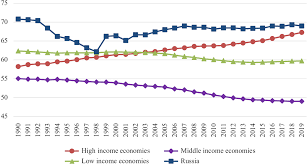
In theory, Russian women have equal rights with men as guaranteed by the Constitution. However, in practice, significant inequalities persist, particularly in the workplace and in areas like domestic violence and reproductive rights. While the constitution mandates equality, women face discrimination and societal expectations that prioritize motherhood over professional development.
While domestic violence is illegal, many forms were decriminalized in 2017, and support groups for victims have been labelled as “foreign agents”.
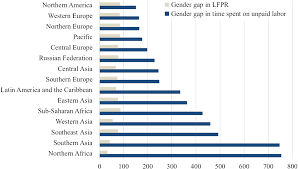
There are ongoing efforts to limit abortion access and potentially introduce mandatory counselling and husband’s consent for abortions.
Women in Russia have been able to vote since either 1917 or 1918 depending on site you look it up on.
Well tha’s enough for this post more next week.

 Jo-AnneRamplings
I enjoy your posts, Joan. I like how you summarize a topic.
Thank you, I am pleased you like the posts